Fine-line tattooing is now included in Skinart’s tattoo course. For Canadian learners considering online study, the important question is how to turn delicate designs into controlled, reviewable practice. This guide helps you compare the course scope, organize an exercise and ask for useful feedback before deciding how fine line fits your wider tattoo learning goals.
Understand what the style adds to your training
Fine-line work uses slender outlines and selected detail to describe a design. It is not synonymous with every tiny tattoo or a compulsory single-needle setup. A readable drawing, deliberate spacing and controlled endpoints matter before you choose a more complex subject.
Draw an original simple shape and prepare a cleaner alternative with fewer marks. Compare them at the intended size. Ask the tutor which version gives you a useful exercise for your current stage of learning.
Compare the inclusion with the rest of the course
Fine line joins blackwork, tribal and Māori-inspired design exercises, traditional tattooing, watercolour and colour realism. These styles connect with the course’s design, equipment, hygiene, stencil, linework and shading topics. Fine line is part of the tattoo course, rather than a separate course to purchase in the Academy.
Review the Canadian online tattoo course and check your selected option. Skinart does not supply equipment with the Canadian regional offer. Ask about the practice requirements and feedback arrangements before buying equipment.
Create a learning record that shows the real work
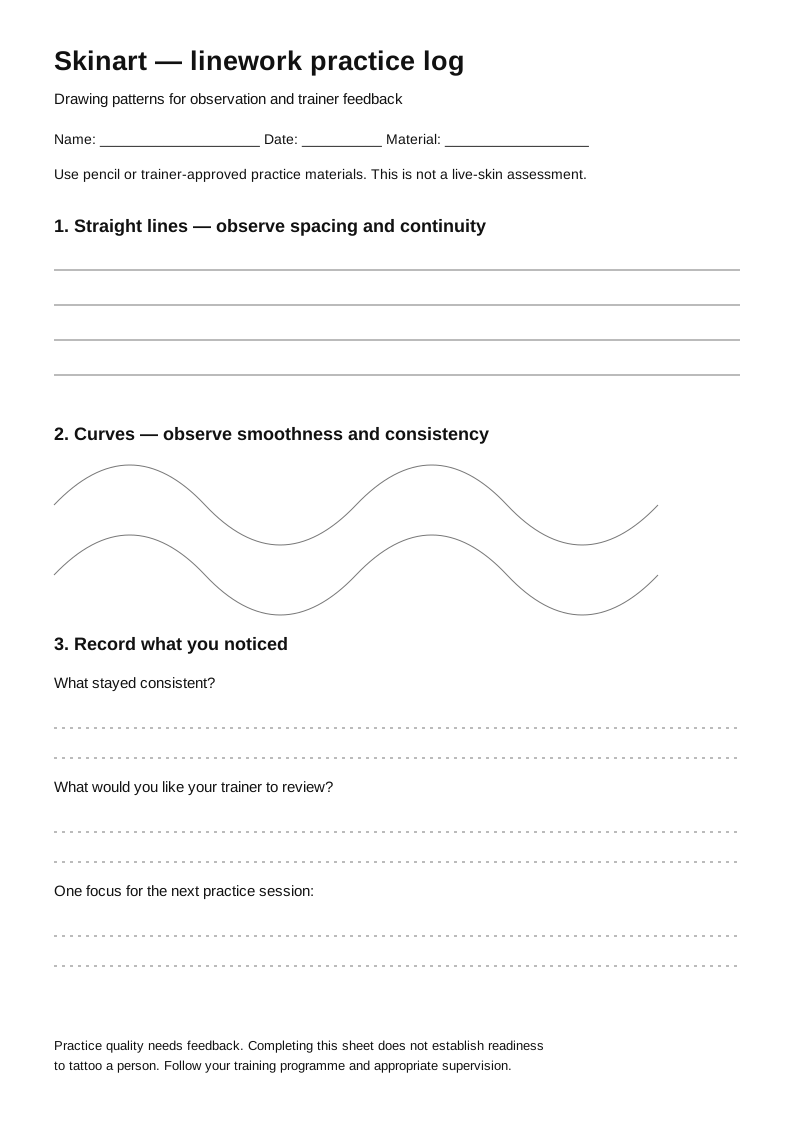
Start with paper exercises for curves, spacing and endpoints. Use the linework practice sheet to keep attempts comparable. Date each version and identify the feature you want reviewed.
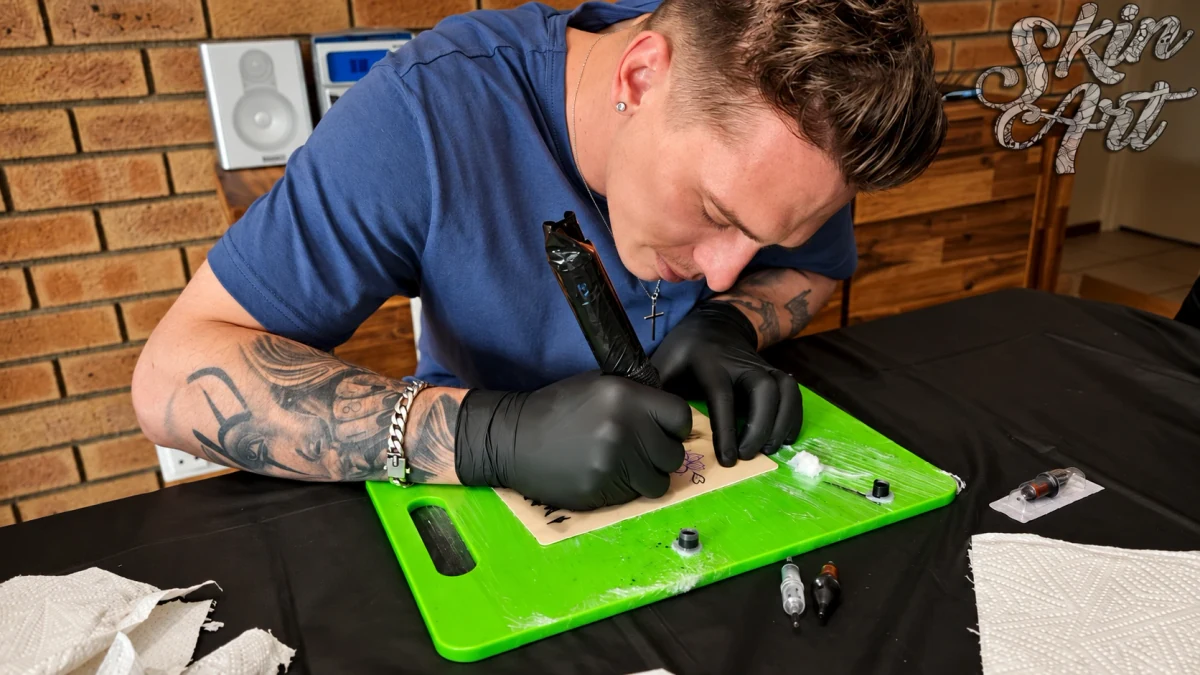
For instructor-assigned equipment practice, follow the approved material and preparation sequence. Photograph the whole piece and a close-up without editing away uneven marks. Record the reference, material and relevant setup so the tutor can evaluate the exercise.
Ask a focused question and repeat the task
A useful submission might ask, “How can I make the joins in this outline more consistent?” State what you can observe without assuming a technical cause. Save the reply and use it to set the next attempt.
Keep earlier attempts instead of replacing them with one polished photo. Paper and synthetic-skin work should be labelled as practice if you share it. Ask about healed examples when evaluating a professional portfolio; a fresh photograph alone cannot establish a long-term result.
Plan the route from learning to professional work
Confirm the applicable requirements with the relevant provincial and local authorities before offering services. Training, premises and permitted practice are separate questions. A certificate and a good practice piece do not automatically establish permission or readiness to work on clients.
Choose the Full Course or the published staged option with a clear understanding of what you are buying. If you want another main discipline too, the Canadian bundle builder shows the selected full courses. Contact the team with your experience and the specific fine-line skill you want to develop.
For the hygiene responsibilities that accompany all tattoo styles, see the infection prevention and control toolkit. This reference does not replace requirements where you work. For general information on caring for tattooed skin, the American Academy of Dermatology explains that UV light can fade some inks. No design or style guarantees an unchanged healed result.