How to Learn Fine-Line Tattooing in India: A Beginner’s Practice Plan
Fine-line tattooing is now included in Skinart’s tattoo course. Delicate lettering, small botanical outlines and minimalist designs need careful planning as well as line control. For learners in India, this guide gives you a practical way to use online lessons, drawing exercises and tutor feedback without treating a popular style as a shortcut around the foundations of tattoo training.
Choose a readable design before chasing detail
Fine line is a delicate visual approach, not a rule that every tattoo must be tiny or use one particular needle setup. Start with an original simple outline and check it at the intended practice size. Remove detail that makes neighbouring marks hard to distinguish.
For lettering, compare the spaces within and between characters. For a botanical exercise, compare the joins and gaps between leaves. Ask your instructor which task best matches your current learning stage before adding texture or shading.
Make paper practice purposeful
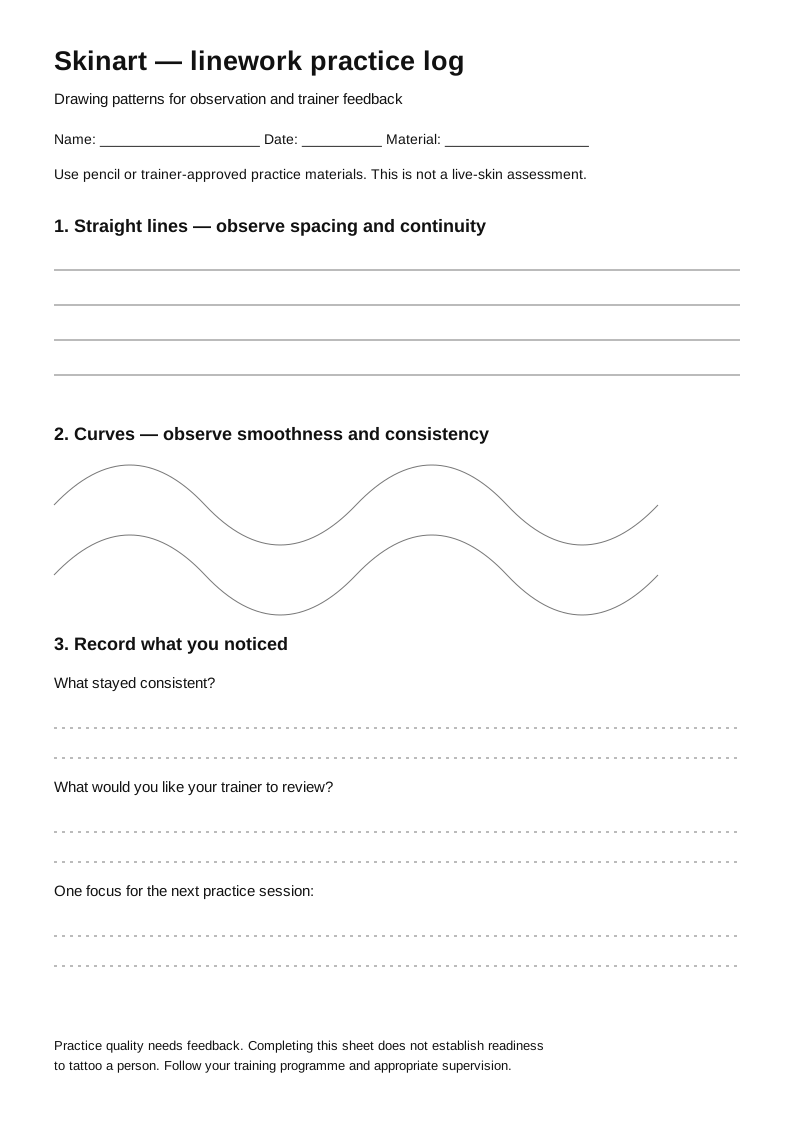
Practise a small set of lines, curves and endpoints on paper. Date each attempt and keep the reference visible. The printable linework sheet can help you record consistency, spacing and questions for review.
Repeat the same exercise after feedback so you can see what changed. A large collection of unrelated drawings is harder to evaluate than a short record that connects a question, a correction and the next attempt.
Follow the assigned equipment practice
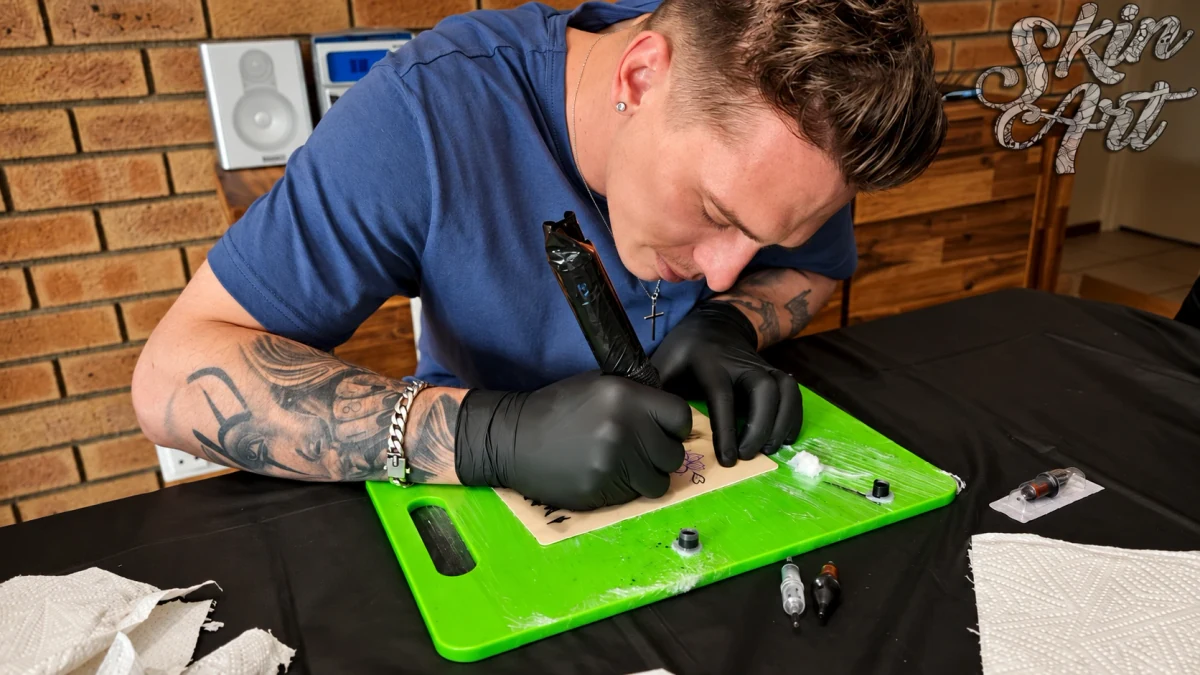
Study the fine-line lesson alongside the equipment, preparation and hygiene foundations. For practical exercises, use the material and setup specified by the instructor. The Indian regional offer does not supply equipment, so read the requirements before arranging your practice kit.
Do not treat online advice about a fixed voltage, depth or repeated passes as a universal technique. Keep the actual reference, material and setup with your submission. Ask for equipment-specific guidance when a result needs correction.
Keep fine line connected to the wider styles
The tattoo course also includes blackwork, tribal and Māori-inspired design exercises, traditional tattooing, watercolour and colour realism. Compare how contrast, colour and outline weight contribute to those assignments. The broader skills support a more informed design discussion than simply naming a trend.
Show practice work honestly and approach cultural references with informed respect. Do not present a synthetic-skin exercise as a healed client tattoo or describe a general design assignment as authority in a cultural tradition.
Use the regional course page and plan your next step
The Indian online tattoo course includes fine-line training. Purchase through the course page; enrolled students continue their lessons in the Academy learning portal. Fine line does not need a separate Academy purchase.
Before offering a service, confirm the applicable local requirements, premises arrangements and practice scope. Send the Skinart team your existing experience and a focused question about training. Build time for repeated practice and feedback into your learning plan.
For the hygiene responsibilities that accompany all tattoo styles, see the infection prevention and control toolkit. This reference does not replace requirements where you work. For general information on caring for tattooed skin, the American Academy of Dermatology explains that UV light can fade some inks. No design or style guarantees an unchanged healed result.