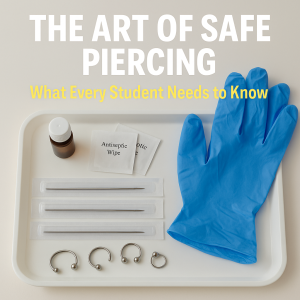
Piercing safety starts with more than a checklist
Body piercing penetrates the skin, so infection control is a central part of learning the work. Equipment, hand hygiene, the working environment and aftercare information all need attention. This introduction helps you identify topics to discuss during training; it is not a procedure guide or a guarantee against complications.
Topics to cover with your trainer
- Always use sterile, single-use needles: Single-use needles must not be reused. Sterile needles are one part of infection control; they do not make a procedure risk-free.
- Follow the required hand hygiene and glove procedure: Ask your trainer when gloves must be changed and how to avoid contaminating clean or sterile items. Gloves alone are not a complete infection-control system.
- Clean and prepare the piercing site: Follow the procedure-specific training and the instructions for the appropriate skin preparation product; do not improvise from a short blog checklist.
- Educate your client: Explain aftercare procedures clearly so they know how to care for their new piercing and recognize signs of trouble.
What to ask before choosing a piercing course
Ask how the course teaches and assesses infection control, what equipment is required, and how practical work is supervised. Confirm which activities are demonstrations, which are practice exercises and what evidence you must submit for assessment. A course title alone does not answer those questions.
For example, if a kit list uses an unfamiliar product name, keep the exact product description and ask the trainer to explain its purpose and required specification before buying an alternative. Do not assume a similar-looking item is interchangeable.
Separate training guidance from local requirements
The linked NSW Health factsheet is an example from Australia, not a statement of Indian law. For the location where you plan to work, confirm the applicable premises, business and waste-handling requirements with the relevant local authority. Ask the training team which supporting course documents they can provide, without assuming that a course certificate supplies every permission you may need.
Read the current online body-piercing course details for India and send the team your questions about practical assessment, equipment and support before selecting an option.
Use the practical piercing preparation guide to identify questions for your trainer. For an example of public-health requirements, see NSW Health guidance for body piercing businesses. That guidance applies to New South Wales; confirm the requirements for your own location.