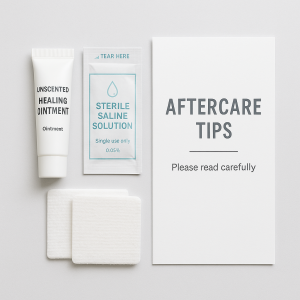
Written aftercare should help the person understand what to do after their specific procedure. For a student, reviewing the clarity of the information is a useful exercise before learning to explain it in a consultation.
Keep the procedures separate
Do not merge tattoo and piercing guidance into one universal routine. Use the instructions approved for the actual service and products, and ask the responsible practitioner to clarify conflicting advice. Avoid adding a product or routine because it appears in an unrelated online discussion.
Check the instructions are usable
- Does the document identify the procedure it covers?
- Are product instructions clear and specific?
- Can the reader find the follow-up contact?
- Does it explain when to seek medical help?
- Does the wording avoid guaranteed healing dates or outcomes?
Explain without guessing
Ask another learner to read the approved document and identify anything they do not understand. Practise referring those questions to the instructor. Do not add an improvised medical explanation or label a concerning change as normal based only on a photograph.
Use a specialist reference appropriately
The Association of Professional Piercers publishes piercing aftercare guidance. It is a piercing reference, not a tattoo aftercare protocol or a diagnosis of an individual concern.
A suspected infection or other health concern needs appropriate medical advice. Keep the studio’s routine follow-up process distinct from medical assessment, and do not promise that a particular routine prevents every complication.
Reference: Association of Professional Piercers: Aftercare.
Connect the exercise to your training
Review the regional course catalogue and bring questions about the relevant lessons to your tutor.