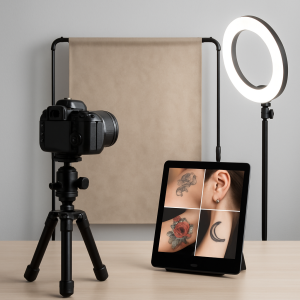
A useful practice photograph lets your trainer see the work clearly. Build a repeatable setup before trying to make an image dramatic. Consistency also makes it easier to compare attempts without mistaking a change in lighting for a change in skill.
Set up one reliable reference view
Clean the camera lens, use a simple background and position the practice piece where light falls evenly across it. Avoid strong glare that hides the surface. Keep the camera approximately square to the area you want assessed, then take a second angle only when it reveals information the first view misses.
Tap or set focus on the work, hold the camera steady and check the image at a larger size before putting everything away. A photograph that looks sharp as a thumbnail may not show enough detail for feedback. Retake a blurred image rather than trying to repair missing detail with a filter.
Record the conditions you can repeat
- Which camera and lens or phone setting you used.
- The light source and the position of the practice piece.
- A reference distance and angle.
- The date, practice material and exercise name.
- The particular detail you want the trainer to review.
Keep comparison photographs honest
Use the same view and lighting when comparing two attempts. Keep an untouched original. Cropping empty background can help, but do not smooth lines, erase inconsistencies or change colour to imply a better result. Separate an edited promotional image from the evidence you submit for assessment.
Label drawings and synthetic-skin work as practice. If you have permission to photograph work on a person, identify fresh and healed photographs accurately and follow the agreed limits on storage and publication. Permission to take a photograph should not be treated as permission to use it everywhere.
Send a small, useful set
Choose an overview and a relevant detail, then add one focused question. Explain what changed since the previous attempt. Several near-identical photographs without context are harder to assess than a clear pair with a specific question. Keep private information out of filenames and general sharing links.
Explore the available Skinart courses and review the curriculum for your chosen subject.