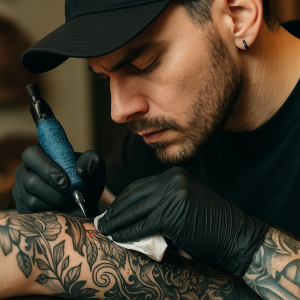
A request for a touch-up or correction starts with understanding the concern. It should not automatically lead to another procedure or a promise that a particular change can be made.
Record the request accurately
Ask the person to describe what they want reviewed. Keep their description separate from any assessment by the responsible practitioner. Use the studio’s approved recordkeeping process and avoid sharing personal details in informal group messages.
Know which questions to refer
Questions about healing, suitability, technique or the cause of an unexpected result need the appropriate practitioner’s assessment. A learner should not decide these issues from a photograph or a brief message. A concern suggesting infection or another health problem needs appropriate medical advice.
Clarify the appointment’s purpose
Make it clear whether the next contact is a discussion, an assessment or a procedure already agreed by the responsible practitioner. Do not describe a review appointment as a guaranteed correction. Check the actual policy before making statements about cost or entitlement.
Practise a handover
- Summarise the requested change.
- Identify what information has already been provided.
- List the questions that remain unanswered.
- State who will review the request and how the person will hear back.
This is a communication exercise, not a guide to carrying out a correction.
Continue with the related exercise
Understanding aftercare information adds a practical next step to these notes.
Connect the exercise to your training
Review the regional course catalogue and ask your tutor how this exercise fits your current lesson.