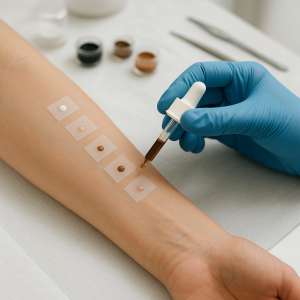
A short skin test should not be presented as a guarantee that tattooing or permanent makeup will be free of allergic reactions. Students need to distinguish a clinician’s diagnostic testing from a product-specific instruction or an informal studio test.
A negative result is not a guarantee
EADV guidance explains that preventive tattoo-ink testing cannot exclude a later allergic reaction. Its patient leaflet recommends dermatology advice when allergy is uncertain.
Do not tell a client that an uneventful 24–48 hours establishes that a tattoo, piercing material or aftercare product is safe for them. These are different exposures and should not be combined into one universal test routine.
Clarify which test is being discussed
Ask your instructor to identify the exact product, its manufacturer instructions and any requirements applying to the service. A manufacturer’s test instruction does not make a learner qualified to diagnose an allergy or override advice from a clinician.
Use an accurate consultation note
- Record the concern the person reports.
- Identify the product or procedure being discussed.
- Record advice from the appropriate professional accurately.
- Keep an unresolved question visibly unresolved.
Do not perform an improvised test with tattoo ink to reassure someone or promise that a reaction has been ruled out. If a concern needs medical assessment, use the appropriate referral route before proceeding.
Reference: EADV: Tattoo allergy patient leaflet.
Connect the exercise to your training
Review the regional course catalogue and bring questions about the relevant lessons to your tutor.