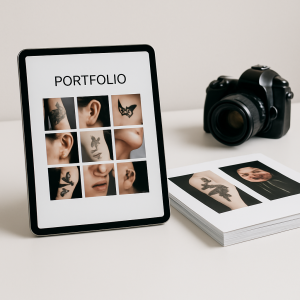
A useful learning portfolio shows what you did, what you noticed and what improved after feedback. It does not need dozens of near-identical images or dramatic editing to communicate progress.
Choose examples with a purpose
Select a small set of exercises that demonstrate different parts of your learning. Label the discipline and the kind of work shown, such as a drawing exercise or practice on synthetic skin. Do not present a practice piece as work on a client, or someone else’s work as your own.
For each example, add the date, the assignment and one thing you were trying to improve. This gives the viewer more useful context than a caption that simply says “latest work”.
Photograph the work consistently
Use steady framing, adequate light and a plain background that does not compete with the subject. Check that the image is in focus before putting the work away. Include a wider view for context and a closer view if it helps the tutor assess the detail.
Crop distracting empty space, but keep enough of the work visible to judge it fairly. Avoid filters, blur or retouching that hide the marks you are asking the tutor to assess. Keep the original image so you can return to it if a detail becomes unclear.
Show the feedback loop
- Choose an earlier attempt.
- Record the specific feedback you received.
- Add the next attempt at the same task.
- Explain what you changed and what still needs practice.
Use similar framing for a comparison. Changing the lighting, angle and crop dramatically can make it harder to tell whether the work itself improved.
Keep personal information out
Use the sharing arrangements agreed with your instructor and the people involved. Check image backgrounds for names, contact details or paperwork before uploading. A portfolio should show the work; it does not need a photograph of a real consultation form.
Edit the selection as you learn
Keep an organised private practice archive, then select the clearest examples for tutor review. Replace repetitive images with a more useful comparison. A short portfolio with honest labels and thoughtful notes can explain your progress better than a large gallery without context.
Write a caption that makes the comparison useful
Here is a fictional caption for a paper exercise: “Botanical composition study, 1 October. Three pencil versions at the same size. Goal: make the main flower easier to read. In version B, I reduced the leaves around the centre. My question: which outer shape still distracts from the flower?” The caption gives the task, material, change and feedback request. It does not present a drawing as a tattoo on a client.
For a before-and-after study, give both versions their own dates and keep the original photographs. Put the trainer’s feedback beside the relevant example, then explain the decision you made in the next attempt. If you crop an image for the portfolio, retain enough context to assess the work and keep the uncropped original for review.
Use a repeatable phone photography checklist when lighting or framing makes comparisons difficult. Keep the fuller working notes in your practice journal; the portfolio can show a smaller selection. These two records have different jobs: one helps you decide what to practise next, while the other explains selected learning clearly.
Connect the exercise to your training
Review the courses and practical requirements available in your region. Bring your exercise notes to your tutor and ask how they relate to the discipline you are studying.
Ask the Skinart team about your learning plan if you need help choosing the course that fits your next learning goal.