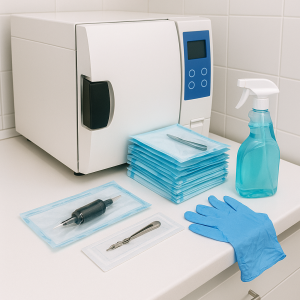
Reviewing a studio’s sterilization arrangements means checking an established, documented process with a qualified person. A clean-looking instrument or a completed machine cycle is not, by itself, evidence that an item is suitable for use.
This guide is a set of questions for a training or procedure review. It does not provide machine settings, an operating procedure or permission to reuse a particular item. Follow the applicable local requirements and the validated instructions for the equipment and items involved.
Distinguish the stages
Cleaning and sterilization are different processes. The CDC explains that material remaining on instruments can interfere with subsequent disinfection or sterilization. Its guidance is written for healthcare facilities; a studio must still establish which requirements and validated procedures apply to its own work. Read the CDC explanation of cleaning.
Questions to review with your trainer or responsible person
- Which items are single-use, and which are approved for reprocessing?
- Where are the current manufacturer instructions and the studio’s written procedures kept?
- Who is trained and authorised to carry out each stage?
- How are processed items identified and protected before use?
- What monitoring, maintenance and records are required for this equipment?
- What happens if a package is damaged, a record is missing or a result is unacceptable?
Write down the answer and the document or person that supports it. If an answer is uncertain, resolve it with the responsible qualified person before relying on the process. Do not fill a gap with a setting copied from an unrelated machine or an informal online demonstration.
Make records useful
The CDC’s recommendations include monitoring sterilization and keeping cycle records. The purpose of a record is to connect what was processed with the relevant result and responsible operator. It should be possible to understand what happened without depending on someone’s memory. See the CDC recommendations on monitoring and records.
During a review, ask the responsible person to explain how a sample record is interpreted, where it is stored and how a concern is escalated. This is an opportunity to identify a missing instruction or training need, not to improvise a replacement procedure.
Keep training and operating instructions connected
A general lesson can introduce terminology and help you ask better questions. Competent practice also depends on the actual equipment, work setting and supervision. Document changes to procedures and make sure the people affected understand them before those changes are used.
For a learner, a useful next step is to discuss this checklist with the trainer and identify the practical assessment still needed. Explore blood-borne pathogen training as part of a broader learning plan. A course or checklist does not replace local requirements or validated operating procedures.