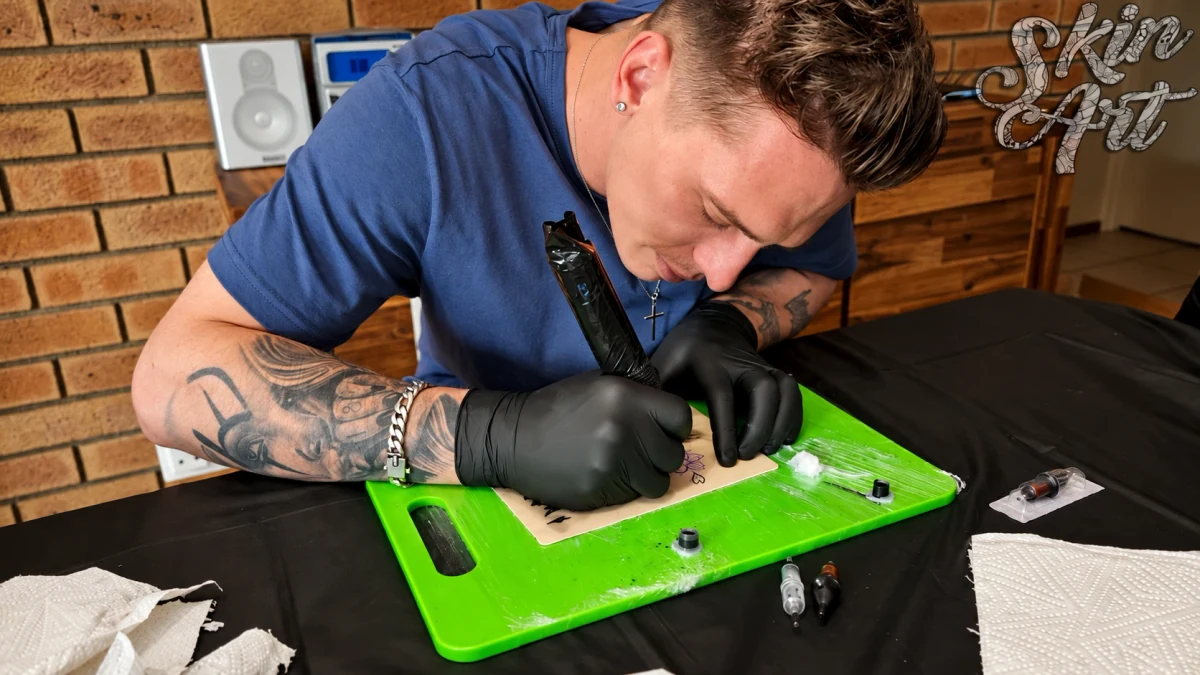
A practice session is easier to review when you can explain what you were trying to improve, what changed and what you will try next. For UK tattoo, piercing and PMU learners, that habit is more useful than collecting equipment or copying a finished portfolio photograph.
Use this checklist alongside your course exercises. It helps you prepare focused questions, compare your own work fairly and recognise when you need feedback before moving on.
1. Starting an exercise without a clear goal
Choose one thing to review in the session: following a design, keeping a practice sequence consistent, identifying equipment or explaining a consultation. Write that goal at the top of your notes so you can judge the result against the task you actually set.
For example, a tattoo learner working on fine-line designs on synthetic skin might record which lines drifted from the drawing. That is a clearer starting point for feedback than asking whether the whole sheet looks good. Keep a photograph of the full exercise as well as a detail view, so your tutor can understand the context.
2. Changing everything after one difficult attempt
A new material, a different tool and a different exercise can make the next result hard to compare. Record the materials and instructions used, then ask which change would help you understand the problem. Keep the next attempt comparable wherever the assigned exercise allows.
Use three short notes: what you expected, what you observed and what question remains. Describe the result without guessing a technical cause you have not established. A tutor can then help you decide what to review next.
3. Buying a kit before checking what the course needs
Compare the course equipment list with the exact items in a proposed kit. Check quantities, intended use, replacement supplies and what you already own. Similar-looking equipment or an appealing product name does not establish that an item suits the lesson.
Keep a small buying list with three groups: required now, needed for a later exercise and awaiting confirmation. Ask about the third group before spending. For a fuller comparison, use the piercing training-kit guide or the tattoo course budgeting guide.
4. Treating a tidy setup as a completed safety check
Appearance does not tell you whether the right preparation and handling steps were followed. Learn the procedure for the actual equipment and products in your exercise. If an item is damaged, unfamiliar or missing, pause and ask how to proceed.
The HSE’s blood-borne-virus guidance covers hygiene, surface contamination, sharps disposal and arrangements for exposure incidents. Use it to understand the questions behind the studio’s procedures. Practical work on people needs appropriate supervision, assessment and the requirements for the place where you intend to work.
5. Recording only the most flattering result
Keep work that shows a difficulty as well as work you are pleased with. Use consistent lighting and framing, and identify synthetic-skin exercises clearly. Record feedback beside the relevant photograph so you can see whether the next attempt addressed it.
A useful practice record includes the task, date, materials, full exercise photograph, one detail view and the next action. You can remove unnecessary personal details and still give your tutor enough information to understand the work.
6. Moving on without reviewing the feedback
Before starting a harder exercise, return to the point your tutor asked you to work on. Explain what you changed and show the comparison. If the feedback is unclear, ask a question about the exact instruction instead of repeating the same task and hoping it will improve.
Make your next lesson easier to review
Bring one completed exercise, one unresolved question and one proposed next task to your tutor. Explore the UK tattoo course, including fine-line training, piercing course or PMU course. If you want to study more than one discipline, compare the full-course bundles and bundle builder.