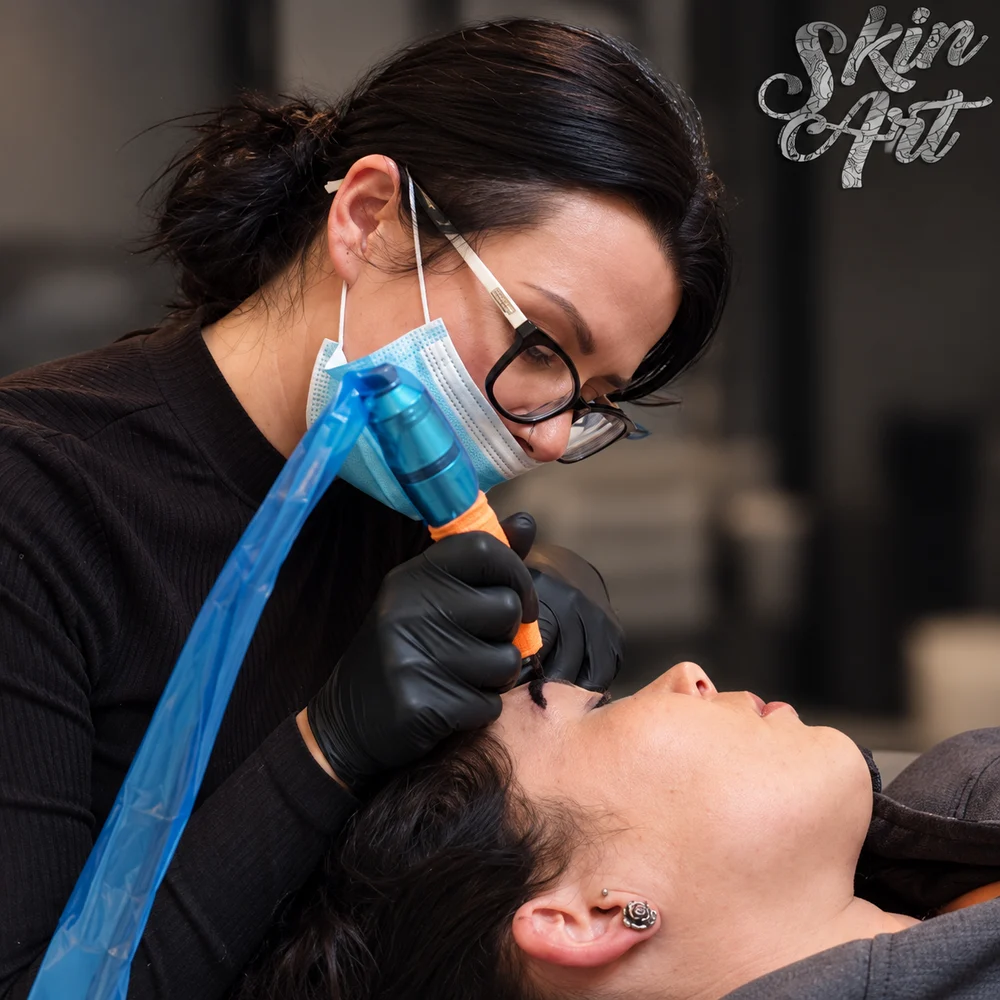
A body-art workstation should support the work sequence, keep supplies organised and make it clear where used materials go. For UK tattoo, piercing and PMU learners, planning that sequence is a useful training exercise before arranging equipment.
Start with the procedure taught for the actual task and products. A photograph can help you discuss the layout, but a neat-looking bench cannot show every preparation or handling step.
Draw the route through the task
Make a simple sketch of the proposed practice area. Mark where unopened supplies are kept, which objects are frequently touched and where used items leave the work area. Identify the places where the sequence needs a decision, such as receiving another supply or answering a question.
Ask your supervisor to review the sketch. Describe what each area is for and which instruction applies to it. Keep the feedback beside the drawing so you can explain why the arrangement changed.
Check the exact equipment and products
Compare the lesson’s equipment list with what you have available. Record the product names and find the relevant manufacturer instructions. Similar packaging does not establish that two products have the same intended use or preparation requirements.
- Which items are required for this exercise?
- Where are unused supplies stored and how are they kept protected?
- Which items are single use, and which have a documented reprocessing route?
- What should you do if packaging is damaged or an item is missing?
- Who can resolve a question before the task starts?
Prepare these questions before buying extra equipment. The piercing kit-planning guide explains how to compare supplies with a course list.
Plan for used materials and interruptions
The HSE’s safe-working guidance calls for suitable sharps disposal at the point of use, hygiene measures and arrangements for exposure incidents. Ask your supervisor how the studio puts those principles into its own procedures.
Think through a missing item, a ringing phone or someone entering the space. Which task should pause, and who should respond? Keep personal devices and unrelated objects out of the work area. A plan for interruptions helps you notice when the sequence has changed.
Make sure you know the studio’s route for reporting an exposure incident or equipment problem. Practical training should include that response, rather than leave it to a learner to improvise.
Review lighting, access and client comfort
Check that the assigned working area is clearly visible without avoidable glare or shadows. Discuss the position of seating, lighting and equipment with the supervisor so you can work through the task without unnecessary reaching or moving supplies.
If a client is involved, the practitioner should decide the arrangement for the procedure and explain how your learning role fits. Keep access routes clear and ask before changing the position of shared equipment.
Keep a setup review you can use again
Record the task, the equipment list, the instructions reviewed and any issue that needed a supervisor’s decision. Revise the sketch after feedback. For later exercises, check what is different instead of assuming that one arrangement suits every discipline or procedure.
A photograph of an empty reviewed practice area can help your study notes. It should support the written explanation of the sequence, not replace it. Practical work on people requires the appropriate supervision, assessment and premises arrangements.
Use the requirements for your UK location
Ask the relevant local authority about the premises and procedures you intend to offer. Requirements differ across the UK; avoid applying another country’s rules to your studio. The UK piercing-licence guide and UK tattoo-licensing guide explain where to check.
Bring the plan to your next lesson
Choose one area you can explain and one question you still need answered. Review the UK tattoo, piercing or PMU course curriculum, then ask your tutor how the workstation review fits the exercise you are studying.