Safety First: The Golden Rule in Body Piercing
Body piercing involves skin penetration, so infection control belongs at the centre of training. Sterile equipment is important, but it does not remove every risk or replace preparation, appropriate handling and clear aftercare information.
Essential Steps for Safe Piercing
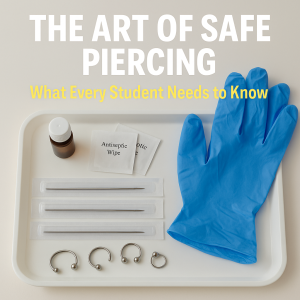
- Always use sterile, single-use needles: Single-use needles must not be reused. Sterile needles are one part of infection control; they do not make a procedure risk-free.
- Follow the required hand hygiene and glove procedure: Ask your trainer when gloves must be changed and how to avoid contaminating clean or sterile items. Gloves alone are not a complete infection-control system.
- Clean and prepare the piercing site: Follow the procedure-specific training and the instructions for the appropriate skin preparation product; do not improvise from a short blog checklist.
- Educate your client: Explain aftercare procedures clearly so they know how to care for their new piercing and recognize signs of trouble.
Building a Lasting Reputation
Before enrolling, ask how infection-control knowledge and practical work are assessed. Confirm the equipment required, the supervision arrangements and which activities are demonstrations or practice exercises. Keep the answer with the course information so you can compare options on the same basis.
Remember: Every piercing is an opportunity to create art—and to set the standard for safety in our industry.
Use the practical piercing preparation guide to identify questions for your trainer. For an example of public-health requirements, see NSW Health guidance for body piercing businesses. That guidance applies to New South Wales; confirm the requirements for your own location.