
Setting Up a Microblading Studio at Home Legally
Before planning a home microblading studio in the United States, establish whether the proposed activity is permitted at that address. Use this guide to organize enquiries about premises, practitioner requirements and business arrangements before committing to fit-out costs.
Training and premises approval are separate steps. Review the course syllabus for your learning needs and ask the responsible authorities about the exact activity and address you are considering.
Table of Contents
Jump to any section. We recommend bookmarking this page for quick reference while you plan your studio.
- Legal overview for Setting Up a Microblading Studio at Home
- Licensing, registration and local health requirements
- Studio setup: equipment, layout and supplies
- Common mistakes to avoid when starting at home
- Infection control, waste and insurance
- Marketing, pricing and client privacy
- Checking Your Proposed Home Studio
- Frequently asked questions
- Final thoughts and next steps
Choose a section to find the information you need.
Legal overview for Setting Up a Microblading Studio at Home
Before you purchase chairs or order pigments, understand that setting up a microblading studio at home requires alignment with federal, state, and local rules. There is no single nationwide license for microblading; instead, rules are enforced by state cosmetology boards, health departments, and municipal ordinances. This layered regulatory environment means you have to research multiple sources to be certain you are compliant.
First, identify the primary agencies in your jurisdiction—typically the state cosmetology or barber board and your county or city health department. Regulations often cover sanitation, disposal of sharps, zoning and whether home-based personal care services are allowed where you live. Some U.S. jurisdictions treat microblading as a “tattoo” service and require tattoo permits, while others categorize it under esthetics or permanent cosmetics. Knowing which applies to you determines the route you take.
Finally, check whether your homeowner association or lease restricts commercial activity from the property, and whether you need a home occupation permit or business license from the city. These municipal steps are often the quickest to miss but the easiest to resolve when approached early in your planning.
Licensing, registration and local health requirements
Ask the responsible authority how it classifies microblading and which practitioner and premises requirements apply. Do not assume that an esthetics or cosmetology qualification authorizes the proposed procedure.
Pros:
- Clearly defined pathway to legal operation
- Official recognition can improve client trust
- Some jurisdictions offer straightforward home-based exemptions
Cons:
- Rules vary widely and can be confusing
- Some areas require expensive inspections or dedicated plumbing
- Delays in permits can slow your launch
Common requirements you’ll likely encounter include a business license, a local home occupation or home-based business permit, proof of relevant cosmetology or esthetics training, blood-borne pathogen (BBP) certification, and documentation of a sharps disposal plan. Keep digital copies of every permit and certificate—inspectors and clients may ask to see them.
If your state treats microblading under tattoo regulations, expect additional requirements such as an on-site inspection, surfaces that are smooth and non-porous, and rules about sterilization equipment. When in doubt, request written confirmation from the health department so you have a paper trail showing you asked before you acted.
Studio setup: equipment, layout and supplies
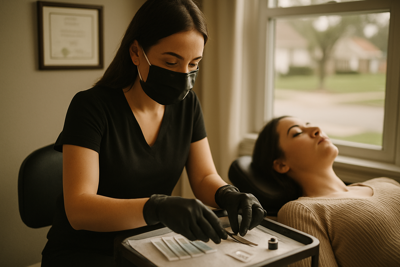
Practical studio design balances client comfort, infection control, and efficient workflow. When setting up a microblading studio at home, allocate a separate room that can be closed off, with a single point of entry, washable floors, and smooth work surfaces. Lighting is essential—invest in high-quality adjustable lamps so you can work precisely.
Below is a recommended checklist of equipment and supplies. Note: Skinart United States does not supply microblading equipment in the U.S.; you must source your own tools from reputable suppliers and ensure they meet local regulatory standards.
- Adjustable treatment chair or bed with waterproof covering
- Bright, adjustable LED magnifying lamp
- Single-use microblading blades and disposable needle cartridges
- Medical-grade pigments labeled for cosmetic use
- Disposable gloves, face masks and protective eyewear
- Sharps container and hazardous waste bags
- Surface disinfectants approved for use against blood-borne pathogens (EPA-registered)
- Autoclave or validated sterilization process, if required by local rules
- Client consent forms, intake forms and aftercare information printed and digital
- First aid kit and emergency contact information
Layout tips: keep a “clean zone” where only sterile or single-use items are placed, and a “dirty zone” for used disposables and waste. Use a small mobile trolley to hold supplies during sessions to minimise movement and possible contamination. Make sure surfaces are easy to disinfect—avoid fabric upholstery that can’t be cleaned thoroughly.
Follow the manufacturer’s instructions and the requirements confirmed for each item. Do not reuse an item designated single-use. Ask about required cleaning, sterilization and records for any reusable equipment before purchasing it.
Common mistakes to avoid when starting at home
New home-based microblading businesses often stumble on similar points. Knowing these ahead of time will save time, money and stress.
- Failing to check zoning and HOA restrictions for home businesses
- Assuming cosmetology licensure is the same in every state
- Using non-medical or non-approved pigments to save cost
- Skipping BBP certification or failing to refresh it regularly
- Not having a dedicated clean/dirty workflow or missing sterilization logs
- Poor record keeping for client consent, pigments used, and aftercare
- Underinsuring the business or assuming homeowner’s insurance will cover claims
- Inadequate signage and privacy protections for clients receiving treatments at home
- Not investing in proper lighting and magnification leading to technique errors
Avoiding these mistakes starts with planning. Maintain a checklist of permits, set aside a clean room budget, and build an operations manual for yourself that outlines every step from client arrival to waste disposal.
When clients come to a home studio, privacy and professionalism matter. Install a clear exterior sign or use appointment-only scheduling to minimize foot traffic and ensure confidentiality. These small details increase client trust and repeat bookings.
Infection control, waste management and insurance
Infection prevention is the cornerstone of lawful microblading practice. Even when working from home, you must follow standard precautions that protect you and your clients. This includes use of gloves, single-use blades, surface disinfection between clients, and correct handling of blood or bodily fluids.
Proper waste disposal is often inspected. Sharps must be placed in approved containers and disposed of through a medical waste contractor or municipal sharps program. Mixing sharps with household trash can violate local public health codes and result in fines.
- Maintain BBP (Blood-Borne Pathogens) certification and refresh as required
- Use EPA-registered disinfectants and follow contact times
- Log sterilization cycles if you use reusable instruments
- Have a documented cleaning schedule and client intake form for medical history
- Purchase professional liability insurance that explicitly covers body art or permanent cosmetics
- Confirm whether your homeowner’s insurance excludes business activities—buy separate business insurance if needed
- Keep records of waste pickups and disposal receipts for inspections
- Display emergency procedures and ensure a clear route for emergency responders if necessary
Describe the proposed home business accurately to an insurer or broker and ask which activities, premises and risks are covered or excluded. Review the actual policy terms. Separately check any notification or permission requirements in your lease.
Ask the relevant local authority what records, premises checks and infection-control arrangements it requires for the activity you propose. Keep its written guidance with your business records.
Marketing, pricing and client privacy
Running a home studio doesn’t prevent you from building a professional brand presence. Use a dedicated business phone number, professional email, and a separate social media profile for client communication. When advertising, be transparent about your home-based setting—clients appreciate honesty and the option to choose a more clinical location if they prefer.
Pricing should reflect your skill level, product costs and the time required for thorough consultations and aftercare. Include charges for color corrections or additional touch-ups where appropriate, and use clear policies to avoid disputes.
- Use professional before-and-after photos with client consent
- Collect testimonials and reviews on verified platforms
- Ensure client records are stored securely (encrypted digital files or locked cabinets for paper)
- Have a clear cancellation and refund policy
- Comply with HIPAA-like privacy expectations — do not share medical details without consent
- Offer digital aftercare guides and follow-up messages to improve outcomes
Privacy is especially important in home studios—position client chairs away from windows and use curtains or frosted glass to preserve discretion. Always ask permission before posting client images and maintain signed photo release forms.
Checking Your Proposed Home Studio
Before spending on a home studio conversion, describe the intended service and premises to the relevant authority. Ask whether the proposal is permitted, what information it needs and which approvals must be obtained before work or appointments begin.
Keep the response with your proposed layout and a list of any unresolved requirements. Do not copy another studio’s room design as evidence that your own premises will be accepted. Check any changes to the proposal with the organization reviewing it.
Separate feasibility, training and business planning. Permission for a premises, completion of a course and demand for appointments are different questions. Confirm each with the relevant evidence rather than assuming one successful step guarantees the others.
Frequently asked questions
Below are the common questions people ask when Setting Up a Microblading Studio at Home legally in the United States. Short, practical answers will help you take the next steps confidently.
Q: Can I do microblading from my home in the United States?
A: Check with the authority responsible for your proposed address before buying equipment or accepting clients. Ask whether home-based microblading is permitted and what premises, practitioner, training and inspection requirements apply.
Q: What permits will inspectors ask to see?
A: Inspectors typically check your business license, home occupation permit (if applicable), proof of training and BBP certification, sharps disposal arrangements, and your client records and consent forms.
Q: Is an autoclave required?
A: That depends. Some jurisdictions require sterilization equipment for reusable items; others allow single-use disposables. Verify local health code before purchasing an autoclave.
Q: Do I need special insurance?
A: Yes—professional liability insurance that covers permanent cosmetics and on-premises services is strongly recommended. Homeowner policies often exclude business activities.
Final thoughts and next steps
Setting up a microblading studio at home legally in the United States is absolutely achievable with the right preparation. Research your state and local rules, design a functional and hygienic workspace, obtain the permits you need, and keep exemplary records. These steps protect you, your clients, and your reputation.
Plan purchases around confirmed requirements and the practical arrangements of your chosen training. Keep a record of costs and outstanding questions before making commitments. An anonymous success story cannot establish whether a home studio is suitable or financially viable for you.
Review the current online microblading course information for its syllabus, support and assessment arrangements. Ask the team to clarify any practical requirement you cannot find. Course completion does not itself establish permission to operate from a home premises.
Ready to start? Take the next step.
Explore our accredited Microblading course and learn the regulated approach to safe, confident practice in the United States.
Recent Blog Posts
 How to pause a consultation without losing claritySometimes the most useful outcome of a consultation is a clear next step rather than an immediate booking. A calm pause…
 Read product instructions before making a practice planA familiar product name does not tell you everything about its intended use. Product-specific questions belong at the start of planning,…
 Build a practice journal you will actually useA useful practice journal makes the next session easier to plan. It does not need to become a second project or…
Sign in to message us
Your messages, replies and private files must stay linked to your Skinart profile.
Sign in Create an accountChat needs account setup
Your profile must be linked to its original Skinart Training site before chat can open.
Assignments are stored privately. Privacy policy
Up to four images or PDFs, maximum 15 MB each. Images are compressed before upload.
Messages and files are private. Privacy policy