Do You Need a Tattoo License in the United States?
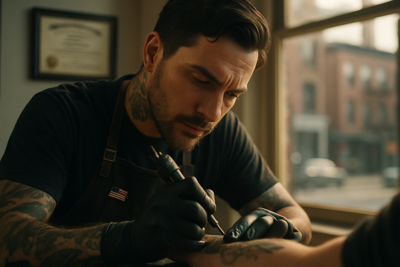
If you plan to tattoo professionally in the United States, identify the requirements for the exact services and location first. This guide helps you organize questions about practitioner approval, premises and training evidence before making commitments.
Use this guide to prepare a location-specific enquiry and organise the answer. Check practitioner, premises and training requirements separately rather than assuming there is one certificate that authorises every part of tattoo work.
Table of Contents
- What “Tattoo License in United States” Typically Means
- Where Licenses Are Required — State & Local Overview
- Training, Qualifications and Typical Requirements
- Common Licensing Mistakes to Avoid
- Working Across States: Portability & Reciprocity
- Health, Safety and Inspections
- Step-by-Step: How to Get Ready and Apply
- FAQs: Do You Need a Tattoo License in the United States?
- Final Thoughts & Next Steps
What “Tattoo License in United States” Typically Means
The word licence can refer to different approvals. Ask whether the proposed activity needs a practitioner registration, a premises approval or another permission, and identify which authority issues each.
Describe the exact service, address and working arrangement when making an enquiry. A broad question about becoming a tattoo artist may miss requirements specific to a premises or temporary event.
Ask the responsible authority what evidence it accepts. Provide the actual syllabus and assessment information when requested; a course certificate does not guarantee approval of a permit application.
Where Licenses Are Required — State & Local Overview
In the U.S., there is no single federal “tattoo license.” Instead, regulations are primarily handled at the state and local levels. That means requirements differ from one state to another—and sometimes from city to city within the same state. Commonly required elements include an individual practitioner registration or license, a separate facility or studio permit, and proof of infection control training.
- A location-specific enquiry helps you identify the actual application process.
- Requirements from another location should not be treated as approval for the place where you intend to work.
Two official starting points show why location matters: Texas DSHS describes tattoo-studio licensing and local zoning documentation, while New York State directs readers to their county or city health department for local requirements. Check the current instructions for your own address.
If you’re gearing up for an application, a good first step is to identify the local or county health department that issues body art permits in your area. Many departments publish checklists, fee schedules, and inspection criteria online. You can also contact them directly — officials often clarify what documentation they accept as proof of training or competency.
Training, Qualifications and Typical Requirements
Ask the reviewing authority for its training-evidence requirements before selecting a course to satisfy them. Provide the syllabus and assessment details if requested, and retain its answer.
Skinart United States offers online tattoo training. Before enrolling, ask the health department responsible for your intended workplace which training, practical experience and permits it requires, then compare those requirements with the course syllabus and assessment. For example, the New York State Department of Health directs applicants to their county or city health department for local requirements.
Use these questions to obtain the actual document list. They are not a nationwide application checklist:
- What identity or eligibility evidence is required?
- Which training documents, if any, will be accepted?
- Is separate bloodborne-pathogen training required, and which providers are accepted?
- Which premises application and fees apply?
- Are plans or facility details required before committing to a location?
- What waste-handling arrangements must be documented?
- What equipment and processing records must be supplied?
- Which application and client-record requirements apply to the proposed activity?
Common Licensing Mistakes to Avoid
- Failing to check city or county rules (assuming state law is the whole story)
- Assuming any accreditation label guarantees acceptance of the training
- Failing to confirm any required training or renewal dates
- Assuming a mobile, guest or event arrangement is covered by a different premises approval
- Not keeping client consent and medical history forms on file
- Poor waste disposal procedures or lack of sharps containers
- Buying equipment before checking the applicable premises and process requirements
- Assuming “freelance” or private work exempts you from regulation
Keep each answer with the authority’s name, date and current application instructions. If an answer refers you to another office, resolve that part too before assuming the enquiry is complete.
Request the current application instructions from the authority. Ask the course team which learning documents it provides and arrange any other required records separately.
Working Across States: Portability & Reciprocity
Before relocating or arranging a guest spot, ask the destination authority whether a new application or additional evidence is needed. Do not assume an approval or training document accepted elsewhere transfers automatically.
Send the destination authority a concise description of the activity, address and dates. Ask which documents it requires and compare those with what you already hold.
- Keep copies of the training documents actually requested
- Supply previous approvals or inspection records only where relevant or requested
- Describe your experience accurately without sending unnecessary client information
- Ask about any temporary or guest-working process
- Confirm both the organiser’s requirements and the responsible authority’s requirements for an event
- When moving, plan for any local permit timelines and inspection bookings
- Record which questions belong to the authority and which belong to the venue
- Confirm any assessment or inspection arrangements before booking work
Health, Safety and Inspections
Request the inspection requirements for the proposed premises and procedures. Check which documents, facilities and operating arrangements will be reviewed rather than using a generic article as an inspection specification.
Use the current official checklist to prepare questions and identify missing items. Completing your own checklist does not guarantee approval; keep any follow-up requirements from the authority with the application record.
- Maintain the processing records required for the equipment and procedures in use
- Keep the required training evidence accessible to the responsible staff
- Use single-use disposables where required and document their disposal
- Post clear studio policies for client consent and aftercare
- Clarify the cleaning procedures and records required for the workplace
- Resolve workplace health requirements with the appropriate qualified adviser
- Arrange regular equipment maintenance and keep records
- Respond promptly to inspection feedback and update protocols as needed
Step-by-Step: How to Get Ready and Apply
Organise the application around the current instructions issued for your location:
Identify the authority, obtain the current forms and list any unanswered questions. Confirm the sequence of application, payment, inspection and approval before committing to an opening date.
- Find the local health department’s body art or environmental health page
- Download inspection and permit checklists
- Confirm and complete the training actually required for the application
- Prepare any premises plans or equipment details requested
- Collect IDs, application forms, and payment
- Submit application and book an inspection date if required
- Address inspector feedback promptly and provide any requested documentation
- Wait for the necessary approval and follow its conditions, including display requirements where applicable
Ask the relevant authority what inspections and records apply to your proposed premises. Prepare the documents it requests and keep a record of any corrections or follow-up questions.
Remember that requirements change; maintain contact with your health department for updates, and keep staff certifications current to avoid permit lapses or penalties.
FAQs: Do You Need a Tattoo License in the United States?
Below are short answers to common questions when researching tattoo licensing in the United States.
What readers often search
Q: How long does it take to get a tattoo licence? A: Ask the issuing authority for current processing and inspection availability. Do not promise an opening date based on a generic estimate.
Q: Is bloodborne-pathogen training mandatory? A: Confirm the requirement and accepted training for your activity with the responsible authority and workplace. Do not assume a general tattoo course replaces separate required training.
Q: Does the course include equipment or in-person training? A: Check the current online course option for included materials, assessment and support. Confirm any equipment or local supervised experience that must be arranged separately.
Final Thoughts & Next Steps
The useful question is which approvals apply to your activity at your intended address. Obtain that answer from the responsible authority and compare it with your training and premises plans before operating.
Review the current US tattoo course information for the syllabus and assessment details. Where an authority needs training evidence, provide the actual course documents and ask it to confirm whether they meet its requirements.
Compare the course’s current syllabus and assessment with your learning needs and any evidence requirements you have received. Resolve differences before enrolling.
Ready to get started?
Review the current online tattoo course details and send specific training questions to the team. Obtain licensing decisions from the responsible authority.
Recent Blog Posts
 Choose your next learning goal with evidenceA long list of courses can make progress feel harder to define. Start with a specific task you want to understand…
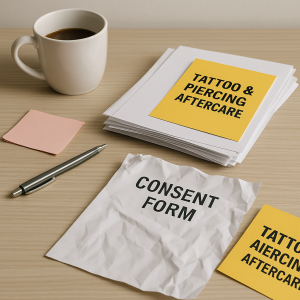 Avoid These Consultation Mistakes in 2026A good consultation leaves the client and artist with the same understanding of the proposed work, its limits and the next…
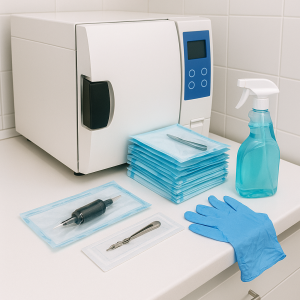 Sterilization 2026: Setting the Gold Standard in Your StudioReviewing a studio's sterilization arrangements means checking an established, documented process with a qualified person. A clean-looking instrument or a completed…