Accredited Online Tattoo Courses: What You’ll Learn
An online tattoo course can organize your study of design, equipment, hygiene and client care. To decide whether a course suits your goals, look at its actual lesson list, assignments and support rather than relying on an accreditation label alone.
This guide summarizes the published Skinart tattoo syllabus and suggests ways to organize your learning. It also separates course topics from assessment requirements and practical experience, so you know what to confirm before enrolling.
Table of Contents
Use these links to jump to the section you need. We recommend reading the full page if you’re new to tattooing — the material builds on itself.
- Overview: What an Accredited Online Tattoo Course Covers
- Benefits and Limitations of Accredited Online Tattoo Courses
- Core Skills and Technical Modules You’ll Learn
- Common Mistakes Students Make
- Compliance, Accreditation and Legal Requirements (US)
- Creative Development and Building Your Portfolio
- Practical Assessments, Exams and Certification
- FAQs
- Final Thoughts
Choose a section to find the information you need.
Overview: What an Accredited Online Tattoo Course Covers
The published Skinart online tattoo curriculum covers tattoo art and history, design assignments, stencil methods, equipment, artistic techniques and professional practice. These topics give you a structure for study; the course page provides the current lesson list.
Check the exact course and scope covered by any advertised accreditation. Ask the intended recipient of your certificate about its requirements rather than assuming an accreditation label establishes acceptance by employers or licensing authorities.
The syllabus includes licensing, health and safety, and contacting the relevant health department. Studying these topics does not establish readiness for client work or acceptance into an apprenticeship. Confirm the practical preparation and approvals needed for your intended next step.
Benefits and Limitations of Accredited Online Tattoo Courses
Compare structured online lessons with the other learning routes available to you. Ask about demonstrations, practical supervision, assessment and feedback. The format alone does not establish which option will be more effective for your circumstances.
- Features and questions to compare:
- Flexible learning schedule suited to busy students across the United States
- Review the current accreditation information alongside the actual course syllabus
- Published topics include equipment, design, cross-contamination and aftercare
- Ask how assignments and portfolio work are reviewed
Compare recorded study, exercise feedback and direct practical supervision as separate learning activities. Ask what the course provides and what additional supervised experience you would need to arrange; do not assume a local placement is included.
Confirm the support, assignment requirements and equipment arrangements for the selected online option. If you need further supervised experience, establish that separately before planning work with clients.
Core Skills and Technical Modules You’ll Learn
Accredited Online Tattoo Courses typically break content into modular units. At Skinart United States you will work through detailed units covering:
Use the current curriculum to plan your study of foundational topics before progressing to more complex exercises. Confirm the required assignments and practical evidence with the training team rather than relying on a general article as an assessment specification.
Below is a compact breakdown of the primary modules and topics you’ll complete during the course.
- Tattoo art, themes, styles and history.
- Licensing and home-business topics, including contacting the relevant health department.
- Design exercises, stencil methods and placement.
- Coil and pen machines, assembly and maintenance.
- Linework, black work, shading, color and selected artistic styles.
- Skin, cross-contamination, aftercare and workstation cleanup.
- Photography, social media and the final practical topic.
Common Mistakes Students Make
Common study mistakes include rushing exercises, losing track of feedback and treating a demonstration as proof of personal competence. Use this checklist to make your learning easier to review:
- Keep the original exercise brief with your work so the tutor can see what you were trying to achieve.
- Record questions about the aftercare lesson rather than inventing instructions to fill gaps in your understanding.
- Use fictional details for consultation practice; do not put another person’s private information into an exercise unnecessarily.
- Ask equipment questions using the exact tool or configuration named in your assignment.
- Repeat assigned practice exercises after reviewing feedback, keeping earlier attempts for comparison.
- Use clear, well-lit photographs that meet the actual submission instructions.
- Distinguish watching a demonstration, completing practice-material work and receiving direct practical supervision.
- Raise any uncertainty about cross-contamination before progressing to practical work.
Keep your questions tied to a lesson and a specific exercise. Ask which evidence the tutor needs to review it, and record any feedback before attempting the exercise again. Confirm the course submission process rather than assuming a particular portfolio format is required.
If you need supervised experience beyond the online course, discuss suitable arrangements with the training team and a prospective local mentor. Confirm eligibility, supervision, insurance and any applicable permissions before arranging work on a person.
Compliance and Accreditation Details (United States)
The CPD Standards Office describes its accreditation as assessment of educational design, delivery and quality assurance. It distinguishes this from a regulated qualification and from validation of treatments or scientific claims. Check the exact provider and activity in its directory, and confirm any recipient’s acceptance separately.
Ask the relevant state or local authority what training evidence it requires for the proposed activity and premises. Compare that response with the exact course documents before assuming that they satisfy an application.
If you need authoritative guidance on continuing professional development standards, the CPD Standards Office provides information on course accreditation and recognised learning outcomes. We also recommend contacting your local health department if you plan to start practicing in a new city.
Creative Development and Building Your Portfolio
The course syllabus includes design assignments, themes, styles, stencil methods and placement. Use those topics to organize your creative practice and show how a design changes through successive drafts.
Photography and social media appear in the published lesson list. You can also maintain a personal learning portfolio that identifies the exercise, date, materials and feedback. Ask separately which portfolio evidence, if any, is required for course assessment.
The following are optional ways to organize a personal learning portfolio, not a list of promised course modules:
- Design briefs: save the brief, first sketch and revised design together
- Placement studies: label the intended placement on your drawings or mock-ups
- Color studies: record the palette and the purpose of each exercise
- Photography: distinguish drawings, practice materials, fresh work and healed work
- Process notes: explain the aim, feedback and changes without inventing client outcomes
- Presentation: select clear examples and describe your own contribution accurately
- Image permissions: retain permission for any identifiable client photographs you use
- Review notes: document the feedback actually received and your response
Practical Assessments, Exams and Certification
Request the current completion criteria for the course option you intend to buy. Clarify required exercises, evidence formats, review arrangements and resubmissions before planning your assessment work.
Keep a learning record that connects each assigned task with the feedback received and your next attempt. Follow the actual submission instructions; a useful personal portfolio is not automatically the same as the evidence required for assessment.
A certificate records the training it describes. If you need it for a studio application, insurance or registration, provide the recipient with the course details and ask whether further evidence is required.
A Simple Record for Practice and Feedback
- Exercise: give the title or lesson reference and describe its objective.
- Materials: identify the practice material and equipment used where relevant to the question.
- Attempt: include the date and explain which part of the exercise you completed.
- Observation: describe what you can see without diagnosing the cause yourself.
- Evidence: attach the views or files requested by the tutor.
- Question: ask about one clear difficulty rather than only asking whether the work is good.
- Feedback: retain the response with the matching attempt.
- Revision: record the specific changes you were asked to make.
- Next attempt: date the revised exercise so progress is easy to follow.
- Outstanding points: list questions that remain unresolved.
- Submission status: distinguish work submitted, feedback received and work accepted.
- Next step: confirm which exercise or review should follow.
Use this record format if it helps organize your study; it is a suggestion, not an official assessment form. Follow the course’s actual submission instructions and ask the team before changing the required evidence format.
When applying to a studio, ask what work it wants to see and how it evaluates applicants. Present your training and experience accurately instead of assuming every studio uses the same selection criteria.
Discussing Your Training With a Studio
When discussing training with a prospective studio mentor, bring the actual syllabus and examples of your assessed work. Explain which activities were drawings or practice-material exercises and which, if any, involved supervised experience. Let the studio explain what further preparation it expects.
Keep dated work and feedback together so you can explain what changed between attempts. A course certificate and a portfolio provide different information; neither should be presented as a guarantee of a mentorship, employment or clients.
- Use dated exercises to show progress rather than inventing a success story.
- Explain the feedback received and what changed in the next attempt.
- Label practice materials, fresh work and healed work accurately.
- Keep permission for any identifiable client images you share.
Checking Accreditation and Local Requirements
For accreditation detail, see the CPD Standards Office website and the Body Art Qualification Association pages for the latest recognition policies. These organisations guide high-quality training and continuous professional development.
Check the accrediting organization’s own information for the specific course and scope of review. Confirm acceptance separately with any organization that needs to recognize your training.
We also encourage students to consult local health department resources in their state for licensure and studio requirements. Practical compliance is a local matter and accreditation complements local licensing rather than replacing it.
Helpful link: CPD Standards Office – Accreditation Information
FAQs: Accredited Online Tattoo Courses — Common Questions
Below are questions readers commonly ask about accredited online tattoo courses. Short, clear answers help you decide the next steps.
What will I learn in an accredited online tattoo course?
The Skinart syllabus lists tattoo art and history, design assignments, stencils and placement, machines and maintenance, linework, shading, color, skin, cross-contamination, aftercare, photography and social media. Confirm the current assessment requirements separately with the course team.
Are accredited online tattoo courses recognised by studios in the United States?
Ask the studio you intend to approach what training, portfolio and practical experience it expects. A course certificate supplies information about learning; it does not guarantee that a studio will accept an application.
Do I need to buy equipment to complete the course?
Request the equipment specifications for your assignments and check what is included in your course option before purchasing a kit.
Will the course help me with licence or registration requirements?
Confirm the current requirements with the authority responsible for your proposed work. Provide the actual course details if requested; accreditation alone does not establish that an application will be accepted.
How practical is the training if it is online?
Check the current course details for demonstrations, assigned exercises and feedback. Clarify any additional supervised experience you must arrange separately rather than assuming local mentorship is included.
Final Thoughts
A useful training decision starts with specific learning needs. Compare the published topics with what you want to learn, and identify any practical supervision or further experience you will need alongside online study.
Compare the current syllabus, practical arrangements, assessment criteria and support before choosing a course. Clear answers help you make a training decision, but they do not guarantee a mentorship or studio position.
Review the current Skinart course options, then ask the team about equipment, assignments and feedback. Keep those answers with your study plan so you understand the commitment before purchasing.
Ready to Get Started?
Explore the online tattoo course for current learning options, the syllabus and equipment arrangements.
Recent Blog Posts
 Choose your next learning goal with evidenceA long list of courses can make progress feel harder to define. Start with a specific task you want to understand…
 Avoid These Consultation Mistakes in 2026A good consultation leaves the client and artist with the same understanding of the proposed work, its limits and the next…
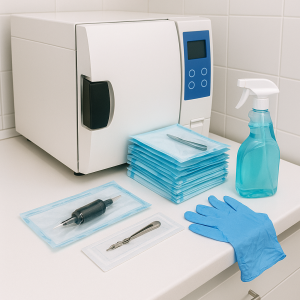 Sterilization 2026: Setting the Gold Standard in Your StudioReviewing a studio's sterilization arrangements means checking an established, documented process with a qualified person. A clean-looking instrument or a completed…