Do You Need a Piercing License in the United States?
Before offering body piercing, confirm the requirements for your exact procedures and location. This guide helps you separate course certification, practitioner requirements and premises approval, and organize the questions to ask before taking clients.
Use this as a research checklist for a fixed studio, home business or event proposal. It is not a determination that a particular person or premises is licensed, and completing a course does not settle every operating requirement.
Table of Contents
Choose a section to find the information you need.
- Overview: What “Piercing License in United States” Means
- State & Local Regulations — Why They Differ
- Common Licensing & Permit Requirements
- Health, Safety & Best Practices
- Common Mistakes That Lead to Enforcement
- Training, Certification & How Skinart United States Helps
- Exemptions, Special Cases & Mobile Services
- Questions for Your Proposed Location
- Frequently Asked Questions
- Final Thoughts & Next Steps
Overview: What a Piercing License in United States Actually Means
Start by separating three questions: what training evidence you need, what permissions apply to you as a practitioner, and what approvals apply to the premises or business. A course certificate documents training; it should not be confused with a government-issued permission to operate.
Describe the exact activity and address when contacting the responsible authority. Ask it to identify the applicable rules, application process and inspection requirements, including anything handled by a different department.
Check the requirements for the specific services and premises you plan to use. Keep a record of the authority’s guidance, required training evidence and any questions awaiting confirmation.
Why State & Local Regulations Differ
Check both state and local sources for the proposed location. The Texas example below shows why reading only one level of guidance may leave important local conditions unresolved.
When comparing requirements for two locations, keep separate records for:
- Practitioner requirements: the training evidence, eligibility conditions and approvals that apply to the person carrying out the work.
- Premises requirements: the permissions, inspection conditions and operating arrangements that apply to the proposed studio or event address.
For a concrete example, Texas DSHS states that businesses performing body piercing other than earlobe piercing must be licensed by the department. It also notes that some cities have stricter local ordinances or prohibit the activity. This example is specific to Texas; confirm the rules for your actual location and procedure.
When considering a job or relocation, send the proposed services and address to the responsible authority. Ask which existing documents remain relevant and what must be obtained or updated for the new location.
Common Licensing, Permit & Record-Keeping Requirements
Use the following topics to organize questions for the authority responsible for your proposed work. This is not a complete application checklist, and satisfying these topics alone does not establish compliance.
Ask which documents and arrangements apply to your proposal:
- Business registration or local business license
- The applicable body-art establishment permit or registration and the authority that issues it
- Bloodborne pathogen training: ask which course, evidence and renewal arrangements are required
- Client age restrictions, identification and consent requirements, including any procedures prohibited for minors
- Proper sharps disposal and written waste handling protocols
- Infection control policies and sterile processing procedures
- Required staff training and occupational-health documentation, with arrangements for keeping personal information secure
- Required inspections, approval conditions and records to retain
Ask separately about practitioner eligibility, age and consent rules, and any restrictions on the procedures you intend to offer. Record the answers in a checklist built from the current requirements for your location.
Compare the required training evidence with the published piercing syllabus. Ask the training team about course documents and assessment, and ask the authority whether that evidence meets its requirements.
Health, Safety & Best Practices
Licensing and infection-control requirements need separate attention. Do not assume that meeting hygiene expectations excuses a missing license, or that a license proves every operating requirement has been met. Request the applicable inspection criteria and resolve each requirement before opening.
- Requirements for sterile instruments and jewelry, including which items must be single-use
- Required protective equipment and staff training in its use
- The approved process and records for any reusable instruments
- Cleaning procedures and schedules for the proposed premises
- Required consent documents and aftercare information
- Required client records and arrangements for protecting confidential information
- Sharps and waste storage, collection and disposal requirements
- Required notices, age checks and identification records
Use the responsible state or local authority’s current guidance for licensing and inspection questions. Keep the source, date and response with your business records. Compare required training evidence with the actual course information rather than assuming a general article establishes acceptance.
Common Mistakes Practitioners Make (and How to Avoid Them)
- Failing to register with the local health department or misunderstanding whether a permit is required.
- Inadequate or missing written client consent and age verification.
- Poor sterilization practices or reuse of single-use items.
- Improper sharps disposal and no waste-handling documentation.
- Missing training records or evidence required by the responsible authority.
- Not having a written infectious disease exposure plan or post-exposure procedures.
- Operating from a location that does not meet building or zoning codes for body art services.
- Treating a training certificate or an approval for one location as permission to work at every location.
Review your records and operating arrangements against the actual requirements, including renewal dates and any inspection conditions. Do not assume an omission is minor or that a general checklist prevents enforcement.
Check the current course information for included learning materials. Any example form or template needs to be reviewed for your actual services and local requirements; it should not be described as automatically inspection-ready.
Training, Certification & How Skinart United States Helps
Ask the intended workplace and relevant local authority what evidence of training and practical competence they require. Provide the actual course information and assessment details; a general accreditation statement does not answer every question about a specific role or location.
Use the Skinart online piercing course page to review the syllabus and assessment before enrolling. Ask the relevant local health department to confirm whether that training meets its requirements and whether additional supervised experience, safety training or permits are needed.
Exemptions, Special Cases & Mobile Services
If you think an exemption applies, ask the responsible authority to identify the provision and confirm how it applies to the proposed activity. Do not assume a private, cultural, educational or nonprofit setting removes licensing or safety obligations.
For an event or mobile proposal, describe the exact location, procedures and facilities to the responsible authority. Ask whether the activity is allowed and which approvals, inspections and operating arrangements are required. Check insurance for that setting separately.
Keep the authority’s response and any applicable conditions with your plan. Resolve questions before advertising or accepting bookings for a setting that has not been confirmed.
Questions for Your Proposed Location
Before relying on a course for a particular purpose, send its details to the organization that will review your training. Ask what additional documents or practical experience it expects.
- For a fixed studio, describe the intended services and premises to the responsible authority. Ask which approvals and supporting documents apply before committing to the setup.
- For an event or mobile proposal, ask about that exact arrangement separately. Do not assume a course certificate or an event vendor permit authorizes body-piercing services.
Keep written responses and the documents supplied together. Follow up on unresolved requirements before committing to premises or offering services.
Review the current course page for the learning format, equipment arrangements and support offered in the United States. Confirm any additional practical preparation needed separately; course marketing cannot establish approval for a studio or mobile service.
Frequently Asked Questions
Below are common questions people searching for “Do You Need a Piercing License in the United States?” ask. Answers are concise and geared to help you take practical next steps.
Q: Do I need a piercing license in my state? The correct approach is to contact your state health department or the county/city environmental health unit. Many local health department websites include body art permitting guides and application forms.
Q: How often do I need to renew permits? Check the renewal date and conditions on the actual permit and the issuing authority’s current instructions. Record deadlines, fees and any training updates needed instead of assuming a standard renewal period.
Q: Will Skinart United States provide equipment or in-person mentorship? The US course is offered online and equipment is arranged separately. Check the current course page for included materials and support, and clarify any additional supervised practical experience you need to arrange.
Final Thoughts: Taking the Next Step with Confidence
Keep a dated record of the official guidance, documents submitted, approvals received and questions still unresolved. Review it before opening, relocating or adding a new service. Use the course information below to assess training needs separately from operating permissions.
Use the online piercing course information to compare learning topics with your training needs. Confirm practical assessment, course documents and support before enrolling, and check regulatory acceptance with the responsible authority.
Ready to Get Started?
Review the Skinart online piercing course below for current learning options and contact the team with questions about the syllabus and assessment.
Recent Blog Posts
 Choose your next learning goal with evidenceA long list of courses can make progress feel harder to define. Start with a specific task you want to understand…
 Avoid These Consultation Mistakes in 2026A good consultation leaves the client and artist with the same understanding of the proposed work, its limits and the next…
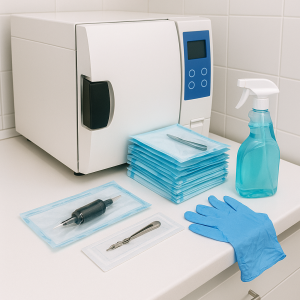 Sterilization 2026: Setting the Gold Standard in Your StudioReviewing a studio's sterilization arrangements means checking an established, documented process with a qualified person. A clean-looking instrument or a completed…