Piercing Side Hustle: How to Start Legally
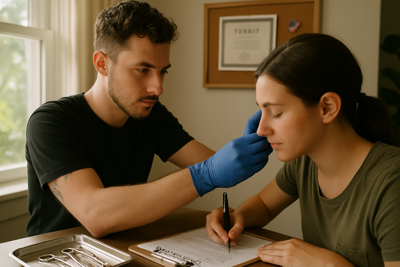
Considering part-time piercing work? Start by checking the training, practical preparation, premises requirements and costs for your intended service. A smaller schedule does not remove those responsibilities, and extra income is not guaranteed.
Start with a specific proposal: the procedures you want to offer, the premises you would use and the hours you can sustain. Resolve those questions before buying equipment or advertising appointments. A home room, event stall or shared beauty space should not be assumed suitable for piercing.
Table of Contents
Use the links below to jump to the section you need. We recommend bookmarking this page or using the search-friendly anchors to get quick answers.
- Legal basics for a Piercing Side Hustle
- Benefits and drawbacks of a piercing side hustle
- Training, certification, and accreditation
- Equipment, supplies and workspace setup
- Common mistakes new piercers make
- Insurance, permits and recordkeeping
- Marketing, pricing and building your client list
- Scaling beyond a side hustle
- FAQ
- Final thoughts & next steps
Legal basics for a Piercing Side Hustle
Write down the exact address and services in your proposal. Ask the relevant local authority which practitioner and premises requirements apply, and whether the proposed arrangement can be approved. Keep the response with your planning records.
Do not assume that a general business permit, beauty qualification or permission from a venue owner authorizes piercing. Ask specifically about the procedures, premises and any proposed temporary work before committing to rent or event fees.
Separate training evidence from workplace responsibilities. Ask which bloodborne-pathogen training is accepted for your proposed work and what exposure-control arrangements are required. If you will employ anyone, check the applicable employer obligations as well.
Benefits and drawbacks of a piercing side hustle
Compare the actual work arrangement before treating piercing as a side income. Include preparation, client communication, records, follow-up and recurring costs in the time and budget available. Part-time work is not necessarily cheaper to establish.
- Potential advantages: a smaller appointment schedule may fit other commitments, and working within an established studio may provide a setting in which to discuss supervision and shared responsibilities. Neither arrangement guarantees clients or profit.
- Potential drawbacks: recurring costs continue between appointments, suitable premises may be difficult to secure, and client communication and follow-up take time outside booked sessions.
Compare a proposed studio arrangement with your available hours and total costs. Establish who is responsible for equipment, supplies, records, cleaning, waste collection and client follow-up before agreeing to a room or commission arrangement.
Ask prospective studios or event organizers which credentials, approvals and insurance evidence they require. Compare those requirements with the course you are considering instead of assuming an accreditation label secures acceptance.
Training, certification, and accreditation
Compare training by its syllabus, practical preparation, assessment and support. Ask how the learning relates to the services you intend to offer and what further supervised experience may be needed. An accreditation label alone does not answer those questions.
Review the current online piercing syllabus and ask how assigned practical work is assessed. Course completion does not itself establish permission to operate or readiness for every procedure.
Confirm the training and documentation required for your intended work with the relevant authority. Consult OSHA’s bloodborne pathogens overview for occupational exposure-control information. The CDC infection-control resources for healthcare providers provide further background; they are not a substitute for local body-art requirements.
- Compare the course syllabus and practical assessment with your learning needs and any required evidence.
- Obtain Bloodborne Pathogens certification
- Practice sterile technique and client consultation
- Understand state and local licensing requirements
- Create and use written consent & aftercare forms
- Set up a compliant sharps & biohazard disposal plan
- Keep client records and incident logs
- Record any ongoing training or renewal requirements that apply to your intended role
Equipment, supplies and workspace setup
- Disposable needles/clamps where required
- Autoclave or certified single-use systems (where mandated)
- Sharps containers and biohazard bags
- Medical-grade antiseptics and sterile wipes
- Gloves (nitrile) and barrier films
- Cleanable treatment surface and disposable covers
- Aftercare wipes, written aftercare instructions
- Informed-consent and client record forms
Build a purchasing list only after the intended premises, procedures and practical training requirements are clear. Obtain current supplier specifications and ask your trainer to review uncertain items before purchase. A generic shopping list is not evidence that a setup is ready for clients.
Have the proposed workspace and equipment processes reviewed against the requirements for that location. Include handwashing, storage, treatment space, cleaning and waste arrangements in that discussion. A small room is not automatically a suitable treatment space.
Common mistakes new piercers make
Check the following planning gaps before committing to equipment, premises or an event. They are questions to resolve, not a guarantee that the proposed operation will be approved.
- Choosing training without checking its syllabus, assessment and practical requirements
- Operating without documented BBP certification
- Assuming home-based piercing is legal without checking local codes
- Not having a dedicated sharps disposal plan
- Poor recordkeeping or missing informed-consent forms
- Underinsuring or lacking professional liability coverage
- Buying supplies without verifying their intended use and documentation
- Failing to establish a cancellation/refund and emergency policy
Use these questions to identify unresolved decisions, then assign an action and a responsible person to each. Completing a course or copying another studio’s checklist does not resolve every premises, insurance or practical-readiness question.
Confirm the requirements for the intended service and location before accepting clients. Ask what records, training evidence and premises approvals are required rather than relying on a generic side-business checklist.
Insurance, permits and recordkeeping
Insurance is non-negotiable for many event organisers and business partners. Professional liability insurance (sometimes called malpractice insurance) and general liability are common requirements. Even if you’re operating a low-cost Piercing Side Hustle, an incident can result in significant costs that insurance helps mitigate.
- Ask about professional liability cover for the exact piercing services you intend to offer
- Ask about public or general liability for the proposed premises and work arrangement
- Confirm whether any temporary event work is included or excluded
- Workers’ compensation if you hire part-time assistants (state dependent)
- Check the training and approval evidence requested for the specific venue
- Documentation of sterilisation logs, autoclave spore test records (if applicable)
- Client records, informed consent forms, and incident reports
- Written aftercare and follow-up logs
Ask each authority, venue and insurer for its actual documentation requirements. Decide how records will be stored, who can access them and how client information will be protected. Collect information for a defined purpose rather than copying an oversized intake form.
Tip: contact your local health department early in your planning process. They can tell you whether your proposed operation is classed as a “commercial” activity requiring inspections, or if a limited mobile permit exists. This local intel prevents surprises and helps you present a clean application when requesting event permits or studio sharing agreements.
Marketing, pricing and building your client list
Advertise only the services and appointments you are ready and authorized to provide. Show your actual work with permission, describe your experience accurately and explain how clients can contact you after an appointment. Do not imply that a course certificate guarantees results.
Estimate the full cost of an appointment: supplies and jewelry, premises charges, recurring expenses, preparation, records and follow-up time. Compare the result with the price you plan to charge. Empty appointment slots and cancellations also affect the amount left after costs.
Practical marketing tactics for a Piercing Side Hustle:
- Create a clear service page describing your actual experience and booking arrangements
- List your services, transparent pricing, and aftercare information
- Use local Facebook groups and Instagram with geo-tags and local hashtags
- Collect and display client testimonials (with permission)
- Discuss referrals with suitable local businesses without assuming their premises can host piercing
- Offer limited “introductory” slots to build momentum with clear terms
- Use appointment software to maintain records and confirmations
- Maintain a professional cancellation and refund policy
Scaling beyond a side hustle
Before adding appointments, review the time spent on preparation, appointments, records and follow-up. Check whether revenue after expenses justifies the additional hours. Resolve capacity problems before taking deposits for more bookings.
Document the operating arrangements required for your proposed service, including client records, equipment processes and staff responsibilities. Ask the intended studio or venue what it needs before assuming course completion will secure a space or event booking.
Recheck premises arrangements, insurance and applicable requirements before changing location, services or staffing. Discuss business records and tax questions with an accountant using your actual activity and income figures.
Frequently asked questions
Below are common questions people searching for “Piercing Side Hustle” ask. Each answer is concise and designed to help you move forward legally and safely.
- Do I need a licence for part-time piercing? Ask the relevant authority about your exact location and procedures. A part-time schedule does not establish an exemption, and a general beauty or business credential should not be treated as permission to pierce.
- Which BBP course should I choose? Confirm the accepted training and evidence with the authority, intended studio or employer before enrolling. Also ask what workplace procedures and further practical preparation are needed.
- Can I pierce clients from home? Do not take bookings on that assumption. Get a clear answer about the proposed address and services from the relevant authority, and confirm the insurance and premises arrangements.
- Should I buy a kit before choosing training? Check the current course requirements first. Request an itemized list and clarify what is included, what you must source and which purchases should wait until practical instruction.
- What should I ask an insurer? Describe the procedures, premises, qualifications and work arrangement accurately. Ask what is covered, what is excluded and whether any conditions must be met before taking clients.
Keep a simple decision log: the question, who answered it, the date, any written evidence and the next action. Revisit unresolved items before committing to costs.
Final thoughts & next steps
Treat part-time piercing as a service that needs appropriate practical preparation and operating arrangements. Confirm the requirements for your location, estimate costs and resolve supervision and insurance questions before accepting bookings.
Use the current course page to compare the syllabus, assessment and support with your plans. Ask the training team about gaps before enrolling; no course is automatically the fastest route to permission to work.
Make the next decision from verified information: the learning required, the permitted work arrangement and a realistic budget. Review your plan as those facts become clear rather than assuming a sustainable income from the outset.
Recent Blog Posts
 Choose your next learning goal with evidenceA long list of courses can make progress feel harder to define. Start with a specific task you want to understand…
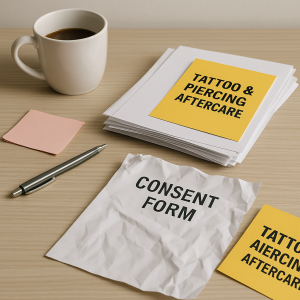 Avoid These Consultation Mistakes in 2026A good consultation leaves the client and artist with the same understanding of the proposed work, its limits and the next…
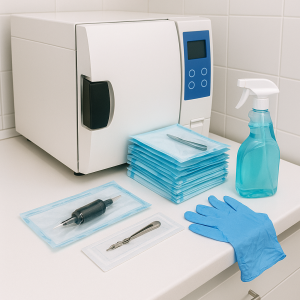 Sterilization 2026: Setting the Gold Standard in Your StudioReviewing a studio's sterilization arrangements means checking an established, documented process with a qualified person. A clean-looking instrument or a completed…