How to Learn Microblading from Home (Beginner’s Guide)
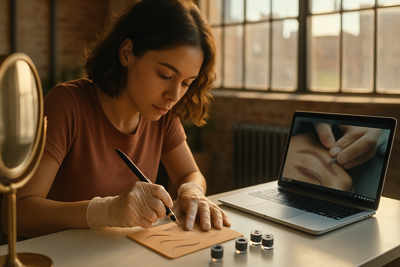
Home study can help you organize microblading theory, demonstrations and assigned exercises around other commitments. This guide explains how to plan that study and record feedback, while keeping online learning separate from readiness or permission to work with clients.
Table of Contents
- What microblading is and why it’s suited to home learning
- Can you realistically learn microblading from home?
- Tools, learning resources and what Skinart provides
- A staged study plan to organize learning
- Common mistakes new home learners make
- Legal, sanitation and safety requirements in the U.S.
- Course accreditation, certification and next steps
- Planning Your Home Study
- Frequently asked questions
- Final thoughts and how to get started
Choose a section to find the information you need.
What microblading is and why it’s suited to home learning
Microblading uses a handheld tool to create pigment strokes resembling eyebrow hairs. Reading about the technique and practising drawing at home are different from developing assessed practical ability. Compare the course requirements with the support and supervision you will need.
Learning at home means you can pace practice sessions, focus on specific drawing and shading drills, and repeatedly review step-by-step video demonstrations. For many United States learners, this flexibility is what makes remote training attractive: you can balance client bookings, family commitments, or existing salon work while building expertise.
Ask how the course reviews assigned work, how questions are answered and which activities require separate supervision. Remote feedback should not be assumed equivalent to an instructor physically supervising a procedure.
Can you realistically learn microblading from home?
Start by comparing the actual assignments and assessment requirements. Confirm which activities can be completed at home and what further arrangements are needed. A certificate or access to demonstrations does not independently establish practical readiness.
- Pros: Flexible scheduling, lower upfront travel costs, repeatable video lessons and demonstrations.
- Check: equipment costs, submission requirements, feedback arrangements and any separately required practical supervision.
Confirm which lessons, demonstrations and review opportunities are included in the selected option. Do not assume there are live tutor sessions, individual video reviews or local placements unless those arrangements are confirmed.
Request the current equipment requirements before buying microblading supplies. Confirm what your selected option includes and which items you need for the first exercises. Ask about any equipment you already own rather than assuming it is compatible with the assigned work.
Tools, learning resources and what Skinart provides
Build a study setup around the first assigned activity. Keep the lesson instructions, required materials and a place to record questions together. Obtain the equipment list before purchasing tools for later practical exercises.
The following are equipment and resource topics to discuss with the training team, not a universal shopping list. Confirm the items needed for your actual assignments.
- Practice synthetic skins (various densities) for hair-stroke practice
- Microblading or manual hand tool (various blade configurations)
- Pigments suitable for cosmetically applied semi-permanent makeup—buy only from reputable U.S. distributors
- Disposable microblading blades, needles or cartridges where applicable
- Medical-grade gloves (nitrile), single-use applicators and disinfectants
- Measuring tools and eyebrow mapping strings/rulers
- High-quality magnification mirror and good LED task lighting
- Client consultation forms, consent forms, and aftercare instruction templates (digital)
- Camera or smartphone with a reliable macro lens and lighting for submitting photos to tutors
Use the course’s assigned infection-prevention resources and clarify unfamiliar instructions before practical work. Questions about offering services at a particular address should go to the relevant authority; general healthcare guidance is not permission to provide microblading.
A staged study plan to organize learning
Use the stages below to organize your study. They are not a fixed course timetable or a deadline for practical readiness. Follow the actual assignments and move forward based on feedback and assessment, rather than a calendar.
Start: read the lesson objectives and practise assigned design tasks on paper. Record the questions you want clarified.
Prepare: confirm the required materials and instructions before any practical exercise. Do not infer depth or technique from an unreviewed attempt.
- Study: organize color-theory questions by lesson and ask for clarification where examples are unclear.
- Review: submit only the evidence requested for an assigned exercise. Do not recruit a friend or model as a substitute for a practice assignment or appropriate supervision.
- Communicate: practise explaining a course concept in plain language and note what you cannot yet explain clearly.
- Plan: list further learning, equipment and operating questions separately from the current study task.
- Assess: follow the provider’s actual submission and completion requirements, including revisions.
- Revisit: keep earlier attempts and feedback so you can explain what changed and what still needs attention.
Ask your tutor how progression is assessed and what the next assigned activity should be. Completing a study schedule does not establish readiness for clients, and photographs alone should not be treated as live supervision.
Common mistakes new home learners make
- Rushing into live clients without sufficient tutor-assessed practice.
- Using incorrect pigment dilutions or products not suited to brow skin tones.
- Poor lighting and inadequate photo documentation that prevents meaningful feedback.
- Ignoring mapping and symmetry fundamentals — resulting in uneven brows.
- Improper sterilisation or cross-contamination risk due to lack of infection-control knowledge.
- Relying solely on free online videos rather than structured, accredited training.
- Not budgeting for consumables and proper disposables in the U.S. market.
- Skipping business and legal modules, leading to licensing or insurance gaps.
Use these points to identify questions and gaps in your preparation. Training and feedback can help you address them, but no course can promise that mistakes or complications will never occur.
Identify the authority responsible for microblading at the proposed work address. Ask about the intended procedures, premises and accepted training evidence before committing to a business arrangement.
Legal, sanitation and safety requirements in the U.S.
Keep study arrangements separate from a future service. Before any client work, resolve the applicable requirements, appropriate supervision and insurance for that activity. Unpaid or discounted work should not be treated as an exemption.
Ask the relevant authority or intended workplace which bloodborne-pathogen training it accepts and whether separate evidence is needed. Keep the answer with your course research.
- Complete an approved Bloodborne Pathogens (BBP) or Bloodborne Pathogen Control course recognized in your state.
- Maintain client consent forms and photographic records for all procedures.
- Use single-use disposables where required and follow local sharps disposal regulations.
- Ensure your workspace meets any municipal inspection standards for sanitation.
- Check whether your city or state requires a specific license or registration for cosmetic tattooing.
- Carry appropriate professional indemnity and public liability insurance when working with clients.
- Follow manufacturer guidance for pigments and products sold in the United States.
- Understand aftercare responsibilities and provide written aftercare instructions to every client.
Before offering services, explain your intended procedures and working location to the relevant authority and ask what requirements apply. Studying at home and operating a home-based business are separate decisions.
Course accreditation, certification and next steps
Ask for the current course assessment requirements and accreditation details. If you need a qualification accepted by a particular employer, authority or insurer, send that recipient the actual syllabus and assessment information and confirm its requirements before enrolling.
Questions to resolve before planning client work:
- Confirm local licensing or registration requirements with your city or county health department.
- Register your business if you plan to operate as a sole trader or LLC.
- Obtain appropriate insurance for cosmetic tattooing services in your state.
- Start gaining supervised client experience, ideally under mentorship or in a salon setting if permitted.
- Continue CPD (continuing professional development) — attend workshops or advanced shading modules.
Confirm the practical arrangements for the US online course and any additional supervised experience you need to arrange separately. Ask what the course assesses and what evidence further training recipients may require.
Planning Your Home Study
Plan home study around the course assignments, available feedback and practical requirements. Ask which activities need supervision and what you must arrange separately. Keep your study plan distinct from any future business plans; course completion does not promise a profitable service or a full appointment book.
Points to discuss with your instructor:
- Ask which activities require in-person supervision; friends and family are not a shortcut to that arrangement.
- Keep the evidence requested for each assigned exercise, accurately labeled and separate from a public portfolio.
- Check the submission instructions before buying camera accessories; ask what image detail and lighting are needed.
- Join local professional associations and online communities to exchange tips and supplier recommendations.
Use your study plan to identify the theory, supervised practice and assessment you still need. Confirm the requirements for your proposed location separately; studying at home does not establish permission to offer services from home.
Advanced learning, specialization and continuing education
If a specialist subject interests you, ask about its prerequisites and whether it is included in the current course or taught separately. Do not assume additional training automatically expands the services you are ready or authorized to provide.
Check any ongoing training or renewal requirements with the organization that sets them. Do not assume that accumulating CPD points automatically keeps insurance or registration valid.
Ask the team which further learning options are currently available, what they cover and what experience is required before enrolling.
Frequently asked questions
Can I really learn microblading from home and work legally in my state?
Studying online and being authorized to offer services are separate matters. Check the course’s practical requirements and the requirements for the intended location before planning client work.
How long does it take to become competent?
Use a study schedule to organize assignments, then review your progress with your instructor. Time spent studying does not establish practical competence. Ask what evidence and assessment are required before moving to the next stage.
Do you provide equipment and supplies in the United States?
Confirm the equipment and consumables included in your selected purchase option with the training team. If items must be sourced separately, request the required specifications and check manufacturer and supplier information before buying.
Will an online certificate be recognised for licensing?
Ask for the certificate issued for your selected course and check the current scope of any accreditation claim. If a local authority, insurer or employer requires particular training evidence, ask that organization what it accepts before enrolling.
How much practice should I do each week?
Set a study schedule you can sustain, with time for questions, feedback and revisions. Ask about assignment requirements and review arrangements rather than relying on a universal weekly practice target.
Final thoughts: Your first steps to become a confident microblading artist
A useful home-study routine produces a clear record of lessons, assigned exercises, feedback and unresolved questions. Use that record to discuss the next step with your tutor.
Compare the current online course with your learning goals, available study time and practical-support needs. Resolve questions about assessment and equipment before purchasing.
Ready to Learn Microblading from Home?
Explore the current course details and send the team your outstanding questions before selecting an option.
Latest Blog Posts
 Choose your next learning goal with evidenceA long list of courses can make progress feel harder to define. Start with a specific task you want to understand…
 Avoid These Consultation Mistakes in 2026A good consultation leaves the client and artist with the same understanding of the proposed work, its limits and the next…
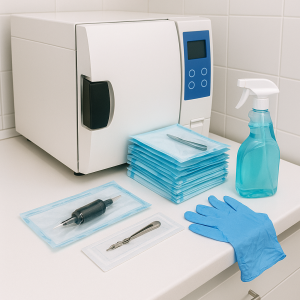 Sterilization 2026: Setting the Gold Standard in Your StudioReviewing a studio's sterilization arrangements means checking an established, documented process with a qualified person. A clean-looking instrument or a completed…