Permanent Makeup Courses in the United States: Start Your Career Today
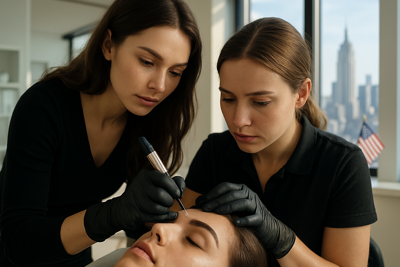
Compare permanent makeup courses in the United States by the subjects taught, practical assessment and support available. This guide introduces questions about online PMU training, certification and preparation for your intended work, so you can review a course against your own learning needs.
Permanent makeup training can cover different subjects, including brows, eyeliner and lip work. Compare the exact syllabus with the services you want to study. Do not assume that a general PMU course includes every specialist application or that completing it guarantees employment.
Table of Contents
Choose a section to find the information you need.
Jump to:
What is Permanent Makeup?
Permanent makeup is cosmetic tattooing used to create effects such as defined brows, eyeliner or lip color. Course scope varies. Check the actual lesson list rather than assuming microblading, scar work or areola micropigmentation is included in a general PMU course.
Compare how the course covers design, color, infection prevention, consultation and aftercare communication. Ask how assigned practical work is reviewed and what additional supervised experience may be required for the work you intend to offer.
Describe your starting experience to the training team. A beauty background and a complete beginner’s background may raise different learning needs; neither should be treated as evidence of readiness for PMU without appropriate assessment.
Benefits and Considerations of Accredited Training
Check any accreditation claim with the named organization and confirm which course and period it covers. If an employer, insurer or authority needs to accept your training, send that recipient the actual syllabus and assessment details before purchasing.
- Compare: course subjects, access duration, assigned practice, feedback, assessment and total cost.
- Plan: time for study and revisions, equipment purchases and any separately arranged supervised experience.
Course completion, accreditation, insurance and permission to provide services are separate questions. Obtain confirmation from the organization making each decision rather than assuming one certificate resolves all of them.
Review the current Skinart US online PMU course and the selected purchase option. Confirm what equipment, assessment and support are included, and what practical preparation must be arranged separately.
What You Will Learn in a Permanent Makeup Course
Use the lesson list to identify the subjects you want to study. Ask which exercises are assigned, what materials they require and how feedback is provided. Follow the course’s actual sequence rather than a generic roadmap.
Before enrolling, request the assessment criteria and clarify how corrections or resubmissions work. Ask who reviews assigned work and how to raise questions about feedback.
Use the topics below as questions when comparing courses. This is not a promise that every listed subject is included or that completing it establishes readiness to offer that service.
- Which anatomy and design topics are included?
- How are color theory and pigment questions taught?
- Is microblading part of this option or a separate course?
- Which machine-brow techniques are covered?
- Does the selected course cover eyeliner, and what prerequisites apply?
- Which lip topics and exercises are included?
- Are specialist scar or areola topics included, excluded or taught separately?
- How are infection-prevention concepts assessed?
- What consultation and documentation learning materials are supplied?
- How are aftercare communication and referral boundaries covered?
- Which business topics are included?
- What practical evidence is required, and what further experience may be needed?
Common Mistakes New PMU Artists Make
- Rushing the mapping stage — poor pre-drawing leads to unhappy clients.
- Using incorrect pigment tones for the client’s skin tone.
- Continuing an exercise without understanding the tutor’s correction
- Inadequate sanitation and cross-contamination risk.
- Not managing client expectations during consultation.
- Poor documentation and consent processes.
- Insufficient aftercare instructions or follow-up.
- Ignoring local regulations or forgetting to obtain the right insurance.
- Overpromising results or using misleading before/after imagery.
- Skipping continuing education and updates in technique or safety.
Use these issues to prepare questions for a tutor or supervisor. A checklist does not replace practical instruction, assessment or the arrangements required before working with clients.
Keep a learning record of the exercise, submitted evidence, feedback and next action. Describe practice work accurately and do not use edited photographs to imply results or experience you have not achieved.
Certification & Legal Requirements in the United States
Check the requirements for your intended procedures and premises before committing to training or workspace costs. Ask the relevant authority which practitioner, premises and training evidence it requires.
Ask how the selected course covers bloodborne-pathogen awareness and infection prevention, and whether any separately required training must be obtained elsewhere. A general healthcare resource does not establish local permission to provide PMU.
Keep the authority’s response with your course research. Confirm insurance conditions separately and resolve practical-experience requirements before accepting clients; do not wait until after certification to discover what evidence is needed.
- Keep the actual syllabus, assessment records and certificate details together
- Complete any state-required blood-borne pathogen (BBP) training
- Register with your local health department if required
- Maintain up-to-date insurance (public liability and professional indemnity)
- Follow local waste disposal regulations for sharps and contaminated materials
- Keep client records with consent, medical history and photos
Equipment, Supplies & Our Policy
Request the current equipment list and selected-option inclusions before buying supplies. Check when each item is needed for assigned work and ask about substitutions before using equipment you already own.
Compare the exact product specification and manufacturer instructions with the training requirements. A generic marketing label is not enough to establish that an item is suitable for a particular exercise or service.
Topics to resolve with the equipment list and training team include:
- Disposable needles/cartridges compatible with your PMU machine
- PMU machine (rotary or cartridge-based) from a reputable dealer
- Pigments and compatible supplies specified for the assigned exercise
- Medical-grade gloves, masks and protective eyewear
- Antiseptic cleansers and skin prep solutions
- Sharps containers and clinical waste disposal service
- Resources used to teach client-care communication
- Professional lighting, magnification and hygiene station setup
- Client record forms, consent documentation and aftercare printouts
How to Enrol & Course Structure
Use the current WooCommerce course page to review the purchase options and checkout details. Before purchasing, clarify access duration, assessment, tutor contact and any practical learning you need to arrange separately.
Compare the published syllabus, demonstrations and actual assessment requirements before enrolling. Ask how feedback works and which practical activities you must arrange separately. Do not assume that local supervised practice or a particular sign-off is included in an online course.
Compare the selected option using the questions below. Keep the answers with the current syllabus so you can plan the time and costs involved without assuming additional resources or services are included.
- How long can you access the lessons?
- Which demonstrations and downloadable resources are available?
- What assignments and evidence must you submit?
- Who reviews submissions, and how are revisions handled?
- Which certificate is issued after the requirements are met?
- Which business or portfolio topics are included?
- What additional practical preparation must you arrange separately?
Frequently Asked Questions
Q: What does an online Permanent Makeup Course in the United States cover?
Compare the current lesson list with the subjects you want to study, such as brows, lips or eyeliner. Ask about assigned exercises and assessment; a broad course title does not establish the inclusion of every technique.
Q: Will this course let me work legally in my state?
A course certificate does not itself authorize you to work. Confirm the requirements for your intended procedures and premises with the relevant authority before enrolling or planning appointments.
Q: Do you provide equipment and in-person practicals in the United States?
Check the current selected-option details for equipment and practical arrangements. Ask what is supplied and what you must arrange separately; do not assume a local placement is included.
Q: How long does it take to complete the online PMU course?
Plan around the actual lesson, practice and assessment requirements, including feedback and revisions. Confirm access periods and review arrangements before setting a completion target. A fixed number of weeks is not a reliable promise.
Final Thoughts — Your Next Step in PMU
Evaluate PMU training against your interests, available study time, practical-learning opportunities and budget. Course completion does not guarantee bookings, employment or a particular income.
Start with the current course page and a list of unanswered questions. Clear information about assessment, equipment and practical arrangements helps you decide whether the selected option fits your plans.
Compare the course details, resolve outstanding questions with the team and choose the next step from that information.