Permanent Makeup Certification & Insurance in United States
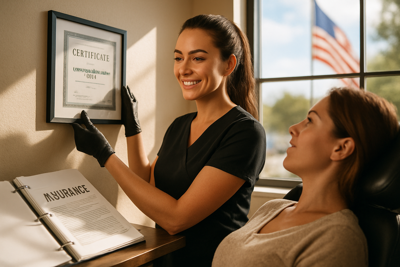
Whether you’re launching a new permanent makeup (PMU) business or expanding an existing beauty service in the United States, understanding Permanent Makeup Certification & Insurance in United States is essential. From state licensing nuances to the right insurance coverage, a clear path to compliance protects you, your clients and your livelihood.
This guide breaks down what to expect, common legal and practical pitfalls, and how Skinart United States’ accredited online Permanent Makeup course prepares you to obtain the qualifications and documentation many insurers and regulators want to see. It’s written with practical advice and real U.S. examples to empower you to set up a safe, compliant, and thriving PMU practice.
Table of Contents
Use the links below to jump to the section you need. These semantic anchors also help search engines show “Jump to” links in search results.
- What is Permanent Makeup Certification?
- Insurance Basics for PMU Artists
- Legal & Regulatory Landscape by State
- Common Mistakes That Jeopardize Coverage
- How Skinart United States Helps
- Preparing for Certification & Insurance
- Licensing & Business Setup
- Frequently Asked Questions
- Final Thoughts & Next Steps
What is Permanent Makeup Certification?
Permanent Makeup certification demonstrates that a practitioner has completed a training program covering PMU techniques, safety protocols, sterilization, color theory, and client aftercare. For many clients and regulators, certification is evidence of competence. At the same time, insurers often require proof of accredited training before offering professional liability insurance.
In the United States the term “certification” can mean different things depending on the state and the insurer: it may be a course completion certificate, a local clinic registration, or a licensed clinician endorsement for certain procedures. That’s why understanding both the credential and the scope of practice where you operate is vital.
Skinart United States offers a CPD and BAQA-accredited online Permanent Makeup course created and taught by Gary Erskine. Our curriculum is designed so you can demonstrate a standard of practice that many insurers recognise—while providing the practical knowledge to run a client-safe PMU business in the United States.
Insurance Basics for PMU Artists
Insurance for PMU practitioners generally falls into a few categories: professional liability (malpractice), general liability, product liability, and property insurance for studio spaces. Professional liability is the most relevant when discussing Permanent Makeup Certification & Insurance in United States because it covers claims of negligence, poor outcomes, or allergic reactions related to PMU work.
Understanding the pros and cons of available policies helps you choose coverage that aligns with your risk profile and the state rules where you operate.
- Pros:
- Professional liability protects your income from client claims related to procedures.
- General liability covers accidents in your workspace (slips, trips, client injuries).
- A documented accredited certification can lower premiums and simplify underwriting.
- Cons:
- Policies differ drastically by insurer—some explicitly exclude PMU unless certain credentials are shown.
- Higher-risk procedures or inexperienced practitioners may face higher premiums.
- Claims may be denied if you cannot show completed accredited training or appropriate safety protocols.
To secure coverage, many insurers request evidence of accredited training, blood-borne pathogen (BBP) certification, and a documented aftercare and consent process. Skinart’s CPD and BAQA accreditation gives students strong documentation to present to insurers.
Pro-tip: always read policy exclusions carefully. Some insurers require a supervising clinician or medical director for certain services; others prohibit offering PMU in a home-based space. Confirm with the insurer in writing what is covered for PMU specifically.
Legal & Regulatory Landscape by State
There is no single federal license for permanent makeup in the United States. Regulation primarily occurs at a state or local level. This means requirements—such as whether PMU is classified under tattooing, cosmetology, esthetics, or medical practice—can vary. Many states require inks and pigment use be governed under tattoo statutes; others allow estheticians or cosmetologists to perform microblading or PMU under an expanded scope.
Because of this patchwork, the documentation you need for insurance and to operate legally changes depending on your location. Examples include:
- States that classify PMU as tattooing may require tattoo licensing, clinic inspections, and specific blood-borne pathogen training.
- Some states allow licensed cosmetologists or estheticians to offer PMU after additional training and registration.
- Local health departments may require separate facility permits or registration for skin-penetrating procedures.
- Medical oversight may be required if the procedure is considered invasive or performed on certain patient groups.
- Cities like New York and Los Angeles have additional municipal health codes that impact how PMU is performed and documented.
- Insurers often ask for clear confirmation of the practitioner’s allowable scope under state law.
- Continuing education standards differ—some states or insurers prefer evidence of ongoing accredited learning.
- Records retention and informed consent form requirements are commonly stipulated by local health departments and insurers.
Because of the complexity, it’s wise to contact your state health department or cosmetology board to confirm the exact classification and any registration required. The Centers for Disease Control and Prevention (CDC) also offers guidance on infection control for tattooing and body art that many local authorities reference.
Example: In Texas and Florida, PMU can fall under tattooing laws in some counties, which may require a tattoo establishment license. In other states such as Colorado, PMU may be allowed under the umbrella of esthetics with supplemental training. These distinctions directly affect the type of insurance an underwriter will extend to you.
Common Mistakes That Jeopardize Coverage
- Failing to get accredited training that insurers recognise.
- Not maintaining documented BBP (blood-borne pathogen) certification.
- Using unapproved pigments or devices that are excluded by policy language.
- Operating from an unpermitted location when a local license is required.
- Not keeping clear client records, consent forms, and before/after photos.
- Assuming a generic “beauty” policy covers PMU—many don’t.
- Failing to disclose prior claims or disciplinary actions when applying for insurance.
- Not renewing professional liability and leaving gaps in coverage.
Any of these errors can lead an insurer to decline a claim or cancel a policy. For example, if you purchase a policy that specifically excludes “tattooing” but your local authority classifies PMU as tattoo work, you could be left uninsured if a client files a claim. Always be explicit when communicating with an insurer about the exact procedures you offer.
To illustrate, a recent municipal spokesperson in a major U.S. city told Skinart, “Local licensing for skin-penetrating procedures was developed with safety and traceability in mind; accurate documentation is the quickest way for practitioners to demonstrate compliance.” That traceability is frequently what insurers check before providing coverage.
How Skinart United States Helps with Certification & Insurance
Skinart United States provides an accredited online Permanent Makeup course focused on the practical skills, safety standards, and documentation practices insurers and regulators expect to see. Our CPD and BAQA-accredited curriculum includes modules on infection control, color theory, consultation and consent, and incident documentation. This aligns directly with many underwriters’ requirements when offering PMU professional liability coverage.
Graduates receive an official certification that acts as formal evidence of training—useful for both applying for insurance and demonstrating professional standards to local authorities and clients. While we do not supply equipment or offer in-person training in the United States, our course thoroughly prepares you for practical application and compliance.
Practical benefits for students considering insurance:
- Accredited certificate to submit to insurers and local licensing bodies
- Clear documentation templates (consent forms, aftercare instructions, client records)
- BBP and infection-control content that supports safer practice
- Detailed modules on client consultation to reduce complaints and clarify expectations
- Access to tutor support from industry experts for questions about preparing files for insurers
- Emphasis on risk reduction to help lower claims likelihood
- Insurance-focused guidance on what underwriters will typically ask
- Examples of compliant client records and photographic documentation
Preparing for Certification & Insurance
Before you apply for insurance, take time to prepare a comprehensive file that clearly demonstrates your competence and risk management approach. Insurers look for consistent training, a commitment to safety, and evidence you manage client expectations.
Key items to assemble:
- Accredited course certificate (CPD/BAQA where applicable)
- Records of BBP and infection control training
- Clear consent and aftercare forms with client signatures
- Photographic portfolio showing before, during and after work (with client consent)
- Client medical history templates for screening contraindications
- Standard operating procedures for sterilization and waste disposal
- Incident reporting templates and examples of how you handled any complications
- Business registration documents if operating a formal studio
- Disclosure of any previous claims or disciplinary actions
Collecting these materials in advance streamlines the insurance application and strengthens your negotiating position when discussing coverage options. If your state requires additional registration or local permits, include those too.
Tip: Ask prospective insurers for a written confirmation that PMU is covered under the policy before you sign, and retain that document with your records.
Licensing & Business Setup for PMU in the United States
Starting a legal PMU practice involves more than certification and insurance. Business structure, studio setup, and client record-keeping are all part of the package. Many insurers will ask not only about your training but also about your business controls and where you perform procedures.
Elements to consider when setting up your PMU business:
- Choose a business structure (sole proprietor, LLC, S-Corp) and register with state authorities.
- Check zoning and local ordinances for home-based work—some cities prohibit skin-penetrating procedures in residential properties.
- Ensure your workspace complies with local health and safety codes; some areas require inspections for any establishment offering tattoo or PMU services.
- Maintain clear client medical history and consent records; many insurers require retention for a set period.
- Invest in proper sterilization and single-use supplies—insurers and local health departments expect appropriate infection control.
- Understand tax obligations including self-employment tax and sales tax where pigment sales or equipment rental exist.
- Consider separate business bank accounts and accounting software to track revenue and claims related to treatments.
- Plan a clear client aftercare program and document distribution—this helps reduce complaints and supports defenses against claims.
Local success story: a former Skinart student in North Carolina set up a licensed PMU studio after completing our online course and using our consent and record templates. With clean documentation and accredited training, they secured professional liability insurance and expanded their clientele through referrals from local aesthetic clinics.
Where relevant, consult an attorney or business advisor to ensure your contracts, waivers and business registration are correctly formed for your state.
Practical Risk Management Steps
Managing risk isn’t just about insurance—it’s about embedding safe practice into every client interaction. Good risk management reduces claims, lowers premiums and builds client trust.
- Follow the course infection-control protocols to the letter.
- Use clear, written consultations to set expectations and identify contraindications.
- Treat every client interaction as a potential legal record: date, sign, and store documents securely.
- Document your work with photos and notes of pigment mixing, device settings and aftercare given.
- Maintain a small incident log and report serious events to your insurer promptly.
- Engage in continuing professional development to stay current with techniques and safety expectations.
- When in doubt about a client’s suitability, refer to a medical professional.
- Keep contact details for local health department contacts and an attorney familiar with cosmetic practice law.
Insurers appreciate practitioners who proactively manage risk. Those who can quickly present evidence of protocols and records are more likely to receive favorable terms.
Industry Perspective
“Accredited training and rigorous documentation are the two things insurers and regulators look for first. Good records protect both the artist and the client.” — CPTP Representative
Including statements like this from industry bodies underscores the importance of training and proper record-keeping. Skinart United States integrates these expectations into the course so students can present a professional, well-documented portfolio to insurers and local authorities.
Gary teaches Skinart’s tattoo, piercing and body art courses. Review the course curriculum and lesson examples to understand the training offered.
Real U.S. Examples & Success Stories
Over the past five years Skinart alumni in the United States have used the accredited online PMU course to satisfy insurer requirements and successfully apply for professional liability coverage. One graduate in Seattle secured coverage after submitting a Skinart certificate alongside detailed consent and aftercare templates. Another student in Florida leveraged portfolio photos and BBP certification to obtain coverage for microblading and eyebrow shading in a shared studio.
These case studies show that while local rules differ, a combination of accredited training, clear documentation and communication with insurers produces better outcomes for practitioners seeking comprehensive coverage.
- Seattle: student used Skinart certificate + BBP to secure tailored professional liability.
- North Carolina: graduate opened licensed clinic after following local health board guidance and presenting documentation to underwriter.
- Florida: artist shifted from informal “beauty” policy to a PMU-inclusive policy after training and updating consent forms.
- Texas: student worked with local health inspector to confirm clinic compliance, then presented that confirmation to an insurer.
- California: practitioner used Skinart materials to standardize studio SOPs, reducing perceived risk and improving insurer terms.
- Colorado: student provided continuing education records when renewing policy to demonstrate up-to-date training.
- Arizona: salon owner added PMU to their business license and updated their insurer with the new procedures.
- New York: practitioner documented municipal registration and the insurer accepted this as proof of local compliance.
Frequently Asked Questions
Q: Do I need a state license to perform permanent makeup in the United States?
A: Licensing requirements vary by state and sometimes by municipality. Some areas treat PMU as tattooing and require a tattoo license; others permit it under cosmetology or esthetics scopes with extra training. Check your state’s board or local health department for exact rules and whether registration or inspection is necessary.
Q: Does Skinart United States provide the equipment or in-person training necessary to get insured?
A: Skinart United States provides an accredited online Permanent Makeup course and documentation to help you prepare for insurance and registration, but we do not supply PMU equipment nor offer in-person training in the United States. Our course materials and support focus on competence, safety, and record-keeping.
Q: Will completing the Skinart course guarantee I get insurance?
A: While completing an accredited course significantly improves your chances of obtaining insurance, it does not guarantee coverage. Insurers review multiple factors—such as state law, policy wording, claims history, and the nature of your practice—before issuing a policy. Accredited training is an important and often required component.
Q: What type of insurance should a PMU artist prioritize?
A: Professional liability (malpractice) coverage is typically the priority for PMU artists. General liability and property insurance for your studio are also important. Confirm that your policy explicitly includes PMU procedures and read exclusions carefully.
Q: How does documentation affect claims and premiums?
A: Clear client records, consent forms, incident reports, and evidence of accredited training all reduce the likelihood of a claim and make it easier to defend against one. Insurers may offer better premiums to practitioners who can demonstrate robust risk management and training.
Final Thoughts & Next Steps
Permanent Makeup Certification & Insurance in United States is a combined journey of training, documentation, and business planning. Accredited education such as the Skinart United States online Permanent Makeup course gives you the technical skills and paperwork that insurers and regulators expect. That reduces your risk and opens more professional opportunities.
If you’re serious about establishing a compliant and professional PMU practice in the United States, take one pragmatic step today: document your training and set up standardized client records. Those two actions alone will make you far more credible to insurers and local health authorities.
We’re here to help. Skinart United States combines industry experience, accredited teaching and practical templates to guide you from training to insured practice. When you’re ready to build both skills and confidence, our accredited online PMU course is the next step.