How to Learn Microblading from Home (Beginner’s Guide)
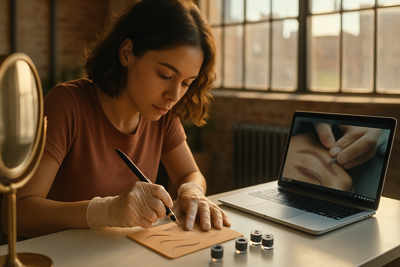
Learn Microblading from Home is an increasingly popular path for aspiring brow artists across the United States. This beginner’s guide explains the practical steps, safety standards, and learning strategies you need to start a successful microblading journey remotely. Whether you want to build a freelance service, work in salons, or add a sought-after skill to your portfolio, this article will walk you through the essential concepts and realistic expectations.
Written by Gary Erskine, 25 years in Learn Microblading from Home education — lead tutor and course developer at Skinart United States. I’ve trained thousands of students internationally and designed our online microblading course to give you accredited, practical learning you can complete from home in the U.S. In the sections below you’ll find step-by-step planning, safety and legal considerations, practice strategies, common mistakes, and a clear path to accreditation.
Table of Contents
- What microblading is and why it’s suited to home learning
- Can you realistically learn microblading from home?
- Tools, learning resources and what Skinart provides
- A 12-week practice plan to build skills
- Common mistakes new home learners make
- Legal, sanitation and safety requirements in the U.S.
- Course accreditation, certification and next steps
- U.S. success stories and local examples
- Frequently asked questions
- Final thoughts and how to get started
Tip: Use the anchor links above to jump to any section. Well-structured headings help Google show “Jump to” links in search results.
What microblading is and why it’s suited to home learning
Microblading is a semi-permanent cosmetic technique that uses fine manual strokes to implant pigment into the superficial layer of the skin, recreating natural-looking eyebrow hair. Because it relies heavily on hand control, artistic judgment, and repeatable technique rather than large, expensive machinery, microblading is especially well-suited to students who want to Learn Microblading from Home with a structured, accredited curriculum.
Learning at home means you can pace practice sessions, focus on specific drawing and shading drills, and repeatedly review step-by-step video demonstrations. For many United States learners, this flexibility is what makes remote training attractive: you can balance client bookings, family commitments, or existing salon work while building expertise.
That said, successful home learning depends on disciplined practice, proper safety education, and guided feedback — which is why an accredited online course with tutor assessments and clear safety modules is essential. Our Skinart Microblading Course for the United States places strong emphasis on blood-borne pathogen control, client consultation, and documented technique checks to replicate the quality of in-person training.
Can you realistically learn microblading from home?
Short answer: yes, but only with structured guidance and deliberate practice. The key difference between hobbyist learning (watching a few videos) and genuine competency is feedback. When you Learn Microblading from Home through a credentialed program, you receive tutor critique, technique checklists, and practice templates that allow you to safely progress.
- Pros: Flexible scheduling, lower upfront travel costs, repeatable video lessons and demonstrations.
- Cons: Requires strong self-discipline, no physical equipment bundle supplied in the United States, and you must arrange local practical models for live practice.
At Skinart United States we ensure every online student receives comprehensive video modules, recorded tutor sessions showing step-by-step treatment workflows, and feedback checkpoints. We emphasize safety standards and documentation so your at-home practice follows the legal and sanitary expectations you’ll meet in American clinics or studios.
Remember: because we do not supply microblading equipment in the United States, you should plan your purchases locally from accredited suppliers once you know the exact tools you prefer. We provide clear equipment lists and recommended supplier types so you can source consumables and devices that meet U.S. safety standards.
Tools, learning resources and what Skinart provides
To Learn Microblading from Home effectively, you need three pillars: high-quality instructional material, deliberate practice tools (synthetic skins, microblading pens), and structured feedback. Skinart’s online microblading course supplies the first and third pillars: detailed video demonstrations, anatomy and colour theory lessons, business guidance, and tutor-assessed practical submissions. You will source tools locally in the U.S. based on our recommended equipment list.
Below is a core list of recommended learning resources and items you’ll want to have on hand for practice. These are items you must purchase yourself in the United States; Skinart does not supply equipment domestically.
- Practice synthetic skins (various densities) for hair-stroke practice
- Microblading or manual hand tool (various blade configurations)
- Pigments suitable for cosmetically applied semi-permanent makeup—buy only from reputable U.S. distributors
- Disposable microblading blades, needles or cartridges where applicable
- Medical-grade gloves (nitrile), single-use applicators and disinfectants
- Measuring tools and eyebrow mapping strings/rulers
- High-quality magnification mirror and good LED task lighting
- Client consultation forms, consent forms, and aftercare instruction templates (digital)
- Camera or smartphone with a reliable macro lens and lighting for submitting photos to tutors
We also recommend reading U.S.-centric guidance on infection control. The Centers for Disease Control and Prevention (CDC) provides general recommendations on bloodborne pathogens and infection control that are relevant to cosmetic tattooing; while not all guidance is microblading-specific, following CDC principles for cross-contamination and sharps disposal is a must for U.S. practitioners (see CDC guidance on infection control procedures).
A 12-week practice plan to build skills
When you Learn Microblading from Home, an organised practice plan keeps your progress measurable. Below is a focused 12-week schedule that blends foundational drawing, pigment work, client simulation, and tutor feedback. It’s an approach we use in our Skinart online microblading course to ensure students develop both manual dexterity and clinical reasoning.
Week 1–2: Anatomy, brow shapes, mapping and proportional measuring. Daily sketching and mapping drills for 30–60 minutes. Record practice photos for comparison.
Week 3–4: Hand control basics on synthetic skins — single hair strokes, pressure control, depth simulation using safe practice needles or mock pens. Tutor sends targeted feedback on submitted images.
- Week 5–6: Pigment theory and skin tone matching; practice on skins with simulated tones; test pigment saturation on practice media.
- Week 7–8: Complete supervised mock procedures (with a friend or model where local regulations allow) under tutor observation by video or photo submission.
- Week 9–10: Aftercare and touch-up planning; troubleshoot common client scenarios (oily skin, alopecia, mature skin).
- Week 11: Business planning — pricing, consent forms, local licensing requirements and insurance considerations.
- Week 12: Final assessment — submit a portfolio of your best work for tutor evaluation and certification readiness.
- Ongoing: Continuing professional development suggestions and advanced modules on shading, paramedical brows and corrective work.
This schedule is adaptable — some students progress faster or need more time on specific elements. The important thing is deliberate repetition and documented feedback. When you Learn Microblading from Home with Skinart United States you will receive a clearly defined assessment rubric so you know when you’re ready to progress to live clients.
Common mistakes new home learners make
- Rushing into live clients without sufficient tutor-assessed practice.
- Using incorrect pigment dilutions or products not suited to brow skin tones.
- Poor lighting and inadequate photo documentation that prevents meaningful feedback.
- Ignoring mapping and symmetry fundamentals — resulting in uneven brows.
- Improper sterilisation or cross-contamination risk due to lack of infection-control knowledge.
- Relying solely on free online videos rather than structured, accredited training.
- Not budgeting for consumables and proper disposables in the U.S. market.
- Skipping business and legal modules, leading to licensing or insurance gaps.
Every mistake above is avoidable with the right training plan. Skinart’s online microblading course reduces these risks by combining technical tuition with robust safety modules and an accreditation pathway that prepares you for real-world practice across the United States.
For context, Maryland, New York City, and several other U.S. municipalities have explicit rules for cosmetic tattooing and may require specific licenses, inspections, or sanitation standards. Always check local rules — your course should include guidance on how to find and follow local authority requirements.
Legal, sanitation and safety requirements in the U.S.
Legal requirements for cosmetic tattooing vary by state and even by city. Common elements include bloodborne pathogen (BBP) training, client consent documentation, sharps disposal, and facility sanitation guidelines. When you Learn Microblading from Home in the United States you must ensure your practice meets local health department regulations before offering paid services.
We strongly recommend completing an approved BBP course (often required by local health boards). The CDC provides useful resources on infection control and sharps safety, which are essential background reading for any practitioner.
- Complete an approved Bloodborne Pathogens (BBP) or Bloodborne Pathogen Control course recognized in your state.
- Maintain client consent forms and photographic records for all procedures.
- Use single-use disposables where required and follow local sharps disposal regulations.
- Ensure your workspace meets any municipal inspection standards for sanitation.
- Check whether your city or state requires a specific license or registration for cosmetic tattooing.
- Carry appropriate professional indemnity and public liability insurance when working with clients.
- Follow manufacturer guidance for pigments and products sold in the United States.
- Understand aftercare responsibilities and provide written aftercare instructions to every client.
Quote from a municipal official (example): “Local health inspections focus on preventing cross-contamination and ensuring safe sharps handling. Practitioners working in private or rented spaces must follow the same sanitary procedures as clinics,” says a health department spokesperson in a major U.S. city.
Course accreditation, certification and next steps
Skinart’s online Microblading course for the United States is fully accredited with the CPD Standards Office and the Body Art Qualification Association (BAQA). Accreditation ensures your certificate is recognised by industry bodies and can support local licensing applications when required. The course includes tutor-assessed practical submissions, safety and business modules, and assessment criteria aligned to industry standards.
Typical next steps after certification:
- Confirm local licensing or registration requirements with your city or county health department.
- Register your business if you plan to operate as a sole trader or LLC.
- Obtain appropriate insurance for cosmetic tattooing services in your state.
- Start gaining supervised client experience, ideally under mentorship or in a salon setting if permitted.
- Continue CPD (continuing professional development) — attend workshops or advanced shading modules.
Note: We do not offer in-person training for Microblading in the United States. Our online curriculum is intentionally designed to be comprehensive, with remote tutor assessment to help you reach the standards expected in U.S. practice.
U.S. success stories and practical tips from graduates
Our course alumni across the United States include graduates who started in small towns and now run busy appointment books in cities like Austin, Portland, and Atlanta. One student from Ohio completed the course while working part-time, used local networking to find models for practice, and now runs a profitable mobile microblading service focusing on natural corrective brows.
Practical advice from recent graduates:
- Start with family or friends as consenting practice models to build a portfolio.
- Document everything — mapping, before/after photos, and written consent — to show tutors and for client records.
- Invest in a good macro lens and lighting kit for submission photos; clear photos speed up tutor feedback.
- Join local professional associations and online communities to exchange tips and supplier recommendations.
These local examples demonstrate that you can Learn Microblading from Home in the U.S. and build a credible, compliant practice — provided you follow safety guidance, complete accredited training, and commit to consistent, assessed practice.
Advanced learning, specialization and continuing education
Once you’ve mastered basic hair strokes and client consultations, advanced modules can expand your service range. Topics often include microshading, combo brows, corrective pigment work, scar camouflage, and paramedical brows. These specialisms increase the value of your services and attract clients with diverse needs.
Continuing professional development (CPD) is particularly important in the U.S., where new pigments, tools, and health guidance evolve. Accredited CPD points and short refresher workshops help you keep insurance and local registrations valid.
Skinart United States provides optional advanced modules and guidance on where to find reputable live workshops for hands-on refinement if you decide later to attend an international or out-of-state masterclass.
Frequently asked questions
Can I really learn microblading from home and work legally in my state?
Yes — provided you complete accredited training, a recognised BBP course, and comply with your state and local health department requirements. Licensing rules differ between states so confirm with your local health authority.
How long does it take to become competent?
Most students reach a competent level within 8–12 weeks of focused practice and tutor feedback, but progression varies. Our recommended 12-week plan gives a realistic pathway for beginners.
Do you provide equipment and supplies in the United States?
No. Skinart United States does not supply microblading equipment domestically. We provide a detailed equipment list and supplier recommendations so you can source locally compliant products.
Will an online certificate be recognised for licensing?
Our course is accredited by the CPD Standards Office and BAQA, which helps support recognition for licensing. Always check with your local authority for specific documentation they require.
How much practice should I do each week?
We recommend 5–10 hours per week of deliberate practice during your initial learning phase, with focused drills and regular photo submissions for tutor feedback to accelerate improvement.
Final thoughts: Your first steps to become a confident microblading artist
Learning microblading from home is an achievable and responsible path when you choose an accredited program with structured tutor feedback and strong safety modules. The most successful learners plan their practice, prioritise infection-control education, and steadily build a professional portfolio before taking paid clients.
Skinart United States combines industry-recognised accreditation with practical, tutor-led learning. If you’re ready to take a disciplined, evidence-based approach to microblading, our online microblading course provides the curriculum, assessments, and support you need to move confidently into professional practice.
Ready to Learn Microblading from Home?
Take the next step with Skinart United States: accredited curriculum, tutor-assessed practicals, and a learning pathway designed for U.S. practitioners.
Latest Blog Posts
- Studio Etiquette Update: Professionalism in 2026
 Workplace Etiquette for Body Art Studios Refresh your studio etiquette and build a reputation for professionalism with these up-to-date best practices.… Read More »Studio Etiquette Update: Professionalism in 2026
 - 🌙 Eid Mubarak: Celebrate with 5% Off in 2026!
 Eid Savings: 5% Off All Courses Celebrate Eid with a special offer: 5% off any course. Use code EID5 at checkout.… Read More »🌙 Eid Mubarak: Celebrate with 5% Off in 2026!
 - Top Mistakes New Body Artists Should Avoid (2026)
 Stay Ahead: Common Pitfalls for New Artists Read up on the most frequent errors new body artists make, and how to… Read More »Top Mistakes New Body Artists Should Avoid (2026)