Is Microblading a Good Career in United States?
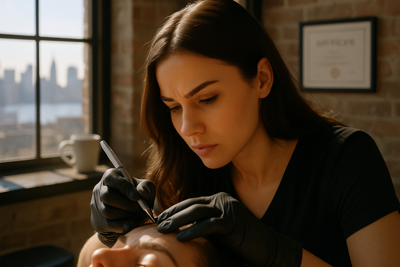
If you’re asking “Is Microblading a Good Career in United States?” you’re not alone — microblading has become one of the fastest-growing beauty professions across cities from New York to Los Angeles. Whether you’re considering a career change, returning to work after a break, or expanding your salon services, microblading offers a practical path to earning, creativity, and flexible working conditions.
In this guide we examine the real-world opportunities, training requirements, earning potential, legal considerations, and how to get started in the United States. We’ll provide local examples, common pitfalls to avoid, and a step-by-step plan so you can decide if microblading is the right long-term career for you.
Skinart United States delivers a fully accredited Microblading online course that follows CPD Standards Office and BAQA requirements; the course is designed for people who want a professional, compliant start in the industry. Read on to understand how microblading fits the U.S. market and whether it matches your goals.
Table of Contents
Use these links to jump to the section you need. Anchor-linked headings use semantic IDs so search engines can offer “Jump to” links in results.
Overview — Is microblading a good career?
Microblading is a semi-permanent cosmetic procedure that creates natural-looking eyebrow hair strokes using pigment implanted into the skin. Asking “Is Microblading a Good Career in United States?” involves weighing demand, regulation, startup cost, and lifestyle fit. Over the last decade, the U.S. has seen consistent growth in permanent cosmetics and microblading, driven by consumer desire for low-maintenance beauty and confidence-boosting results.
For many technicians, microblading offers a blend of artistry and entrepreneurship. It’s hands-on, client-facing work that rewards attention to detail and interpersonal skills as much as technical ability. In metropolitan areas like Miami, Chicago, and Seattle, high demand translates into premium pricing; in smaller markets, reliable earnings come from competitive service packages and repeat clients.
Beyond individual appointments, microblading skills open doors to related services—touch-ups, shading, corrective work, and training other technicians. Microblading a Good Career in United States is often a function of how well a technician builds their brand, maintains standards, and invests in ongoing learning.
Pros and Cons of a Microblading Career
Below are the practical advantages and challenges you should consider when deciding if microblading a good career in United States is true for you.
- Pros
- High demand in many urban and suburban markets.
- Relatively fast appointments with strong repeat business (touch ups).
- Low overhead for mobile or home-based services compared to a full salon.
- Creative, artistic work with visible client transformation.
- Flexible scheduling — part-time to full-time opportunities.
- Cons
- Regulation and licensing requirements vary by state and locality.
- Initial learning curve and need for supervised practice to build confidence.
- Potential liability and infection control responsibilities.
- Income can vary by season and client flow; marketing is necessary.
Weigh these trade-offs against your goals: if you like independent work, enjoy beauty and detail, and are prepared to market yourself, microblading can certainly be a profitable and satisfying career in the United States.
At Skinart United States we focus on practical, accredited training so graduates leave with real competency, a business-ready mindset, and clear next steps to set up a compliant service offering online. We do not offer in-person training in the United States; our course is delivered online and fully accredited.
Earning Potential & Business Models
How much you earn as a microblading technician depends on your location, pricing, client retention, and whether you build ancillary services. In major cities technicians can charge considerably more per set, while smaller markets rely on volume and package deals. The phrase Microblading a Good Career in United States often translates into ‘can be lucrative for those who treat it as a business’.
Typical pricing models in the U.S. include single-session pricing with an included 6–8 week touch-up, tiered pricing for experienced vs. junior technicians, and package pricing for brows plus shading or additional services. Consideration of recall clients, referral discounts, and seasonal promos will affect steady revenue.
Below are practical revenue streams and business ideas you can combine to maximize earnings. These reflect realistic opportunities across the United States market.
- Standard microblading service with one touch-up (most common package).
- Premium packages (brow shading, colour correction, bespoke mapping).
- Touch-up-only appointments for new technicians forming their portfolio.
- Maintenance appointments at 12–18 months for faded pigment.
- Mobile or at-home services for convenience—higher pricing due to travel.
- Working in med-spas or cosmetic clinics on salary or commission.
- Teaching workshops or mentoring other technicians once experienced.
- Retail product sales (aftercare products, facial care) to boost income.
- Offering combination treatments like lash lifts, tinting, or non-invasive skincare services where legally permitted.
Common Mistakes New Technicians Make
- Underpricing services and not factoring in business costs.
- Skipping thorough client consultations and consent forms.
- Poor mapping leading to asymmetrical results.
- Not following state/local infection control protocols.
- Using low-quality pigments or equipment (be careful — Skinart does not supply equipment in the United States).
- Relying solely on walk-ins and not building a marketing strategy.
- Trying advanced corrective work before mastering basics.
- Failing to track client records, photos, and touch-up schedules.
- Neglecting aftercare communication and follow-up.
- Ignoring continuing education and updates in best practice.
Many of these mistakes are avoidable with structured training, checklists, and clear client communication. Accreditation and certification reduce the chance of technical errors and legal issues.
At Skinart United States we emphasise evidence-based infection control, professional consultations, and practical mapping techniques so our graduates enter the market with confidence and fewer early-career setbacks.
Training, Certification & Regulations in the United States
Regulatory frameworks differ widely between states and even municipalities. Some states require a tattoo license or bloodborne pathogen certification; others treat microblading under cosmetology or esthetics rules. Because rules change, it’s essential to check your state board and local health department requirements before offering services.
Skinart United States provides a CPD- and BAQA-accredited online Microblading course that covers the technical skills, infection control, and business knowledge you need to meet industry standards. Our program is tailored to be relevant across the U.S., while encouraging students to confirm local licensing steps.
The following checklist outlines common regulatory and training components you will likely encounter when launching microblading services in the United States.
- Basic anatomy and skin structure training.
- Bloodborne Pathogens (BBP) and infection control certification — often required.
- First aid and CPR in some localities.
- State cosmetology or tattoo licensing where applicable.
- Detailed client consultation, patch testing, and consent form procedures.
- Record-keeping and photography protocols for before/after documentation.
- Understanding of pigment safety and removal practices.
- Ongoing CPD-style learning to remain current with techniques and regulations.
- Insurance (professional liability) to protect against claims.
Skills, Equipment & Safety — What You Need to Know
Microblading requires a blend of micro-motor coordination, colour theory, facial mapping, and excellent client communication. Soft skills — empathy, patience, and sales acumen — are just as important as technical competence when building a loyal client base.
Important safety note: Skinart United States does not supply microblading equipment for students in the United States. We teach you how to select safe, appropriate tools and reputable suppliers, and how to evaluate pigments and needles for quality and safety.
Below is a practical list of supplies, training topics, and safety items you’ll use and learn about in a professional microblading setup. Use it as a baseline when budgeting and sourcing equipment locally or online.
- Single-use microblading blades or disposable cartridge options.
- High-quality pigments formulated for permanent cosmetics.
- Medical-grade gloves, masks, and protective eyewear.
- Surface disinfectants and proper sterilisation workflows.
- Client consent forms, aftercare information sheets, and client intake forms.
- Clean, adjustable treatment chair and proper lighting for mapping.
- Magnification loupes and microblading rulers for precise mapping.
- Sharps disposal containers and a medical waste plan if required locally.
- Professional liability insurance tailored for permanent cosmetics.
“Proper infection control and precise mapping are the backbone of reputable microblading services. Regulators look first at safety standards — not marketing.” — CPTP statement
Career Paths & Progression
Once you establish technical competence, several career trajectories open up. Some technicians remain independent service providers, others partner with med-spas or salons, and some transition into training and mentorship roles. In high-demand cities, experienced microblading artists may command premium pricing and collaborate with cosmetic clinics for corrective work.
A common progression looks like this: foundational training, supervised practice (or portfolio building), junior technician pricing, transition to full pricing after a proven portfolio, and then expanding to teach, manage, or work in a clinical setting. The phrase Microblading a Good Career in United States frequently maps to those who follow a growth-oriented plan and treat the role as a business, not just a hobby.
Written by Gary Erskine, 25 years in microblading education and industry training. Gary has trained thousands of technicians worldwide and focuses on building careers that are safe, profitable, and sustainable.
Frequently Asked Questions
Below are common search-style questions people ask when considering whether microblading is a good career in the United States. Short, practical answers follow.
Is microblading a profitable career in the United States?
Yes — it can be profitable if you price services appropriately, build a steady client base, and invest in marketing and professional standards; profitability varies by city and how much time you dedicate to the business side of your practice.
How much do microblading technicians make per appointment?
Average prices vary widely; initial sessions in urban markets commonly range from several hundred to over a thousand dollars, often including a touch-up; earnings per appointment should be calculated after deducting supplies, venue costs, insurance, and taxes.
Do I need a licence to do microblading in the US?
Licensing depends on state and local laws. Some areas classify it under tattooing, others under cosmetology or esthetics. Always check with your state board and local health department for specific requirements before working.
How long does a microblading course take?
Course lengths vary. Skinart United States offers an accredited online microblading course designed to give comprehensive technical and business knowledge; students can complete the curriculum at a practical pace while building skills through guided practice.
Can I start microblading with no art background?
Yes — many successful technicians come from varied backgrounds. While artistic aptitude helps, structured training, practice, and mentorship are the keys to developing consistent, professional results.
For convenience and discoverability, here’s a short FAQ schema for search engines reflecting the above Q&A.
Final Thoughts — Is Microblading a Good Career in United States?
Microblading can absolutely be a good career in the United States for people who treat it like a business and commit to professional standards. The demand is tangible in many urban centers, and the work offers creative satisfaction and client impact that many beauty professionals find rewarding.
Success depends on proper training, understanding local regulation, consistent infection control, and sensible business practices — from pricing to marketing. Those who invest time in building a strong portfolio, learning effective consultations, and delivering consistent results typically see the best returns.
If you’re motivated, detail-oriented, and passionate about helping clients feel more confident, microblading presents a realistic route to a fulfilling career. Skinart United States’ accredited online microblading course is designed to help you move from beginner to business-ready, with the credentials respected by industry associations.
Ready to Start Your Microblading Career?
Join Skinart United States’ accredited online Microblading course and take the practical steps toward a professional, compliant, and creative career. Our course follows CPD and BAQA standards, taught by experienced tutors with a focus on real-world outcomes.
Recent Blog Posts
- Studio Etiquette Update: Professionalism in 2026
 Workplace Etiquette for Body Art Studios Refresh your studio etiquette and build a reputation for professionalism with these up-to-date best practices.… Read More »Studio Etiquette Update: Professionalism in 2026
 - 🌙 Eid Mubarak: Celebrate with 5% Off in 2026!
 Eid Savings: 5% Off All Courses Celebrate Eid with a special offer: 5% off any course. Use code EID5 at checkout.… Read More »🌙 Eid Mubarak: Celebrate with 5% Off in 2026!
 - Top Mistakes New Body Artists Should Avoid (2026)
 Stay Ahead: Common Pitfalls for New Artists Read up on the most frequent errors new body artists make, and how to… Read More »Top Mistakes New Body Artists Should Avoid (2026)