Microblading Courses United States: What to Know in 2025
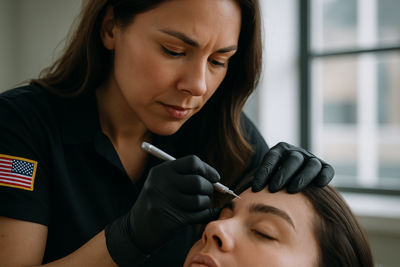
Microblading Courses United States are increasingly popular in 2025 as more clients seek natural, long-lasting eyebrow enhancement. Whether you are pivoting careers, expanding a beauty business, or beginning a serious interest in semi-permanent makeup, understanding the training landscape in the United States is essential. This guide outlines what to expect from accredited online microblading courses, the regulatory climate by state, and practical advice to start a secure, ethical microblading practice.
At Skinart United States we design our online microblading course to meet modern standards while making sure you gain the skills and confidence to work safely and professionally. This article explains course content, accreditation, common mistakes to avoid, and how to choose the best training path for your location and goals in 2025.
Written by Gary Erskine, over 25 years training experience in permanent cosmetics and accredited active tutor — I’ve trained thousands of students worldwide and seen first-hand how the right course accelerates careers. Read on for a practical, state-aware roadmap to choosing Microblading Courses United States this year.
Table of Contents
Use the links below to jump to the section that matters most — these semantic anchors help Google generate “Jump to” results and make it easy for you to navigate this long guide.
- What is microblading and who should train?
- Regulations and licensing in the United States
- Course curriculum: what you’ll learn
- Common mistakes new artists make
- Accreditation, BBP and safety requirements
- How to choose the best microblading course
- Skinart United States microblading course details
- FAQs about Microblading Courses United States 2025
- Final thoughts & next steps
What is microblading and who should train?
Microblading is a manual form of semi-permanent eyebrow enhancement where ultra-fine pigment strokes mimic natural eyebrow hairs. The technique delivers precise hair-like lines and shading using a sterile handheld tool and selected pigments. In the United States in 2025, microblading remains one of the fastest-growing niches in beauty because it combines artistry with technical skill, repeat clientele, and strong margin potential for trained practitioners.
Who should train? Estheticians, cosmetologists, makeup artists, and beauty professionals who wish to expand their services will benefit most, as well as complete career changers seeking a hands-on, creative trade. A strong foundation in hygiene, skin anatomy, and facial symmetry helps but is not mandatory — the right accredited training equips students with those core skills.
Microblading Courses United States delivered online (with practical guidance elements) suit students who need scheduling flexibility or live far from major training centers. In 2025, many state boards accept accredited online theory paired with competency assessments, but requirements vary by state — always check local rules before enrolling.
Regulations and licensing in the United States
Licensing and oversight for microblading vary significantly across U.S. states and even municipalities. Some states regulate microblading under cosmetology or esthetics licensing, while others require specific tattoo or permanent makeup credentials. This inconsistency is the primary reason to review state board requirements before you register for any course.
- Pros
- Flexible online theory for busy students
- Accredited courses streamline meeting BBP and CPD standards
- Accessible community support and mentorship
- Cons
- State-by-state licensing differences can complicate practice
- Some local health departments still require in-person practical assessment
- Insurance providers may have varying acceptance criteria
In practice, many students combine accredited online microblading courses with local practical sign-offs or supervised assessments. At Skinart United States we provide accredited theory, live demonstrations, and a clear logbook of practical outcomes to help you meet local competency checks. Remember: we do not offer in-person training in the United States — our focus is accredited, practical online learning and mentor support.
Before booking, check your state’s board or public health guidance. Some municipal health departments may require additional documentation, so contact the relevant office where you will practice. For general infection control and bloodborne pathogen guidance, the CDC remains a reliable national reference.
Course curriculum: what you’ll learn
A high-quality microblading course covers both foundational theory and applied techniques. At Skinart United States we focus on a structured curriculum: skin anatomy, color theory, sanitation, mapping and shaping, technique, aftercare, and client consultation. Theory modules are delivered in clear units with video demonstrations and assessments that prepare you for the practical stages.
Our online approach pairs detailed demonstration footage and step-by-step case studies. Students study needle selection, pigment properties, and corrective strategies for healed brows. We emphasize consistent, repeatable techniques so graduates can reliably produce natural-looking results for diverse skin types.
Below is a compact breakdown of typical topics included across accredited Microblading Courses United States. Use it as a checklist to compare providers when shopping for training in 2025.
- Skin anatomy & Fitzpatrick skin typing
- Color theory and pigment selection
- Sanitation, cross-contamination prevention and BBP protocols
- Client consultation, consent forms and medical screening
- Brow mapping, symmetry, and facial proportions
- Microblading tools, hand techniques, and stroke patterns
- Needle configurations and safe handling (manual tools)
- Recognizing and managing complications (e.g., allergy, infection)
- Aftercare protocols and realistic client expectations
- Photography, case logging and portfolio building
- Business essentials: pricing, consent, documentation
- Professional ethics and building client trust
Common mistakes new artists make
- Skipping a proper consultation or medical history check
- Poor mapping that results in asymmetry
- Using incorrect pigment tone for the client’s skin undertone
- Applying strokes too deeply causing migration or scarring
- Relying on a single technique for all clients instead of customizing
- Inadequate infection control or reuse of materials
- Underestimating the importance of aftercare communication
- Poor photographic documentation of before-and-after healing phases
- Rushing practice: insufficient supervised practice hours
- Not understanding how hormones, medication, or skin conditions affect healing
New technicians often focus on achieving perfect looking live results and forget to consider long-term healing. The healed look can differ considerably; therefore careful pigment selection and conservative strokes are safer and more predictable. Accredited training emphasizes staged learning — start with practice skins, then supervised live models, and carefully document every case.
Another recurring issue is assuming online training equals lower standards — in reality, a well-designed online microblading course includes rigorous theory testing, high-quality video demonstrations, and mentor review of student case photos. At Skinart United States we require students to demonstrate competency through assessed case submissions and mentor feedback to reduce these common errors.
Accreditation, BBP and safety requirements
Accreditation matters. Reputable bodies such as the CPD Standards Office and the Body Art Qualification Association (BAQA) provide frameworks ensuring training meets professional and safety standards. Skinart United States courses are accredited to recognised standards, covering bloodborne pathogen (BBP) protocols and infection control thoroughly.
BBP certification and infection prevention are not optional — they’re mandatory in many localities. Courses should clearly teach sterilization, personal protective equipment (PPE), proper disposal of sharps, and decontamination of work surfaces. Even when working with manual microblading tools rather than machines, strict control prevents transmission risks.
Insurance companies typically require proof of accredited training and BBP certification before issuing professional indemnity or public liability insurance. If you plan to operate in a salon or mobile environment, confirm your insurer’s prerequisites early in the planning stages.
- CPD Standards Office accreditation
- BAQA course alignment and recognition
- Bloodborne Pathogen (BBP) training and certificate
- Client consent and medical screening templates
- Clinical hygiene checklists for audits
- Record keeping and photographic logbook requirements
- Insurance readiness checklist
- Guidance on state-specific public health compliance
How to choose the best Microblading Courses United States
Choosing a course is about fit — how the provider supports your learning, the accreditation they carry, and the practical pathways they provide for competency verification. With microblading, technique quality and safety are non-negotiable. Look for clear module outlines, access to mentor feedback, and demonstrable student outcomes.
Below are practical selection criteria to shortlist providers. These are the same checkpoints that have helped many Skinart students select credible training and succeed in building a client base.
“Courses that combine accredited theory with mentor-led practical assessments produce the most consistent outcomes for new microblading technicians.” — CPTP regional training advisor
- Accreditation with recognised bodies (CPD, BAQA)
- Clear BBP and hygiene training included
- Mentor feedback on practical cases
- Transparent refund and cancellation policy
- Student success stories and verified testimonials
- Practical assessments or guidance to meet local sign-off
- Business and marketing guidance for a sustainable start
- Reasonable class sizes for live virtual demos
Skinart United States microblading course details
Skinart United States offers an accredited online Microblading course tailored to students in the USA. Our curriculum is aligned with CPD Standards Office and BAQA expectations and designed to give you clear theoretical grounding plus practical guidance. You will receive high-quality video demonstrations, downloadable resources, comprehensive theory tests, and mentor feedback on assessed case submissions.
It’s important to note we do not provide in-person training in the United States. Instead, the course equips students to meet local practical assessment requirements through supervised mentor review, case submission, and documented learning outcomes. We also do not supply microblading equipment in the United States; students acquire their own tools from reputable suppliers that meet local health regulations.
For students who want to fast-track to practice, Skinart includes guidance on state board engagement, BBP certification requirements, client consent templates, and business setup basics. Gary Erskine and the training team offer ongoing mentor support to review practical case photos and suggest improvements.
Frequently asked questions
Are online Microblading Courses United States accepted for licensing?
Many state boards accept accredited online theoretical training paired with documented practical competency, but acceptance is state-dependent. Always confirm with your specific state cosmetology or health board before enrolling. Skinart United States provides documentation and mentor-reviewed case submissions to help meet local practical requirements.
Do I need a cosmetology or esthetics license to practice microblading in the US?
It depends on your state. Some states require a cosmetology or esthetics license, others treat microblading as tattooing under separate regulations. Contact the licensing authority where you intend to practice to get definitive guidance.
Does Skinart United States provide in-person practical training?
No — Skinart United States does not offer in-person training in the United States. Our accredited online course includes comprehensive theory, detailed video demonstrations, and mentor-led case reviews to support your practical development and meet local requirements where applicable.
Will Skinart supply microblading tools or pigments?
Skinart United States does not supply microblading equipment in the United States. Students are guided on trusted suppliers and specifications so you can purchase compliant, high-quality tools that meet local health and safety rules.
How long until I can start taking paying clients after the course?
Timing depends on state regulations and how quickly you complete practical assessments. Many students begin by offering discounted practice sessions, building a documented case log until they satisfy local competency requirements and secure insurance. Skinart mentors provide guidance on readiness and portfolio standards.
These FAQs cover common questions about online microblading training in the U.S. If you have a state-specific question, reach out to our admissions team for tailored guidance.
Final thoughts & next steps
Microblading Courses United States in 2025 present exciting opportunities for beauty professionals and new entrants alike. The most important choices you make are accreditation, practical competency, and a commitment to client safety. Choose a training path that offers mentor feedback, recognised accreditation, and clear documentation so you can meet local licensing requirements confidently.
If you’re ready to build a reliable, ethical microblading practice, Skinart United States’ accredited online microblading course is structured to get you there. We combine industry-recognised theory, mentor assessment and clear pathways to practice — all designed around real-world needs in the United States.
Take the next step — learn with a team that prioritizes safety, skill and long-term success. We’re here to help you grow professionally and build a reputation clients trust.
Recent Blog Posts
- Studio Etiquette Update: Professionalism in 2026
 Workplace Etiquette for Body Art Studios Refresh your studio etiquette and build a reputation for professionalism with these up-to-date best practices.… Read More »Studio Etiquette Update: Professionalism in 2026
 - 🌙 Eid Mubarak: Celebrate with 5% Off in 2026!
 Eid Savings: 5% Off All Courses Celebrate Eid with a special offer: 5% off any course. Use code EID5 at checkout.… Read More »🌙 Eid Mubarak: Celebrate with 5% Off in 2026!
 - Top Mistakes New Body Artists Should Avoid (2026)
 Stay Ahead: Common Pitfalls for New Artists Read up on the most frequent errors new body artists make, and how to… Read More »Top Mistakes New Body Artists Should Avoid (2026)