Pricing Your First Microblading Appointments
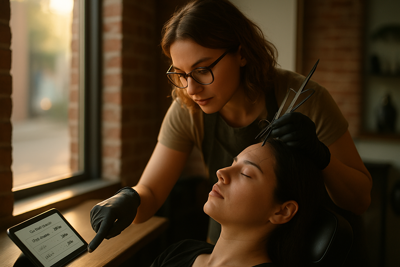
Starting out as a microblading technician in the United States is exciting — but learning how to price your first microblading appointments can be one of the most stressful parts of launching your service. In this guide we’ll walk through everything from calculating costs and setting beginner rates to positioning yourself in a local market, so you can price confidently and attract your first clients. The phrase Pricing Your First Microblading Appointments will appear throughout to keep you on track as you make smart business choices.
Whether you’re fresh from an online microblading course, building a freelance schedule, or planning to offer services from a studio, getting pricing right matters. Good pricing communicates value, covers your expenses, protects your time, and helps build a sustainable career. This article is tailored for the United States context and packed with practical steps, local examples, and real-world numbers to help you decide: what should I charge for my first microblading clients?
Written by Gary Erskine, 25 years in microblading and body art education. Skinart United States is fully accredited with the CPD Standards Office and the Body Art Qualification Association (BAQA). Our Online Microblading Course gives you the techniques and the business sense to price your services correctly — join us to turn training into a profitable first month.
Table of Contents
Use these links to jump to the section you need. We recommend bookmarking this page as you plan your pricing strategy.
- Why Pricing Strategy Matters
- Key Factors That Affect Price
- Pricing Models & Packages
- How to Calculate Your Price Step-by-Step
- Marketing, Promotions & First-Client Offers
- Common Pricing Mistakes to Avoid
- Legal, Insurance & Local Requirements
- US Success Stories & Examples
- Frequently Asked Questions
- Final thoughts & Next Steps
Why Pricing Your First Microblading Appointments Matters
Pricing Your First Microblading Appointments is more than a number on a booking form — it’s a strategic decision that affects your reputation, client satisfaction, and long-term profit. A well-considered pricing strategy helps you cover materials and consumables, compensate for time and learning curve, and reflect the value of your training and accreditation. Especially in the United States where markets vary city by city, your first prices set expectations about your brand and client base.
For many new technicians, setting prices too low can produce a full schedule but no sustainable income; pricing too high can result in empty appointment books or misaligned clientele. You want prices that help you book clients while signaling competence. The aim of this section is to help you understand the balance between beginner rates and value-based pricing so you can convert training into a viable income stream.
We’ll cover the exact math to calculate overheads and time, practical package ideas, marketing approaches for booking your first clients, and essential legal considerations in the U.S. — including why a thorough, documented consultation and consent process must be reflected in your price. Pricing Your First Microblading Appointments repeatedly throughout this guide will anchor every recommendation to the practical reality of your first paying work.
Key Factors That Affect Your Price
When deciding on pricing, think in three layers: direct cost (consumables), time/skill (your hourly worth), and market positioning (what local clients expect to pay). Pricing Your First Microblading Appointments means you must estimate realistic consumable use rates and factor in consultation and aftercare time. In the United States, consumables like numbing cream, sterile blades, pigments, and single-use needles add up quickly — budget for them per treatment.
Here are the major variables to include in your calculations:
- Consumable costs per appointment (pigment, blades, gloves, disposables)
- Time per appointment including consultation, mapping, procedure, brief photo session, and initial aftercare guidance
- Overheads (studio rent if applicable, utilities, insurance, marketing, booking software)
- Training amortisation — your investment in accredited education like our CPD & BAQA-backed course
- Local market averages — city vs. suburban vs. rural pricing in the United States
- Client experience: follow-up, touch-ups, and included aftercare items
- Regulatory costs, permits, and sterilisation standards
Understanding each of these will let you price to cover costs and to grow. If you learned microblading through Skinart’s Online Microblading Course, factor the course credentials into your positioning — accreditation can justify moving from “intro” to “standard” pricing within months as you build a portfolio.
Pricing Models, Packages & How to Position Your First Offers
There’s no single “correct” pricing structure; there are choices you can make to attract the right clients. You can start with an introductory flat fee, tiered pricing for more complex brows, or a package that bundles a touch-up. Below are popular options for Pricing Your First Microblading Appointments, with pros and when to use them.
When you launch, consider offering a limited number of discounted introductory slots to build portfolio photos and online reviews. However, structure discounting so it doesn’t undercut your ability to transition to full price quickly. For example, offer a lower introductory fee valid for the first 10 clients only, and clearly mark it as a time-limited launch rate.
Here are 10 practical package ideas and pricing models you can implement and test in your first three months:
- Introductory Launch Price — a capped number of low-rate slots to build experience and before/after photos
- Flat Rate Standard Treatment — one price for most clients with average skin types
- Complex Case Surcharge — additional fee for scarred skin, sparse brows requiring extra time
- Touch-up Included Package — one free touch-up within 6–12 weeks bundled in the price
- Premium Package — longer appointment time, premium pigments, and extra aftercare kit
- Subscription for Maintenance — annual or biannual touch-up pricing for repeat clients
- Referral Discount — small credit for new clients referred by existing clients
- Model/Portfolio Trade — heavily discounted work for clients who agree to full photo release
- Group or Multi-Location Shuttle — if you travel to clients, add a travel fee
- Gift Vouchers and Seasonal Promotions — limited-time discounts tied to holidays or local events
How to Calculate Your Price Step-by-Step
Putting a number on Pricing Your First Microblading Appointments requires clear arithmetic. Follow these steps to produce a defensible starting price you can refine over time.
- Step 1 — List Direct Consumables: Add pigment cost per use, blades, gloves, cottons, and disposable microblading blades or cartridges. Example: pigment $8–$15 per client, blades $1–$3.
- Step 2 — Time Cost: Decide your hourly rate (what you want to earn per hour after tax). For a new technician, a starting target might be $25–$50 per hour; experienced artists charge $60–$150+. Multiply appointment time by your hourly rate.
- Step 3 — Overhead Allocation: Divide monthly overheads (rent, insurance, software, advertising) by expected monthly appointments. If rent is $800 and you expect 40 appointments per month, allocate $20 per appointment.
- Step 4 — Training & Accreditation: Amortize your course cost into your prices. If your accredited course cost $1,200 and you expect 120 clients in a year, add $10 per appointment as a training recovery fee.
- Step 5 — Profit Margin: Add a margin (15–30%) for profit and reinvestment. This ensures the business can buy better supplies and save for slower months.
- Step 6 — Touch-up Policy: Decide whether touch-ups are included or extra. If included, increase the price; if extra, be transparent about timing and cost.
- Step 7 — Round & Position: Round to a user-friendly price and consider local psychological pricing (e.g., $199 vs $200). Compare to local competitors in your city or town.
- Step 8 — Test & Adjust: Track booking rate and client feedback for 3 months and adjust prices if you’re either consistently overbooked (raise rates) or underbooked (improve marketing or adjust price).
Example calculation for a new microblading tech in a mid-sized U.S. city:
- Consumables: $18
- Time (3 hours at $35/hr): $105
- Overheads allocation: $20
- Training amortisation: $10
- Subtotal: $153
- Profit margin 20%: +$30.60
- Suggested price: $185–$199 (rounded)
This concrete example shows how Pricing Your First Microblading Appointments can practically land in the $150–$250 range for new technicians depending on location and included extras. Use this method to produce a starting point unique to your circumstances.
Marketing, Promotions & Booking Your First Clients
Once you’ve set your initial price, you need a plan to get your first paying clients. Pricing Your First Microblading Appointments is closely tied to how you present your offer online and in your local area. Use social media, community groups, and local search to make your limited launch offers visible.
Practical steps to fill your schedule:
- Create a clear introductory offer with a limited number of slots and a clear end date.
- Post high-quality before/after images (with client permission) and short process videos to Instagram and Facebook.
- Ask friends or local models to take part in discounted sessions with a signed photo release to build a portfolio.
- List your service on local directories and Google Business Profile with clear pricing or “introductory price” information.
- Collect reviews and testimonials after every appointment and display them on your booking page.
- Run a small, targeted ad in your city for the introductory rate if your budget allows.
- Partner with local beauty businesses (salons, spas) for cross-referrals.
- Offer a referral credit for clients who send new customers to you.
Remember that promotions should be framed as limited and professional. Avoid constant discounting — it trains clients to wait for sales. Instead, invest time in building trust and demonstrating the value behind your prices: accredited training, sterile protocols, and transparent touch-up policies.
Common Pricing Mistakes to Avoid
- Charging only for procedure time and forgetting to include consultation and aftercare time
- Not tracking consumables and assuming supplies cost less than they do
- Underpricing to get clients but not accounting for rebooking and returns
- Failing to include a touch-up policy (and charging inconsistently for touch-ups)
- Letting competitors’ lowest prices dictate your pricing instead of your costs
- Offering unlimited discounts or open-ended promotions
- Not factoring in insurance and regulatory costs into each appointment
- Failing to raise prices as experience and skill increase
- Not documenting cancellations and no-show fees in terms & conditions
- Using vague language about what the price includes (e.g., pigments, aftercare kit, follow-up)
Many new technicians tell us they regret charging too little in their first year because it forced them to work long hours with little profit. Pricing Your First Microblading Appointments requires discipline: track each booked appointment’s full cost profile and adjust quarterly.
If you’re unsure what local clients will tolerate, do a small market survey. Look at three established studios in your city, check their average pricing, and compare what they include. That snapshot will help you place your introductory price in the right band while you accumulate credible before/after images and reviews.
Legal, Insurance & Safety Considerations That Should Affect Pricing
In the United States, regulations and inspection requirements vary by state and municipality. Always confirm local rules on body art, sterilisation, and licensing because compliance costs should be built into your pricing. For example, costs for sharps disposal, single-use supplies, and extra cleaning between clients add directly to per-appointment expenses.
You should carry appropriate professional liability insurance and client consent forms; both are non-negotiable. Many insurance providers offer microblading-specific policies — compare quotes and spread annual premiums into your price per booking. For authoritative safety guidance on bloodborne pathogens and infection control, consult CDC resources which provide national-level recommendations relevant to permanent cosmetic procedures.
- Check state and county health department requirements for tattooing and permanent cosmetics
- Include costs for sharps containers and designated medical waste disposal
- Factor in CPR or BBP training and certification renewals
- Allocate budget for quality pigments and dermatologically tested aftercare items
- Make cancellation and no-show policies clear and enforceable in booking terms
- Keep written, signed consent and pre-procedure records — these protect you and justify pricing
- Maintain client photos and healing records to demonstrate outcomes and reduce disputes
- Confirm whether a municipal license or registration is needed and incorporate the fee into overhead
Quote from a municipal health official: “Compliance with local body art regulations is essential for both client safety and the sustainability of small businesses. Proper pricing must reflect these compliance costs.” This is why Pricing Your First Microblading Appointments should never ignore regulatory overhead.
US Success Stories & Local Examples
Real-world examples help make pricing tangible. In Phoenix, a new technician started with an introductory offer of $150 (including a single touch-up) and booked eight clients within two weeks through Instagram and local Facebook groups. After accumulating 20 solid before/after photos and positive reviews, she raised her standard price to $225 and retained most of her clients while improving margins.
In Portland, another Skinart graduate launched with a $199 price that included a premium aftercare kit. Her positioning emphasized accredited training, documented sterilisation, and follow-up care; within six months she moved to $350 for complex brows. Both stories show how Pricing Your First Microblading Appointments can begin with competitive introductory pricing and transition to full market rates as credibility grows.
Localizing your price means testing offers in your community. If you’re in a smaller town, your price may trend lower than large metropolitan averages, but the calculation steps remain identical — cost + time + overhead + margin = sustainable price.
Frequently Asked Questions
Below are common search-style questions readers ask about Pricing Your First Microblading Appointments.
How much should I charge for my first microblading appointment in the United States?
As a guideline, many new U.S.-based technicians price their first paid microblading appointments between $150 and $250, depending on consumable costs, local market, and whether a touch-up is included. Use the step-by-step calculation earlier in this article to create a number tailored to your overhead and target hourly rate.
Should I include a free touch-up in the initial price?
Including one complimentary touch-up (commonly scheduled 6–12 weeks after the initial procedure) is industry standard and can justify a higher starting price. If you include touch-ups, allocate the expected additional time and consumables into your initial price.
Can I undercut local competitors to get clients quickly?
Undercutting is a short-term tactic that often reduces perceived value. It can attract volume, but it also trains clients to expect low prices. Instead, consider limited introductory offers tied to portfolio building and then transition to standard pricing as you gain reviews and before/after images.
How often should I review and raise prices?
Review your prices every 3–6 months during your first year. If demand exceeds supply, raise prices incrementally (5–15%). Annual reviews are standard once you’re established.
Do I need special insurance that affects pricing?
Yes. Professional liability and business insurance tailored to permanent cosmetics are recommended and should be included in overhead calculations. Insurance premiums vary by state and provider; include a per-appointment allocation for this cost.
Final Thoughts & Next Steps
Pricing Your First Microblading Appointments is part technique, part accounting, and part market psychology. Begin by calculating the full cost per appointment, set a realistic hourly target for your time, and choose a pricing model that allows for one or two complimentary touch-ups. Be sure your written policies for cancellations, deposits, and touch-ups are clear and visible when clients book.
If you’re ready to move from planning to practice, Skinart United States offers a comprehensive Online Microblading Course accredited by CPD and BAQA. Our course equips you with the skills to deliver professional results and the business perspective to price with confidence. Remember: your prices are not fixed — they should evolve as your reputation, portfolio and demand grow.
You can start small, track every appointment’s true cost, and refine. With consistent review and a focus on quality, your early pricing choices will become the foundation of a profitable and rewarding microblading career in the United States.
Ready to Price with Confidence?
Join Skinart United States’ accredited Online Microblading Course to learn technical skills and the business strategies that help you price and market services successfully.
Recent Blog Posts
- Studio Etiquette Update: Professionalism in 2026
 Workplace Etiquette for Body Art Studios Refresh your studio etiquette and build a reputation for professionalism with these up-to-date best practices.… Read More »Studio Etiquette Update: Professionalism in 2026
 - 🌙 Eid Mubarak: Celebrate with 5% Off in 2026!
 Eid Savings: 5% Off All Courses Celebrate Eid with a special offer: 5% off any course. Use code EID5 at checkout.… Read More »🌙 Eid Mubarak: Celebrate with 5% Off in 2026!
 - Top Mistakes New Body Artists Should Avoid (2026)
 Stay Ahead: Common Pitfalls for New Artists Read up on the most frequent errors new body artists make, and how to… Read More »Top Mistakes New Body Artists Should Avoid (2026)