Top Mistakes New Microblading Artists Make
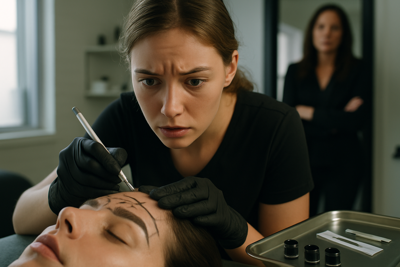
Whether you’re just starting out or moving from conventional tattooing into brows, understanding the Top Mistakes New Microblading Artists Make will save you headaches, unhappy clients, and costly corrections. This guide is written for the United States market and focuses on the practical errors we see learners make again and again in microblading.
At Skinart United States we’ve trained hundreds of artists online, and Gary Erskine — with over 25 years in the industry — has distilled common pitfalls into this actionable roadmap. Read on to spot the issues early, protect your clients, and build a thriving microblading practice.
Use this article as a checklist: learn what to avoid, how to fix problems when they happen, and where to get accredited training so you don’t repeat these mistakes. The phrase Top Mistakes New Microblading Artists Make appears throughout to help you search and return to critical sections quickly.
Table of Contents
- Why tracking mistakes matters
- Consent, regulations and legal mistakes
- Tools, hygiene and setup errors
- Design, mapping and shape mistakes
- Pigment selection & technique errors
- Aftercare mistakes and communication failures
- Business mistakes new artists make
- Top mistakes new microblading artists make — quick list
- Frequently asked questions
- Final thoughts & next steps
Why understanding the Top Mistakes New Microblading Artists Make matters
Recognising the Top Mistakes New Microblading Artists Make is the first step toward becoming a confident, safe and successful practitioner. These mistakes aren’t just about aesthetics — they impact client safety, healing outcomes, and your reputation in a competitive U.S. market.
New artists often assume microblading is a simple ‘eyebrow tattoo’. In reality, it’s a blend of esthetics, anatomy, pigment science, and infection prevention. A single poor decision — from incorrect pigment choice to rushing the mapping stage — can lead to dissatisfied clients and corrective procedures.
In the United States, where regulations and expectations vary state-by-state, being methodical and accredited is essential. The good news: most of these errors are preventable with focused training, consistent practice, and disciplined client communication.
Consent, regulations and legal mistakes
Failing to secure informed consent or misunderstanding state regulations is one of the Top Mistakes New Microblading Artists Make in the U.S. Lack of proper forms or misunderstanding contra-indications can create legal exposure and put clients at risk.
- Pros: Having clear consent forms and knowing your local rules builds trust and protects you legally.
- Cons: Time spent on paperwork and compliance can feel bureaucratic but is necessary.
Best practice: use a detailed client intake that documents medical history, medications (e.g., Accutane, blood thinners), allergies, and prior aesthetic procedures. Many U.S. states require blood-borne pathogen (BBP) awareness or certification — even if not mandated, it’s considered a professional standard.
Skinart United States includes compliance modules in our online Microblading course so you understand federal guidance and common state differences. We also show sample consent forms and how to document aftercare conversations, which reduces misunderstandings and potential complaints.
Tools, hygiene and setup errors
New artists often underestimate the importance of clean setup and appropriate tools. While Skinart United States does not supply microblading equipment for U.S. students, we ensure you know which tools meet safety and performance expectations.
Using the wrong needle size, working with inconsistent blade angles, or failing to change blades and gloves at the right times are common issues that affect pigment deposit and increase infection risk. Always maintain an aseptic technique and follow BBP recommendations.
Another frequent mistake is relying on low-quality pigments or unaware sourcing. Pigment quality affects hue retention, oxidation, and client allergic reactions. Research pigments that are formulated for microblading and approved or widely used by experienced practitioners.
- Set up a dedicated treatment tray with disposable covers
- Use single-use blades and discard in a sharps container immediately
- Sanitise surfaces between clients with EPA-approved disinfectants
- Wear appropriate PPE and change gloves when touching non-sterile surfaces
- Use magnification and good lighting to reduce procedural errors
- Keep a sealed, labelled pigment palette and avoid cross-contamination
- Calibrate your hand position to maintain consistent stroke depth
- Track blade type and number used per client in your notes
Design, mapping and shape mistakes
- Incorrect eyebrow mapping that doesn’t suit the client’s bone structure
- Over-reliance on trends rather than the client’s natural features
- Rushing the pre-draw phase
- Ignoring facial asymmetry—forcing symmetry that looks artificial
- Poor stencil or guideline placement
- Failing to consult on client expectations (too thick, too thin)
- Using one-size-fits-all approaches for all face types
- Not getting a signed visual approval from the client before starting
Mapping is a technical and creative stage. One common pitfall is copying a celebrity brow without adapting to the client’s face width, orbital bone, or hair density. A successful map should be a compromise between aesthetic ideals and realistic healing outcomes.
Spend additional time on pre-draw and shape approval. Use a mirror and a paused review process so clients can see and sign off. This reduces revision requests and ensures your final work aligns with the client’s goals.
Pigment selection & technique errors
Pigment handling and the microblading stroke technique are frequent trouble spots. New artists commonly choose pigments that are too warm, too cool, or too dense, leading to undesired color shifts after healing.
Technique-wise, inconsistent stroke depth produces patchy strokes — too shallow and the pigment won’t retain; too deep and scarring or blowouts can happen. Understanding the skin’s layers and how pigment behaves in different skin types (oily, dry, mature, sun-damaged) is crucial.
- Always test pigments on practice skin and, when possible, on a small real-skin patch with consent
- Choose pigments designed for brows and follow manufacturer storage guidance
- Adjust needle angle and pressure to match skin tension and elasticity
- Use shorter strokes closer to the hair direction on the front of the brow
- Blend undertones to avoid overly red, orange, or blue healed results
- For oily skin, consider different pigment blends and conservative depth
- Practice layering strokes rather than forcing pigment in one pass
- Document pigments, batch numbers, and stroke patterns in client records
Aftercare mistakes and communication failures
One of the most damaging mistakes new artists make is poor aftercare guidance. A carefully executed procedure can heal poorly if aftercare is inadequate or misunderstood. Provide clear, written instructions and review them verbally.
Another common problem is not setting realistic expectations for healing and retention. Clients often expect crisp, permanent strokes immediately — explain the staged healing process, scabbing, and the need for a perfecting session after initial healing.
- Provide printed aftercare instructions and a link to a video FAQ
- Explain common signs of infection and when to seek medical help
- Schedule the follow-up session and log it in your booking system
- Advise on activities to avoid (swimming, sunbeds, heavy workouts) during the first week
- Recommend specific gentle cleansers and avoid harsh skincare products
- Set realistic expectations for initial darkness and progressive fading
- Document the aftercare discussion in client notes and have the client initial
- Follow up by message after 48–72 hours to check healing progress
Business mistakes new artists make
Beyond technique, many new microblading artists struggle with pricing, policies, and client screening. Underpricing can set unrealistic expectations and hurt long-term growth; not vetting clients may lead to inappropriate bookings (e.g., someone with contra-indicated medical conditions).
In the United States marketplace you’ll need clear cancellation policies, refund rules for aesthetic services, and an understanding of insurance options. Professional indemnity and public liability are essential to protect your practice.
- Set tiered pricing for first sessions and touch-ups
- Create a clear refund and cancellation policy and display it at booking
- Keep an updated portfolio and get client permission for photos
- Use client screening forms to filter contraindications early
- Invest in basic business insurance suitable for tattoo/microblading
- Track time spent per client for accurate pricing decisions
- Offer package pricing for combined services (brows + touch-ups)
- Build referral and review systems to grow locally in your city or state
Top mistakes new microblading artists make — quick, actionable list
Below is a consolidated checklist you can use before each treatment. These items are the recurring entries in our training feedback forms and the reasons clients request corrections.
- Skipping a thorough intake or consent form
- Poor hygiene or reusing non-disposable items
- Incorrect mapping based on facial anatomy
- Using inappropriate pigment blends for skin tone
- Inconsistent stroke depth and pressure control
- Failing to manage expectations about healing stages
- Not scheduling or enforcing a follow-up perfecting session
- Underpricing and undervaluing your service
- Ignoring local state regulations and BBP best practice
- Relying solely on social media trends rather than fundamentals
- Using unvetted suppliers for pigments or tools
- Not documenting pigment batches and client responses
- Failing to carry appropriate insurance
- Overbooking and rushing client sessions
- Poor lighting or inadequate magnification during treatment
- Not educating clients about realistic outcomes
These items are repeated in many client complaints. When you systematically address each point, you dramatically reduce the chance of a negative experience and create happier clients who refer others.
Use this list as a pre-treatment checklist: run through it before every client until it becomes habit. In our online Microblading course, we provide printable checklists that you can use in your studio for bookings across the United States.
Frequently asked questions about Top Mistakes New Microblading Artists Make
Q: What are the most common mistakes?
A: New artists often rush mapping, misunderstand stroke depth, skip intake questions, or use non-specialised pigments. These are classic entries under the topic Top Mistakes New Microblading Artists Make.
Q: How soon will a client see final results?
A: Final healed results typically take 6–8 weeks; the first 10–14 days involve scabbing and lightening. Setting expectations early prevents disappointment.
Q: Are there state-specific rules I should know in the U.S.?
A: Yes. Rules differ by state. Check with your state health department and local licensing boards. Skinart United States provides guidance on common regulatory variations and best practices for U.S. students.
Real-world examples and U.S. success stories
In Texas, one of our remote students overcame early mapping issues by implementing a structured pre-draw sign-off and saw client satisfaction rise 70% in three months. In another example from Florida, a student reduced color-corrective appointments by switching pigmented blends appropriate for oily skin and adding a short follow-up call at 48 hours post-procedure.
These cases underline how small changes in workflow — more questions at intake, a slower mapping process, or a revised pigment selection — directly reduce the most-common mistakes new microblading artists make and lead to stronger client retention.
Gary Erskine often highlights these success stories in our course modules to show that the solution isn’t always complicated; it’s consistent, evidence-based practice. If you’re working in a U.S. state with active local aesthetics communities, attend meetups to share lessons and updates on products and regulations.
Training, resources and where to get accredited help
Most of the Top Mistakes New Microblading Artists Make are preventable with structured education. Skinart United States provides an accredited online Microblading course that covers mapping, pigment science, hygiene, client communication, and business basics — all aligned with CPD Standards Office and BAQA accreditation.
Gary’s curriculum focuses on developing muscle memory for consistent strokes, understanding healing pathways for different skin types, and building policies that protect both the client and artist. Our online format fits U.S. schedules and includes practical exercises, video breakdowns, and downloadable forms.
Remember: accreditation matters for credibility and client confidence. If you plan to advertise professional microblading services in the U.S., a recognised qualification reduces friction with local inspectors and helps you secure insurance.
Final thoughts — how to move from mistakes to mastery
Everyone starts somewhere. The difference between a frustrated beginner and a sought-after microblading artist is a commitment to avoiding the Top Mistakes New Microblading Artists Make and replacing them with repeatable systems. That means structured training, detailed checklists, and honest feedback loops.
At Skinart United States we guide you through the common pitfalls with practical exercises, mock sessions, and real-case breakdowns. Our goal is to make your path smoother so you can focus on consistent technique, happy clients, and a sustainable business in your U.S. city.
Written by Gary Erskine, 25+ years in microblading and body art education. If you’re ready to reduce mistakes and accelerate your progress, the next section shows how to take the practical step.
Ready to fix these mistakes in your practice?
Take the next step with Skinart United States’ accredited online Microblading course. Learn mapping, pigment theory, hygiene, and the business essentials that prevent the most common pitfalls.
Recent Blog Posts
- Studio Etiquette Update: Professionalism in 2026
 Workplace Etiquette for Body Art Studios Refresh your studio etiquette and build a reputation for professionalism with these up-to-date best practices.… Read More »Studio Etiquette Update: Professionalism in 2026
 - 🌙 Eid Mubarak: Celebrate with 5% Off in 2026!
 Eid Savings: 5% Off All Courses Celebrate Eid with a special offer: 5% off any course. Use code EID5 at checkout.… Read More »🌙 Eid Mubarak: Celebrate with 5% Off in 2026!
 - Top Mistakes New Body Artists Should Avoid (2026)
 Stay Ahead: Common Pitfalls for New Artists Read up on the most frequent errors new body artists make, and how to… Read More »Top Mistakes New Body Artists Should Avoid (2026)