What Can Go Wrong with Microblading & How to Fix It
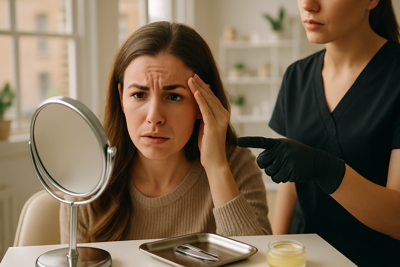
Microblading has transformed how people in the United States and around the world manage sparse or uneven brows, but like any cosmetic procedure it carries risk. In this comprehensive guide we explain what can go wrong with microblading, how to recognise problems early, and practical steps to fix — or avoid — each issue. Whether you’re a new artist training in Microblading or a client researching safety, this article will help you make better choices.
As an accredited provider with CPD Standards Office and the Body Art Qualification Association (BAQA), Skinart United States focuses on best practice, harm reduction and repair. Written by Gary Erskine — 25+ years in body art education — this article draws on clinical guidance, industry experience and US-specific examples so you can take safer, smarter steps when complications occur.
Table of Contents
Use the links below to jump to any section. Anchored headings help Google show “Jump to” links in search results.
- Overview: Why Microblading Can Go Wrong
- Common Complications — What to Watch For
- Prevention: Clinic, Client and Aftercare Best Practice
- Technical Mistakes Artists Make
- Correction Options: From Touch-ups to Medical Care
- Legal, Insurance and Reporting Considerations
- Real U.S. Cases & Success Stories
- FAQs — What Can Go Wrong with Microblading?
- Final Thoughts & Next Steps
Overview: Why Microblading Can Go Wrong
Microblading is a semi-permanent cosmetic tattooing technique that deposits pigment into the superficial dermis to create hair‑like strokes. While it’s an effective solution for many, a number of interrelated factors make it possible for things to go wrong: client medical history, artist experience, equipment quality, hygiene practices, pigment selection, and aftercare adherence. Understanding those risk areas reduces surprises and helps you respond quickly when complications appear.
In the United States the regulatory landscape varies by state — some have stringent body art laws, others concentrate on bloodborne pathogen training and local health department oversight. This variability makes standardised training essential: accredited courses such as Skinart’s Microblading course emphasise infection control, client consultation and corrective techniques so you can minimise harm and restore client confidence if problems arise.
Throughout this guide you’ll see practical, evidence-informed steps and real examples from U.S. practice. The phrase “What Can Go Wrong with Microblading” is front-and-centre because recognising early signs and understanding repair paths is the key to safe, ethical work and excellent client outcomes.
Common Complications — What to Watch For
Below are common complications clients and artists encounter after microblading. Early recognition helps you act quickly and avoid escalation.
- Infection — signs include increasing redness, warmth, swelling, pus, fever.
- Allergic reaction — itching, rash, swelling beyond normal healing.
- Hypopigmentation or hyperpigmentation — pigment fades unevenly or darkens unexpectedly.
- Blowouts — pigment migration beyond stroke lines, often due to deep placement.
- Asymmetry or poor shape — initial mapping or technique errors create uneven brows.
- Granulomas / keloids — rare inflammatory nodules formed by immune reaction or scarring.
- Color shift — pigment changes hue over months due to sun, skin chemistry or pigment quality.
- Poor retention — strokes fade quickly or patchy retention requires frequent touch-ups.
Pros and cons of immediate corrective action versus waiting: acting early can save tissue and limit corrective work, but rash interventions (like aggressive scrubbing or inappropriate topical steroids) may worsen scarring. The following paragraphs give practical guidance each artist can implement.
Always prioritise client safety. If you suspect infection or anaphylaxis, refer to medical services. For non-urgent aesthetic fixes, book a corrective consultation and document everything — photographs, timelines, and consent for corrective procedures.
Prevention: Clinic, Client and Aftercare Best Practice
Prevention is the most effective way to limit what can go wrong with microblading. Start with a robust client intake that documents medications (blood thinners, isotretinoin history), autoimmune conditions, pregnancy status, recent facial procedures and previous reactions to pigments or topical agents. A thorough consultation reduces risk and sets realistic expectations for retention and colour evolution.
Clinics must follow standard infection control protocols: single-use needles/blades, medical-grade gloves, sterile disposables, surface disinfection, and visible cleaning logs. In the U.S., many local health departments monitor these standards; artists should also complete OSHA and BBP (bloodborne pathogen) training. Skinart’s Microblading course emphasises these operational habits and documents them for client reassurance.
Aftercare instructions are a shared responsibility. Clear, written aftercare reduces complications: clients should avoid excessive moisture, sun exposure and makeup on the treated area for the recommended period, and should follow prescribed topical products only. Good aftercare prevents infection, improves pigment retention and reduces color shift.
- Complete medical history and informed consent before every procedure
- Single-use sterile needles or blades; never re-use disposables
- Proper PPE — gloves, masks, and eye protection as needed
- Work surface and tool sterilisation; sharps container and clinical waste stream
- Patch testing for pigment sensitivity if history suggests allergy
- Avoid microblading on clients on certain medications (consult guidelines)
- Provide written aftercare and follow-up scheduling (48–72 hour check, 6–8 week touch-up)
- Maintain clear documentation and photographic records from pre to healed state
Technical Mistakes Artists Make
- Going too deep — placing pigment into the reticular dermis causes blowouts and poor healing.
- Inadequate stroke depth — too shallow leads to early pigment loss and patchiness.
- Wrong pigment selection — using pigments not suited to the client’s skin tone or undertone.
- Poor mapping — asymmetry from bad eyebrow mapping or ignoring facial proportions.
- Overworking tissue — repeating strokes on scabbed tissue increases scarring and irregular retention.
- Poor needle configuration choice — wrong blade size for hair simulation or skin type.
- Rushed procedures — inadequate time compromises hygiene and precision.
- Not adjusting technique for oily or mature skin — one-size-fits-all methods fail in certain skin types.
- Insufficient documentation — without before/after images, resolving disputes or planning corrections is harder.
- Failure to provide clear, written aftercare instructions — clients unknowingly undo your work.
Many of these mistakes come down to training, practice and conservative decision-making. For example, oily skin often benefits from shallower strokes and pigment choice optimised for quicker fade. Skinart’s Microblading course covers these nuances in depth so students can avoid common pitfalls.
When a technical mistake occurs, the corrective path depends on the issue: for blowouts or migration, wait for full healing before attempting pigment correction; for colour shifts, pigment lightening (laser) or colour-correcting pigments may be options; for scarring, work with medical professionals. Document and communicate clearly with your client every step of the way.
Correction Options: From Touch-ups to Medical Care
When something goes wrong with microblading, the first step is triage: is this urgent (infection, allergic reaction, anaphylaxis) or aesthetic (shape, colour, retention)? Urgent issues require medical referral; aesthetic ones can typically be managed by an experienced artist.
Common correction paths include conservative touch-ups, pigment-lightening techniques, colour correction and, in some cases, referral for laser removal. Each option carries trade-offs: laser is effective for pigment removal but carries a risk of scarring and changes in skin texture. Colour correcting can be useful for hue shifts but requires deep knowledge of colour theory.
- Conservative touch-up (6–8 weeks after primary procedure)
- Patch testing and small-area trials before full corrective pigment work
- Topical or intralesional steroid referral for nodular granulomatous reactions (medical)
- Antibiotic therapy only under medical advice for clear infections
- Colour correction using counter-pigments — only by trained professionals
- Laser or Q-switched tattoo removal — medical referral and informed consent required
- Camouflage cosmetic makeup training for short-term client confidence
- Referral to dermatologist or plastic surgeon for scarring or complex reactions
Always set realistic expectations. Corrective work is often slower and more costly than primary treatments, and healed results can differ from initial intentions. Good documentation and transparent communication maintain trust and reduce liability risks.
Legal, Insurance and Reporting Considerations
In the United States the legal and regulatory environment around microblading varies by state and sometimes by county or city. Many jurisdictions require bloodborne pathogen training, proper disposal of sharps, and registration of body art facilities. Check your local public health department for specific rules where you practice.
Liability insurance is critical. If a client experiences infection, allergic reaction or scarring, having professional indemnity and public liability coverage helps resolve claims and supports client care costs where appropriate. Document consent forms, pre-procedure photos and aftercare instructions — these are invaluable in any investigation.
Quote from a recognised authority: “The CPD Standards Office recognises the importance of training and documentation in cosmetic procedures. Practitioners should follow local guidance and maintain clear records.” — CPD Standards Office (representative statement)
- Verify your state and local licensing requirements before practising
- Maintain up-to-date BBP/OSHA training and display certificates where required
- Carry professional indemnity and public liability insurance suitable for cosmetic tattooing
- Keep meticulous client records including photos, consent, and medical history
- Report severe adverse events when required by local health authorities
- Have a written refund and corrective policy to manage client expectations
- Train staff in emergency protocols, including anaphylaxis response
- Work with legal counsel experienced in cosmetic or medical aesthetics law
Real U.S. Cases & Success Stories
To make this practical, here are anonymised U.S. examples that illustrate how small errors can cascade — and how good practice fixes problems quickly.
Case 1: A client with oily skin experienced early pigment loss and patchy strokes following a rushed session. The artist documented the issue, scheduled a conservative touch-up at 8 weeks, adjusted needle configuration and pigment choice and used a lighter hand. Result: improved stroke retention and a satisfied client who left a positive review on the salon’s Google profile.
Case 2: A minor infection developed due to client non-compliance with aftercare (immersing brows in chlorinated water within 48 hours). The artist referred the client to urgent care; oral antibiotics were prescribed and the artist later performed a corrective shading after full medical clearance. The incident was recorded and used as a teaching moment for other students in a Skinart case review.
- Successful conservative touch-up after poor initial retention
- Medical referral and combined aesthetic correction after infection
- Colour-correction workflow succeeded where pigment choice caused a blue-green shift
- Laser removal coordinated with dermatologist for stubborn pigment
- Client education prevented repeat complications in subsequent clients
- Documentation reduced liability and assisted insurance claim resolution
- Follow-up calls strengthened client trust and improved long-term outcomes
- Peer review (mentor oversight) prevented repeated technique errors
FAQs — What Can Go Wrong with Microblading?
Common reader questions about complications and fixes, answered plainly.
What are the first signs of an infection after microblading?
Early infection signs include increasing redness beyond the initial treatment zone, swelling, tenderness that worsens rather than improves after 48 hours, yellowish pus, and systemic symptoms like fever. If you see these, advise the client to seek medical care immediately.
Can colour changes be fixed and how long should I wait?
Colour shifts often need time to settle — wait for complete healing (typically 6–8 weeks) before corrective interventions. Options include colour correction by a trained artist or referral for laser removal if necessary; always document and patch-test before full corrective work.
Is scarring reversible after microblading?
Scarring can be minimised but not always completely reversed. Superficial scarring sometimes improves with topical treatments and conservative cosmetic approaches; deeper scarring may require dermatological care. Avoid reworking scarred tissue until a clinician gives clearance.
How do I handle a dissatisfied client who says the shape is wrong?
Listen and document their concerns, show pre-treatment mapping and photos, offer a corrective consultation and clearly explain options and timelines. Maintain a professional, empathetic approach and use a written corrective policy to guide resolutions.
When should I refer to a medical professional after microblading?
Refer immediately for any signs of spreading infection, systemic symptoms, severe allergic reaction, anaphylaxis or significant scarring/nodules. Artists are not medical practitioners; timely referral protects the client and limits liability.
Final Thoughts & Next Steps
What can go wrong with microblading is often a predictable set of issues that skilled artists can prevent or correct. The key is a combination of sound training, attention to hygiene, honest client communication, appropriate equipment and ongoing professional development. When problems do occur, fast triage, good documentation and collaboration with medical professionals keep clients safe and protect your reputation.
If you are an aspiring artist in the United States, accredited, evidence-based training is the best way to reduce the chances of complications. Skinart United States offers a fully accredited online Microblading course that covers infection control, skin assessment, advanced technique and corrective workflows so you can learn to avoid and resolve these issues confidently.
Written by Gary Erskine, 25+ years in body art education and lead tutor at Skinart United States — our courses are accredited by the CPD Standards Office and BAQA to ensure you learn safe, compliant and industry-relevant practice.
Recent Blog Posts
- Studio Etiquette Update: Professionalism in 2026
 Workplace Etiquette for Body Art Studios Refresh your studio etiquette and build a reputation for professionalism with these up-to-date best practices.… Read More »Studio Etiquette Update: Professionalism in 2026
 - 🌙 Eid Mubarak: Celebrate with 5% Off in 2026!
 Eid Savings: 5% Off All Courses Celebrate Eid with a special offer: 5% off any course. Use code EID5 at checkout.… Read More »🌙 Eid Mubarak: Celebrate with 5% Off in 2026!
 - Top Mistakes New Body Artists Should Avoid (2026)
 Stay Ahead: Common Pitfalls for New Artists Read up on the most frequent errors new body artists make, and how to… Read More »Top Mistakes New Body Artists Should Avoid (2026)