Do You Need a Piercing License in United States?
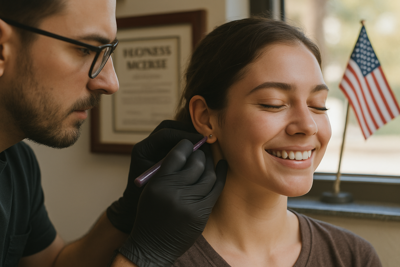
If you’re thinking about offering body piercing professionally, one of the first questions you’ll ask is: do I need a Piercing License in United States? The short answer is: it depends — but the pathway to operating safely, legally, and with confidence is clear. This article walks through federal guidance, state and local variations, common requirements, practical steps to compliance, and how accredited training from Skinart United States prepares you to meet those standards.
Understanding Piercing License in United States requirements is essential whether you plan to work in a studio, operate mobile services, or start your own business. Regulations vary widely by state and municipality — from formal licensing schemes to permit-based systems and detailed health department rules. Read on for a full breakdown that helps you make informed decisions and ensures you start your career on the right side of the law.
Table of Contents
Quick links to jump to the section you need. Use these anchor links to let Google generate “Jump to” links in search results.
- Overview: What “Piercing License in United States” Means
- State & Local Regulations — Why They Differ
- Common Licensing & Permit Requirements
- Health, Safety & Best Practices
- Common Mistakes That Lead to Enforcement
- Training, Certification & How Skinart United States Helps
- Exemptions, Special Cases & Mobile Services
- Real-world Examples & Success Stories
- Frequently Asked Questions
- Final Thoughts & Next Steps
Overview: What a Piercing License in United States Actually Means
When people ask about a Piercing License in United States, they often mean one of three things: a formal state or municipal license to operate, a health department permit for a specific location, or professional certification demonstrating competency. Federal law does not create a single nationwide piercing license; instead, authority is delegated to states and local health departments. That results in a patchwork: in some cities you need a business license plus a body art permit, while other jurisdictions rely on education and inspection-based systems.
Knowing which category your area falls into is the first practical step. Some states maintain comprehensive statutes for tattooing and piercing, while many counties and cities regulate through health codes and permitting processes. Even when a formal “piercing license” isn’t required, health and safety rules typically still apply and can be enforced during routine inspections.
For this reason, aspiring piercers should treat compliance as a combination of legal, clinical, and professional obligations: register where required, meet minimum training standards, carry out infection control practices, and keep records. The focus keyword — Piercing License in United States — is an umbrella term for all of these regulatory instruments.
Why State & Local Regulations Differ
Regulatory differences stem from how public health authority is organized: many states set broad standards and delegate inspections and permitting to counties or cities. This means two neighboring towns can have different rules on age limits, consent forms, or the need for municipal permits.
Pros and cons of this decentralized approach include:
- Pros: Local control allows health departments to respond to specific community risks and enforce rules that reflect local needs.
- Cons: It increases complexity for practitioners who move between jurisdictions or offer mobile services; compliance becomes a moving target.
Understanding local nuance is crucial. For example, in New York City, body art businesses must register with the Department of Health and meet hygiene training standards; many California cities require a county-level permit; while in some rural counties the requirements are limited to general business licensing. Always consult your local health department’s body art guidance — an authoritative resource is the CDC’s body art web pages, which outline infection-control principles and good practice (see CDC guidance).
At Skinart United States we encourage students to check municipal websites during their job search or before relocating, and we include guidance on how to find and interpret local regulations in our online piercing course.
Common Licensing, Permit & Record-Keeping Requirements
While rules differ, inspectors and health departments often ask for the same basic elements. If you meet these consistently you’ll be prepared for most jurisdictions that regulate piercing.
Most commonly required items include:
- Business registration or local business license
- Body art establishment permit or certificate (issued by county/city health department)
- Blood-borne pathogen (BBP) training certificate — most jurisdictions require demonstrable BBP competency
- Written consent forms for clients (often with age verification and parental consent for minors)
- Proper sharps disposal and written waste handling protocols
- Infection control policies and sterile processing procedures
- Employee records showing relevant training and immunizations where required (e.g., Hepatitis B information)
- Facility inspection compliance and available records of previous inspections
Some locations also require background checks or age minimums for practitioners. If you plan to offer services such as oral piercings or neonatal care for ears, additional rules or medical clearances may apply. The practical takeaway: build a compliance checklist for your studio and review local health code language regularly.
At Skinart United States we design our online Piercing course to prepare students for these requirements — we teach BBP, record-keeping practices, and how to communicate clearly with local health authorities so you can apply for permits or demonstrate readiness to inspectors.
Health, Safety & Best Practices
Health and safety are the backbone of regulatory scrutiny. Inspectors are primarily looking for infection control measures that protect clients and staff. In many places, failure to follow these practices is the most common reason for enforcement action — not the absence of a formal license itself.
- Using single-use, sterile needles and jewelry where required
- Appropriate personal protective equipment (PPE) and gloves
- Disinfection and sterilization of non-disposable tools
- Documented cleaning schedules for work areas and waiting rooms
- Client aftercare instructions and written consent forms
- Accurate client records, including medical disclosures and allergy checks
- Sharps containers and safe disposal contracts with licensed waste handlers
- Clear signage and age verification procedures
Quote from an industry official: “Local health departments look for a proven commitment to infection control. Compliance is about daily routines as much as paperwork,” says Dr. Maria Alvarez, Infectious Disease Advisor, San Francisco Department of Public Health. This reflects what inspectors nationwide report — consistent procedures reduce risk and make licensing simpler.
For trusted, evidence-based reference, see the CDC’s guidance on body art and hygiene. Skinart United States covers these standards in detail in our online piercing curriculum so you can show both practical competence and the paperwork many jurisdictions expect.
Common Mistakes Practitioners Make (and How to Avoid Them)
- Failing to register with the local health department or misunderstanding whether a permit is required.
- Inadequate or missing written client consent and age verification.
- Poor sterilization practices or reuse of single-use items.
- Improper sharps disposal and no waste-handling documentation.
- Gaps in employee training records — inspectors expect to see BBP certificates and documented training.
- Not having a written infectious disease exposure plan or post-exposure procedures.
- Operating from a location that does not meet building or zoning codes for body art services.
- Assuming “national certification” exists — many people mistakenly believe a single federal piercing license covers all states.
Most enforcement actions arise from simple oversights, not intentional misconduct. A missing consent form, expired BBP certificate, or a sharps container that’s full enough to expose staff are typical triggers. Regular internal audits and a compliance checklist can eliminate most of these problems.
Skinart United States helps students build those checklists. Our online piercing course includes templates for consent forms, cleaning logs, and inspection-ready record-keeping that meet the expectations of many U.S. health departments.
Training, Certification & How Skinart United States Helps
Even when a formal license isn’t mandatory, many employers and health departments look for evidence of training. The most accepted elements are BBP (blood-borne pathogens) training, practical skills in aseptic technique, and knowledge of anatomy and aftercare. Professional accreditation signals to clients and regulators that you take safety seriously.
Skinart United States provides an accredited online Piercing course that covers: BBP, infection control, anatomy relevant to piercing, client assessment, consent and legal essentials, and aftercare. Our course is fully accredited with the CPD Standards Office and the Body Art Qualification Association (BAQA), so it aligns with the type of training many jurisdictions accept.
Quote from Gary Erskine, lead tutor: “Our aim is to bridge the gap between theory and practice. We teach the knowledge inspectors want to see and the practical judgement employers look for.”
Exemptions, Special Cases & Mobile Services
Certain activities may be exempted or treated differently depending on local law. For example, religious or cultural piercing done as part of a ceremony could be regulated differently. Similarly, schools, private events, or nonprofit health clinics might fall under alternate rules. It’s crucial to check exemptions carefully — assuming you are exempt can lead to enforcement and fines.
Mobile piercing services introduce another layer of complexity. Many jurisdictions either prohibit mobile body art or require separate mobile permits and inspection readiness. If you plan to work at festivals, private events, or as a traveling piercer, research permits and insurance requirements early. Inspections for mobile services often focus on clean setup protocols, portable sterilization standards, and waste containment.
If in doubt, contact your local health department. They can confirm whether special exemptions exist and what documentation you’ll need to provide. Skinart United States offers guidance on locating the right contacts and preparing documentation for both fixed and mobile practice settings.
Real-world Examples & Success Stories from the United States
Many of our students began with little regulatory knowledge and, after completing Skinart United States’ accredited piercing course, launched compliant careers. Here are two anonymized, localized examples:
- Case 1 – Portland, OR: A student used our compliance checklist to apply for a Multnomah County body art permit, passed the initial inspection with no violations, and now operates a small studio focused on ear and facial piercings.
- Case 2 – Austin, TX: A mobile piercer completed the BBP module and used our templates to secure a vendor permit for a local music festival. Clear aftercare instructions and client records reduced post-event complications and helped the artist build referrals.
These stories reinforce that meeting the expectations of local health departments and employers often depends on preparation rather than luck. A well-document training and thorough record-keeping routine makes compliance straightforward.
Remember: Skinart United States provides accredited theoretical training across the modules regulators look for — we do not offer in-person training in the United States, and we do not supply piercing equipment. Our course focuses on safe practice, legal readiness, and building practical skills for employment or studio work.
Frequently Asked Questions
Below are common questions people searching for “Do You Need a Piercing License in United States?” ask. Answers are concise and geared to help you take practical next steps.
Q: Do I need a piercing license in my state? The correct approach is to contact your state health department or the county/city environmental health unit. Many local health department websites include body art permitting guides and application forms.
Q: How often do I need to renew permits? Renewal cycles vary from annual to multi-year. Keep a calendar reminder and copies of all certificates to avoid lapses that could affect employment or inspections.
Q: Will Skinart United States provide equipment or in-person mentorship? No. We offer comprehensive online training only. We do not provide equipment or in-person training in the United States. Our course prepares you with knowledge, documentation templates, and professional best-practices you can apply immediately.
Final Thoughts: Taking the Next Step with Confidence
Navigating a Piercing License in United States landscape can feel overwhelming, but preparation makes it manageable. Focus on consistent infection-control practices, secure BBP training, maintain clear records, and check local permitting requirements early. These steps protect clients, build your reputation, and simplify any licensing process.
At Skinart United States, our accredited online piercing course is designed to teach you the practical knowledge and documentation health departments and employers expect. You’ll learn how to present your training credentials, prepare inspection-ready paperwork, and adopt professional standards that make your studio or mobile service a trusted choice for clients.
Written by Gary Erskine, Lead Tutor — 25+ years training body artists worldwide. If your goal is to work confidently and compliantly in the United States, start with the right training and a clear plan. We’re here to help you every step of the way.
Ready to Get Started?
Enroll in Skinart United States’ accredited online Piercing course today to build the skills and documentation you need to operate confidently and meet local requirements.
Recent Blog Posts
- 🌙 Eid Mubarak: Celebrate with 5% Off in 2026!
 Eid Savings: 5% Off All Courses Celebrate Eid with a special offer: 5% off any course. Use code EID5 at checkout.… Read More »🌙 Eid Mubarak: Celebrate with 5% Off in 2026!
 - Top Mistakes New Body Artists Should Avoid (2026)
 Stay Ahead: Common Pitfalls for New Artists Read up on the most frequent errors new body artists make, and how to… Read More »Top Mistakes New Body Artists Should Avoid (2026)
 - Client Communication Skills: 2026 Body Art Success
 Master Consultation for Better Results Top communication strategies for client satisfaction and better outcomes in 2026 and beyond. X Send Chat