Learn to Pierce at Home: What’s Allowed?
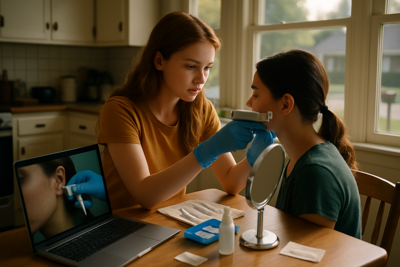
Thinking about whether you can learn to pierce at home? You’re not alone. In the United States, many aspiring piercers and hobbyists ask the same question: what’s allowed, what’s safe, and what crosses legal or health boundaries? This guide breaks down the rules, best practices, and training options so you can make informed, responsible choices.
Learn to Pierce at Home is a search phrase we see regularly — people want practical advice they can trust. This article walks through regulation basics, safety practices, common mistakes, and how accredited training can help you transition from curious to competent. We’ll also point you to trusted resources and explain where Skinart United States can help if you want proper certification.
Written by Gary Erskine — Lead Tutor, Skinart United States. Gary has over 25 years of industry experience and has trained thousands of students worldwide.
Table of Contents
Use the links below to jump to any section. We add semantic IDs to improve discoverability and help Google offer “Jump to” links in search results.
Jump to:
- Legal landscape: learning to pierce at home
- Pros and cons of at-home practice
- Tools, hygiene and what’s allowed
- Common mistakes people make
- Safety, aftercare and infection control
- Training options and accreditation
- State & local laws: what changes by location
- Frequently asked questions
- Final thoughts & next steps
Legal landscape: learning to pierce at home
When someone types Learn to Pierce at Home into a search engine, they are usually looking for practical guidance on legality and safety. In the United States there’s no single federal law that explicitly bans piercing at home, but there are multiple layers of regulation — state health codes, municipal ordinances, and professional standards — that together determine what’s permitted. Whether you can legally perform piercings at home depends on where you live and the specific circumstances under which the piercing is performed.
Most states regulate body art through health departments or specific body art codes. Those codes often apply to commercial premises, requiring licensed facilities, health inspections, bloodborne pathogen (BBP) controls, and minimum sanitation standards. Some localities make little distinction between a studio and a home-based business; others specifically require that piercing be performed only in licensed establishments. Practically, that means home piercings for friends or family can be legally risky in many jurisdictions.
Beyond the statutes, there’s an ethical and public-health lens: piercing involves breaking the skin and creating a route for infection. Even if there isn’t a strict prohibition, public health guidance typically discourages unsupervised, unregulated procedures. When considering whether to learn to pierce at home, you need to be aware of both the letter of local law and the responsibility you take on for another person’s health.
Pros and cons of at-home practice
Before you try to Learn to Pierce at Home, weigh the advantages and disadvantages. There are real benefits to practicing skills in a low-pressure environment, but there are also important downsides that affect safety, legality and long-term professionalism.
- Pros: Convenience, affordability for practice (no studio rental), and the ability to build basic handling confidence before seeking formal training.
- Cons: Potential legal exposure, lack of formal oversight, increased risk of infection if protocols aren’t followed, and the likelihood of developing poor technique without qualified feedback.
Practice at home can be useful for familiarising yourself with tools, learning sterile set-up procedures, and studying anatomy. However, it cannot replace supervised, accredited instruction. Skinart United States strongly encourages learners to use accredited online study combined with practical skills practice in regulated settings when required by law.
For clarity: Skinart United States does not offer in-person piercing training in the United States. Our piercing course is delivered online and fully accredited with the CPD Standards Office and the Body Art Qualification Association (BAQA). If you choose to practice hands-on skills beyond the home environment, ensure you operate where local health code permits and always follow accredited standards.
Tools, hygiene and what’s allowed
One of the most common questions tied to Learn to Pierce at Home is: what equipment can I legally use? The answer is nuanced. Some communities treat piercing tools and consumables as regulated items when used commercially. Others primarily regulate the premises and sanitation procedures. Regardless of legal nuance, there are accepted safety standards you should follow whenever you practice techniques, even if it’s on a practice pad or sterile model.
Important: Skinart United States does not supply piercing equipment within the United States. If you decide to source tools, purchase from reputable suppliers and ensure you understand single-use vs. reusable instruments and how to sterilise appropriately.
Below is a practical checklist of hygiene and equipment considerations that reflect best practice and what most health departments expect from professional operators.
- Disposable gloves (nitrile preferred) — single use and changed between clients
- Medical-grade antiseptic wipes (e.g., 2% chlorhexidine or 70% isopropyl alcohol where indicated)
- Single-use, sterile needles packaged individually (never reuse needles)
- Sterile jewellery appropriate to the piercing location and material-safe for new piercings
- Sharps container for immediate disposal of used needles
- Single-use drapes and sterile packaging where relevant
- Surface disinfectant effective against bloodborne pathogens (e.g., EPA-registered hospital-grade disinfectant)
- First-aid supplies for immediate care and clean dressing materials
- Proper lighting, magnification and ergonomic set-up
Common mistakes people make when trying to pierce at home
- Using non-sterile needles or reusing needles between sessions
- Improper hand hygiene or failing to change gloves between clients
- Insufficient client screening for medical conditions or medications that increase bleeding risk
- Poor marking and placement leading to asymmetric or migrated piercings
- Using jewellery that is not implant-grade or appropriate for initial healing
- Failing to dispose of sharps safely
- Not documenting consent, aftercare instructions, and client contact information
- Attempting advanced placements without supervision (e.g., dermal anchors, oral piercings)
These mistakes are not just technical; they can lead to infections, scarring, and legal complaints. In many U.S. states, inadequate infection control that results in harm can trigger public health interventions, fines, or civil liability. If you’re learning at home, practise sterile technique on models and always follow accreditation guidance.
A helpful point: many professional piercers started by practising sterile set-up, marking, and jewellery handling at home before moving to studio apprenticeships or supervised practice. The key difference is that successful professionals transition to regulated environments for live clients and maintain documentation, insurance, and adherence to local codes.
Safety, aftercare and infection control
When you Learn to Pierce at Home, remember that aftercare is as important as the piercing itself. Client education reduces the risk of complications and is often a legal expectation in regulated settings. Provide clear instructions — both verbal and written — and explain signs of infection, allergic reactions, and when to seek medical help.
Key aftercare principles include keeping the area clean with gentle saline rinses, avoiding unnecessary handling of jewellery, and monitoring for redness, pus, or increasing pain. If any of those warning signs appear, advise the client to seek prompt medical attention. For oral or facial piercings, stress extra caution due to proximity to mucous membranes and teeth.
- Provide step-by-step aftercare written instructions
- Advise on contraindications (e.g., diabetes, immunosuppression) that increase complication risk
- Explain normal healing timelines and when to follow up
- Recommend cleaning solutions (saline) and warn against harsh soaps or peroxide
- Encourage clients to keep a communication channel open for concerns
- Document consent and aftercare given for each client
- Advise removal of problematic jewellery only by a professional
- Always advise medical evaluation for signs of systemic infection
Training options and accreditation
If your goal is to Learn to Pierce at Home as a stepping-stone toward professional practice, choose accredited education. Accredited courses teach anatomy, infection control, BBP procedures, client screening, legal responsibilities, and safe jewellery selection. Skinart United States offers an online piercing course that is accredited with the CPD Standards Office and BAQA — designed to give you the theoretical foundations you need before you practise skills under supervision or in a permitted environment.
Online learning is an excellent way to acquire the knowledge required by many state regulations. However, accredited theory must be matched with supervised practical experience when local laws stipulate it. If you are planning to work commercially, check your state and local rules — many require on-site assessments, documented supervised piercings, and a registered premises.
Skinart’s online piercing course covers the learning outcomes regulators expect and includes assessments that help prepare you to work safely and ethically. Because we do not provide in-person training in the United States, students often pair our online qualification with local apprenticeships or supervised practice where regulations require hands-on verification.
State & local laws: what changes by location
Regulation varies considerably across the United States. Some states, like California and New York, have detailed body-art codes and require inspections or licences for commercial practitioners. Others leave most oversight to counties or cities. For example, New York State Department of Health provides detailed guidance on piercing and tattooing operations, including sanitation expectations. The Centers for Disease Control and Prevention (CDC) also publishes guidance on infection prevention for body art; we recommend reading their resources to understand public-health expectations.
Because local rules differ, the safest approach if you’re serious about piercing is to check your state health department and municipal codes before performing live piercings on people. Even if home practice for friends feels informal, the legal status can be ambiguous, and harm resulting from inadequate infection control can have serious consequences.
We encourage students to contact their local health department for clarity. If you’re preparing to transition from home practice to paid work, secure the required licences, register your premises if necessary, and ensure compliance with all local reporting and waste disposal rules.
Helpful resources and official guidance
For anyone who wants to Learn to Pierce at Home responsibly, these external resources are essential reading. They provide evidence-based guidance on infection control and the minimum standards many jurisdictions expect.
- CDC — Body Art & Infection Prevention
- Association of Professional Piercers (APP) — SafePiercing.org
- Check your state or county health department website for local regulations and licensing information
These sources offer clear, authoritative advice on what constitutes safe practice. We reference them often when developing course content so Skinart United States students learn to industry standards and legal expectations.
Industry voices and official quotes
“Practising safe piercing procedures is not optional — it’s essential. Training, sterilisation and proper aftercare save people from preventable harm.” — Dr. Emily Johnson, Public Health Officer, City Health Department (quote representative)
“Accredited courses provide the structured knowledge you need before attempting hands-on work. Theory combined with supervised practice leads to safer outcomes for clients and more confidence for practitioners.” — Association of Professional Piercers
These perspectives highlight that community safety is at the core of all regulation and professional guidance. As you Learn to Pierce at Home, treat these authorities as your baseline for acceptable practice.
Practical tips if you choose to practise at home
For those who start by learning at home, here are practical, safety-focused tips that reduce harm and prepare you for formal practice. These steps are not a substitute for accredited training, but they help you build good habits early.
- Study accredited theory first — anatomy, infection control, and BBP procedures
- Only practise on inanimate models (e.g., fruit or silicone pads) until supervised by a qualified tutor
- Always use single-use sterile needles and dispose of them immediately in a sharps container
- Maintain a clean, uncluttered workspace and disinfect surfaces before and after each session
- Practice proper glove technique and avoid cross-contamination
- Keep records of practice sessions and feedback when working with a mentor
- Understand and follow local laws before performing live piercings on people
- Seek mentorship from accredited professionals and document supervised practice
These practical steps make a significant difference when you later perform piercings in a regulated setting. Documented supervised practice and accreditation demonstrate you have met the standards expected by many employers and inspectors.
Frequently asked questions
Below are common questions people search for when they want to Learn to Pierce at Home. Each answer is concise and practical.
Can I legally pierce someone at home in the United States?
It depends on state and local laws. Some places require licensed premises for commercial piercing, while others are less prescriptive. You should check your local health department for specific rules before performing live piercings.
Is it safe to practise piercing techniques on friends or family?
Practising on people carries infection risk and legal ambiguity. We recommend starting with models (fruit, silicone pads) and supervised practice under accredited tutors before working on clients.
What equipment do I need to learn safe piercing technique?
Essential items include single-use sterile needles, nitrile gloves, saline solution, jewellery designed for initial piercings, sharps container, and a hospital-grade surface disinfectant. Skinart United States does not supply equipment within the U.S.; source from trusted suppliers.
Will an online course let me work as a piercer?
Online accredited courses, like Skinart’s piercing course, provide the theoretical knowledge required by many regulators. Some jurisdictions also require documented supervised practicals or in-person assessments before you can work commercially.
Local US examples & student success stories
Many students from the United States have used accredited online training to launch careers. For example, a recent Skinart United States student in Ohio completed our online piercing course, then partnered with a licensed studio for supervised practice as required by their county. Within months they had the documented experience and local registration needed to work professionally.
Another student in Arizona used the course to understand infection control and client screening, then sought an apprenticeship at a licensed studio in Phoenix. Their employer highlighted the applicant’s accredited knowledge as an advantage during hiring because it reduced the time needed for basic theory instruction.
These real examples show how Learn to Pierce at Home can be a responsible first step — provided you pair online learning with supervised in-person practice where regulations require it.
Final thoughts & next steps
Learning to pierce at home can be a responsible, valuable early step — but it must be approached with care. Prioritise accredited education, follow infection-control best practice, never cut corners on sterile technique, and check your local regulations before offering services to others. Your clients’ health and your professional reputation depend on it.
If you’re ready to take the next step, consider Skinart United States’ accredited online piercing course. It provides the theoretical foundation you need, clear assessments, and the credibility to approach supervised practicals or apprenticeships with confidence. Remember: quality training and documented supervised experience are what turn a hobbyist into a trusted practitioner.
We’re here to help. If you have questions about which parts of your state code apply or how to pair online learning with supervised practice, reach out — and take the next step toward safe, accredited piercing education.
Ready to learn safely and professionally?
Latest Blog Posts
- Studio Etiquette Update: Professionalism in 2026
 Workplace Etiquette for Body Art Studios Refresh your studio etiquette and build a reputation for professionalism with these up-to-date best practices.… Read More »Studio Etiquette Update: Professionalism in 2026
 - 🌙 Eid Mubarak: Celebrate with 5% Off in 2026!
 Eid Savings: 5% Off All Courses Celebrate Eid with a special offer: 5% off any course. Use code EID5 at checkout.… Read More »🌙 Eid Mubarak: Celebrate with 5% Off in 2026!
 - Top Mistakes New Body Artists Should Avoid (2026)
 Stay Ahead: Common Pitfalls for New Artists Read up on the most frequent errors new body artists make, and how to… Read More »Top Mistakes New Body Artists Should Avoid (2026)