Piercing Side Hustle: How to Start Legally
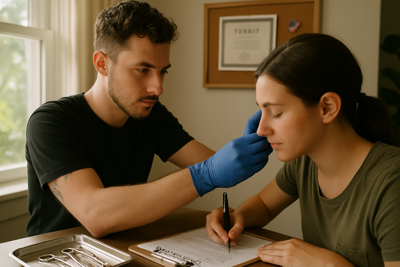
Thinking of launching a Piercing Side Hustle in the United States? You’re not alone. More people are turning passion into income by offering professional piercing services outside of traditional salon hours — but doing it legally requires training, the right paperwork, and a commitment to safety. This guide walks you through the practical, legal, and business steps to launch a compliant, reputable piercing side hustle that builds clients and avoids costly legal pitfalls.
Piercing Side Hustle ventures can start from a small home studio, a pop-up at events, or by partnering with local businesses. But before you pick up equipment or book your first client, you need to understand state and local regulations, infection-control rules, and professional standards. In this article we’ll map the steps you need — from accredited training and bloodborne-pathogen certification to insurance, recordkeeping, and marketing — so you can focus on great work and steady growth.
Skinart United States provides fully accredited online piercing training designed specifically for people launching a Piercing Side Hustle. Written by Gary Erskine, 25+ years in piercing and body art education, this article is grounded in practical experience and regulatory guidance tailored to the U.S. context. Read on for checklists, common mistakes, legal tips, and an action plan that moves you from concept to compliant practice.
Table of Contents
Use the links below to jump to the section you need. We recommend bookmarking this page or using the search-friendly anchors to get quick answers.
- Legal basics for a Piercing Side Hustle
- Benefits and drawbacks of a piercing side hustle
- Training, certification, and accreditation
- Equipment, supplies and workspace setup
- Common mistakes new piercers make
- Insurance, permits and recordkeeping
- Marketing, pricing and building your client list
- Scaling beyond a side hustle
- FAQ
- Final thoughts & next steps
Legal basics for a Piercing Side Hustle
Starting a Piercing Side Hustle in the United States means navigating a patchwork of state and local rules. Unlike a full-time studio operation that may have clearer inspection pathways, side hustles often start small — and that’s where the most legal risk appears. Key legal areas include local health department rules, state-level licensing for body-art or cosmetology, and liability insurance requirements.
At minimum, you’ll need to verify whether your state requires a body-art license, a cosmetology license, or allows mobile/home piercing under specific conditions. For example, some states require that all piercing practitioners operate from an inspected commercial space, while others allow temporary or mobile piercing with sanitation protocols in place. Always check both state statutes and municipal codes — health departments will often publish checklists for mobile vendors and temporary events.
Another immediate legal consideration is bloodborne pathogen (BBP) training and compliance with OSHA’s Bloodborne Pathogens Standard (29 CFR 1910.1030). Even if you work solo and part-time, OSHA guidance and CDC infection-control recommendations apply to protect you and your clients. Many local health departments and event organizers require proof of BBP training before permitting piercing services on-site.
Benefits and drawbacks of a piercing side hustle
A Piercing Side Hustle can provide flexible income, a way to build local reputation, and practical experience without the overhead of a full studio. Many practitioners begin part-time, building a loyal clientele and gradually increasing prices and availability. That said, a side hustle requires strict time management, clear client communications, and uncompromising professionalism to succeed.
- Pros: Low startup costs (if you already have training), flexible hours, faster client acquisition through local networking, opportunities to test pricing and services.
- Cons: Regulatory complexity (different city/state rules), potential restrictions on home-based services, limited liability protection if you don’t carry insurance, and increased scrutiny at events or pop-ups.
Weigh these pros and cons in light of your personal circumstances. If you live in a city with strict commercial requirements, a side hustle might require renting a small treatment room or partnering with an inspected studio. In other areas, you may be able to legally provide mobile or home-based services with documented sanitation and informed-consent forms.
Importantly, a Piercing Side Hustle that begins with accredited, widely recognised training will be easier to scale. Clients and event organisers want evidence of training and insurance — that’s why Skinart United States’ accredited course is tailored to help you open doors while remaining legally compliant.
Training, certification, and accreditation
Training is the foundation of a legal and ethical Piercing Side Hustle. Accredited courses teach anatomy, aseptic technique, infection control, aftercare, consent and legal responsibilities. In the United States, many municipalities and venues require documented certification before you can pierce at events or in shared commercial spaces.
At Skinart United States our online Piercing course is fully accredited with the CPD Standards Office and the Body Art Qualification Association (BAQA). The course covers essential modules: infection control, anatomy, client assessment, sterile technique, emergency response and aftercare. Completing accredited training not only improves safety — it increases client trust and reduces legal exposure.
In addition to accredited training, you should obtain an OSHA-compliant Bloodborne Pathogens (BBP) certification. Local health departments often require BBP proof for event permits and inspections. Authoritative guidance is available from the Occupational Safety and Health Administration (OSHA) and the Centers for Disease Control and Prevention (CDC), both of which provide key standards and best practices for safety and disposal: OSHA Bloodborne Pathogens Standard and CDC infection control guidelines.
- Complete an accredited piercing course (CPD & BAQA recognised)
- Obtain Bloodborne Pathogens certification
- Practice sterile technique and client consultation
- Understand state and local licensing requirements
- Create and use written consent & aftercare forms
- Set up a compliant sharps & biohazard disposal plan
- Keep client records and incident logs
- Maintain continuing professional development (CPD) hours
Equipment, supplies and workspace setup
- Disposable needles/clamps where required
- Autoclave or certified single-use systems (where mandated)
- Sharps containers and biohazard bags
- Medical-grade antiseptics and sterile wipes
- Gloves (nitrile) and barrier films
- Cleanable treatment surface and disposable covers
- Aftercare wipes, written aftercare instructions
- Informed-consent and client record forms
Note: Skinart United States does not supply piercing equipment within the U.S. If you plan to operate a Piercing Side Hustle, source equipment from reputable U.S.-based suppliers and ensure any reusable instruments meet local sterilisation requirements. Where autoclaving is necessary, document maintenance and test results. For pop-ups and mobile setups, prepare a checklist that inspectors and venue managers can quickly review to confirm compliance.
Set your workspace layout to support a one-way clean-to-dirty workflow: sterile supplies stored separately from waste, clear handwashing station, and dedicated area for client consultation. Even in a small home-based setup, clear separation, documented cleaning schedules and easy-to-view signage improve safety and reduce inspector concerns.
Common mistakes new piercers make
Even experienced body artists can trip up when pivoting into a side hustle. Here are common mistakes to avoid, condensed from years of training and mentoring students who launched successful Piercing Side Hustles across the U.S.
- Skipping accredited training and relying on informal mentorship
- Operating without documented BBP certification
- Assuming home-based piercing is legal without checking local codes
- Not having a dedicated sharps disposal plan
- Poor recordkeeping or missing informed-consent forms
- Underinsuring or lacking professional liability coverage
- Using non-medical-grade antiseptics or uncertified tools
- Failing to establish a cancellation/refund and emergency policy
Each of these mistakes increases legal risk and can damage your reputation. For instance, missing consent forms or poor aftercare instructions can lead to complaints and possible municipal fines. The simplest way to avoid many of these problems is to complete accredited training and follow checklists used by inspected studios.
Quotes from official sources underline these risks. A municipal public health spokesperson noted: “Inspectors prioritise documentation and infection-control — inadequate recordkeeping is one of the quickest triggers for enforcement.” Similarly, training bodies consistently recommend BBP certification as a starting point for any piercing work.
Insurance, permits and recordkeeping
Insurance is non-negotiable for many event organisers and business partners. Professional liability insurance (sometimes called malpractice insurance) and general liability are common requirements. Even if you’re operating a low-cost Piercing Side Hustle, an incident can result in significant costs that insurance helps mitigate.
- Professional liability insurance (covers claims related to piercing procedures)
- General liability (covers accidents on premises during appointments)
- Event insurance (short-term coverage for pop-ups and fairs)
- Workers’ compensation if you hire part-time assistants (state dependent)
- Proof of BBP and accredited training for venue permits
- Documentation of sterilisation logs, autoclave spore test records (if applicable)
- Client records, informed consent forms, and incident reports
- Written aftercare and follow-up logs
Many venues and municipal permit offices require proof of insurance, BBP certification and examples of your client consent forms before they’ll approve your application. Keep copies of everything digitally and in a secure paper file. A standardized intake form that includes emergency contact information and medical history reduces the risk of missed disclosures.
Tip: contact your local health department early in your planning process. They can tell you whether your proposed operation is classed as a “commercial” activity requiring inspections, or if a limited mobile permit exists. This local intel prevents surprises and helps you present a clean application when requesting event permits or studio sharing agreements.
Marketing, pricing and building your client list
Marketing for a Piercing Side Hustle balances visibility with trust. Clients want to know you’re trained, insured, and practice safe techniques. Use before-and-after galleries responsibly (with client consent), collect reviews, and partner with local businesses for referral opportunities. Many successful side hustles start by offering limited-time introductory bookings for loyal clients of existing tattoo or beauty businesses.
Pricing should reflect your local market, the complexity of piercings offered, and the overheads you incur (insurance, BBP certification, supplies, venue fees). Avoid racing to the bottom on price — instead focus on value: accredited training, clear aftercare instructions, and a professional client experience justify higher rates and better client retention.
Practical marketing tactics for a Piercing Side Hustle:
- Create a simple website or landing page highlighting accreditation and course credentials
- List your services, transparent pricing, and aftercare information
- Use local Facebook groups and Instagram with geo-tags and local hashtags
- Collect and display client testimonials (with permission)
- Partner with local retailers, festivals or markets for pop-up events
- Offer limited “introductory” slots to build momentum with clear terms
- Use appointment software to maintain records and confirmations
- Maintain a professional cancellation and refund policy
Scaling beyond a side hustle
As your Piercing Side Hustle grows, you’ll reach natural inflection points: demand might exceed your available hours, events or studio partnerships may offer expansion, and you may consider hiring an assistant or renting a shared studio space. Growth brings new obligations. Commercial leases, employee law, and permanent inspections have different requirements than occasional pop-ups.
Plan for growth by documenting systems: intake and consent processes, sterilisation logs, staff training plans, and a clear operations manual. These systems not only keep you compliant but also create transferable business value if you decide to sell or partner later. Many of our students at Skinart United States have used the online piercing course as the credential to secure studio space or event vendor slots because accredited training reduces onboarding friction for managers.
When you scale, revisit your insurance coverage, local permits, and tax structure. Moving from a hobby to a business may change how you file and the licences you need. Consult a local small-business advisor or accountant early so scaling decisions are built on a compliant foundation.
Frequently asked questions
Below are common questions people searching for “Piercing Side Hustle” ask. Each answer is concise and designed to help you move forward legally and safely.
- Do I need a licence to run a Piercing Side Hustle in the U.S.?
Licensing depends on your state and local jurisdiction; many require either a body-art licence or a cosmetology/esthetics endorsement and municipal inspection for commercial or permanent operations. Check your local health department early so you know whether pop-ups, mobile piercing, or home-based work is permissible. - Is BBP certification required?
While not universally mandated by federal law for private practitioners, BBP certification is widely required by event organisers, venues, and many municipalities. It’s also best practice for client and practitioner safety in any piercing business. - Can I pierce clients from home?
Some local regulations allow home-based piercing with specific sanitation and space requirements; others prohibit it. Always verify municipal codes and, if in doubt, arrange to operate from an inspected commercial space or a partner studio. - Do I need to buy equipment from the course provider?
No. Skinart United States provides accredited online training but does not supply equipment in the U.S. Purchase instruments and single-use disposables from trusted U.S.-based vendors that meet local standards. - What insurance do I need for a side hustle?
Professional liability and general liability are commonly required. Event-specific coverages are also available. Confirm required levels with venues and review your policy exclusions carefully.
We’ve also provided a short FAQ schema below to improve search visibility for these common queries.
Final thoughts & next steps
Launching a Piercing Side Hustle in the United States is an exciting way to turn skill into income — but it must be done carefully. Prioritise accredited training, BBP certification, and clear documentation to protect yourself and your clients. Local health departments and event organisers look for these signposts of professionalism when granting permits or recommending vendors.
Skinart United States’ accredited online Piercing course was created with side hustlers in mind: clear modules, practical checklists and guidance tailored for U.S. regulations. If you want a structured route to start legally and confidently, taking an accredited course is the fastest, safest path.
Take action today: educate yourself, document every step, and build a practice rooted in safety and integrity. When you do that, your Piercing Side Hustle becomes more than extra income — it becomes a respected, sustainable service clients rely on.
Recent Blog Posts
- Studio Etiquette Update: Professionalism in 2026
 Workplace Etiquette for Body Art Studios Refresh your studio etiquette and build a reputation for professionalism with these up-to-date best practices.… Read More »Studio Etiquette Update: Professionalism in 2026
 - 🌙 Eid Mubarak: Celebrate with 5% Off in 2026!
 Eid Savings: 5% Off All Courses Celebrate Eid with a special offer: 5% off any course. Use code EID5 at checkout.… Read More »🌙 Eid Mubarak: Celebrate with 5% Off in 2026!
 - Top Mistakes New Body Artists Should Avoid (2026)
 Stay Ahead: Common Pitfalls for New Artists Read up on the most frequent errors new body artists make, and how to… Read More »Top Mistakes New Body Artists Should Avoid (2026)