Common SMP Mistakes Beginners Make
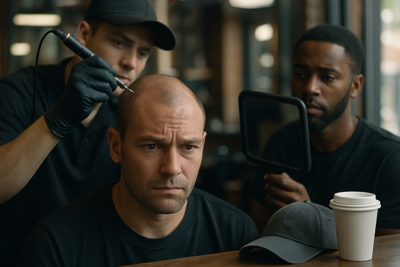
Common SMP Mistakes are surprisingly consistent across beginners — and many are avoidable. If you’re learning Scalp Micropigmentation in the United States, understanding the typical errors others make can save you time, money, and client trust. This guide walks through the practical, technical, and professional missteps new technicians encounter and offers clear steps to fix them.
As an internationally recognized training provider, Skinart United States created this resource to help new artists build confidence while avoiding pitfalls that can hinder their careers. Whether you’re just starting with your first client or refining your technique, these insights come from decades of hands-on tutoring and real-world casework.
Written by Gary Erskine, Lead Tutor — 25 years in Scalp Micropigmentation education. Gary has trained thousands of students worldwide and compiled the most frequent and consequential errors into this single, practical reference.
Table of Contents
- Understanding Scalp Micropigmentation and Core Concepts
- Equipment, Needles and Setup: Pros & Cons
- Skin Types, Conditions and Practical Tips
- Top Beginner Mistakes to Avoid
- Client Management, Consent and Aftercare
- Practice Routines, Technique and Troubleshooting
- Business Ethics, Local Rules and Licensing
- Frequently Asked Questions
- Final Thoughts & Next Steps
Tip: Use the anchor links above to jump to each section—search engines like Google may show “Jump to” links for these headings.
Understanding Scalp Micropigmentation and Core Concepts
Scalp Micropigmentation (SMP) is a cosmetic tattooing technique that uses micro-needles to place pigment into the upper dermal layer of the scalp, recreating the appearance of hair follicles. Understanding the physiology of the skin and how pigment settles over time is critical — many Common SMP Mistakes stem from a lack of appreciation for how scalp skin responds differently than facial or body skin.
When you begin, it’s tempting to focus narrowly on machine settings or needle configurations. While tools matter, the core art rests on three pillars: accurate consultation and design, controlled depth and pigment placement, and a strict approach to hygiene and client safety. Missing any of these pillars increases the risk of poor cosmetic outcomes.
Throughout this article you’ll find examples drawn from US-specific practice — from state licensing nuances to common client expectations in metropolitan markets like New York and Los Angeles. Learning to see the procedure as both a technical tattoo and a hairline restoration service will help you avoid the most frequent traps.
Equipment, Needles and Setup: Pros & Cons
Choosing the right equipment and setting up an ergonomic workspace are early decisions that shape results. Many Common SMP Mistakes occur because beginners rely on the wrong needle groupings, inconsistent machine speed, or poor workstation ergonomics that lead to hand fatigue and uneven dot distribution.
- Pros: Modern rotary machines offer smooth, repeatable strokes and low vibration; cartridge needles can reduce cross-contamination and allow predictable dot sizes.
- Cons: Cheap or poorly tuned machines can cause inconsistent pigment delivery; overly large needles create blotchy deposits rather than crisp follicle impressions.
- Pros: Adjustable power supplies and variable speed allow you to match technique to skin tension and density.
- Cons: Over-reliance on power settings without correct depth control leads to blowouts or poor retention.
When selecting needling configurations, consider the client’s skin type and scalp condition. A single-needle or tight three-round magnum might be ideal for creating crisp follicle dots on pale, unscarred scalps. For thicker skin or scarred areas, different groupings and slower passes may be necessary to encourage pigment uptake without trailing.
Because Skinart United States provides online Scalp Micropigmentation training only, we do not supply Scalp Micropigmentation equipment in the United States. Our courses teach you how to choose, set up, and maintain your own kit safely and effectively, and we include detailed checklists so you can create a professional workspace that reduces the most common setup-related mistakes.
Skin Types, Conditions and Practical Tips
Different skin types react differently to pigment placement. Oily scalps can cause pigment to spread slightly more, while dry scalps can resist pigment uptake. Understanding how Fitzpatrick skin types and scalp conditions like scarring, sun damage, or alopecia areata affect retention is essential to avoid Common SMP Mistakes.
Beginners often treat every client the same way. That’s a fast path to unsatisfactory results. Take the time to assess skin elasticity, hair pattern, and existing scars during consultation. Test a small area when in doubt, especially on scar tissue where pigment behaves unpredictably.
Seasonal and lifestyle factors matter too. Clients who swim regularly or sweat heavily may experience faster pigment fade. Educate clients during consultation so expectations align with realistic timelines for touch-ups and outcomes.
- Oily scalp — expect slightly wider dots; use tighter needles and lighter pressure.
- Dry scalp — increase hydration before treatment and monitor needle depth carefully.
- Scarred tissue — perform test patches; scars may need smaller, denser dots or different pigment formulations.
- Sun-damaged skin — plan for softer pigmentation and slower build-up across sessions.
- Dark skin tones — contrast management matters; choose pigments and dot sizes to prevent muddy appearance.
- Thin, translucent scalp — avoid heavy pigment that looks artificial; use a feathered, layered approach.
- Clients on blood thinners — expect more bleeding and slower retention; consult medical history carefully.
- Active dermatitis or infection — postpone treatment until condition resolves to avoid complications.
Top Beginner Mistakes to Avoid
- 1. Incorrect needle depth — creating blowouts or poor retention.
- 2. Overworking the skin — excessive passes that cause scabbing and pigment loss.
- 3. Poor pigment choice — wrong tone or concentration creating unnatural results.
- 4. Weak consultation and design — mismatched hairline or unrealistic expectations.
- 5. Inadequate sanitation — risking infection or cross-contamination.
- 6. Ignoring scalp tension — uneven dots on relaxed vs. stretched skin.
- 7. Inconsistent dot size — visible patterning and lack of realism.
- 8. Skipping test patches on scar tissue — unpredictable pigment behavior.
- 9. Rushing sessions — not allowing time for correct placement and client comfort.
- 10. Poor documentation — no retention of settings, pigment mixes, or photographic records.
- 11. Lack of aftercare communication — increased chance of poor healing and client dissatisfaction.
- 12. Not tracking touch-up schedules — loss of revenue and client trust.
These mistakes often compound. For example, incorrect needle depth combined with overworking the skin can lead to both immediate and long-term poor retention. Always document your session details — machine settings, pigment shade and dilution, needle grouping, and the number of passes — so you can refine approach over time.
One practical tip: create a short checklist you run through before every session (client consent, blood pressure, patch test for scars if needed, machine calibration, and a documented photo). This habit alone prevents many Common SMP Mistakes that come from inattention or rushing.
Client Management, Consent and Aftercare
Excellent SMP is more than technique; it includes how you manage client expectations before, during, and after treatment. Skipping proper consent forms or failing to set realistic timelines are among the most common non-technical mistakes beginners make. These errors can damage your reputation faster than a poorly executed hairline.
- Use a clear, written consent form that lists risks, expected timeline, and the need for follow-ups.
- Record pre-procedure photos with consistent lighting and angles for comparison.
- Provide a written aftercare plan: avoid heavy sweating, direct sun, and swimming for specified periods.
- Explain healing stages and what to expect in terms of scabbing and pigment settling.
- Set realistic expectations: SMP is a multi-session process for optimal density.
- Offer documented touch-up policies and pricing, to remove ambiguity later.
In the United States, local regulations about consent and record-keeping vary by state. Even where formal licensing for SMP is not explicitly defined, follow best-practice infection control standards such as OSHA’s Bloodborne Pathogens regulation to protect clients and yourself — see OSHA guidance for bloodborne pathogens for details.
A strong consultation is also a brand-building opportunity. Take time to explain alternatives (hair transplant, concealers) and be honest about what SMP will and won’t achieve. Honesty prevents dissatisfaction and reduces the number of clients who later ask for refunds or corrections.
Practice Routines, Technique and Troubleshooting
Practice builds confidence. One frequent mistake is neglecting structured practice and leaning solely on live clients to learn. A disciplined routine using practice skins, varied skin analogues, and peer feedback prevents early career errors and helps refine muscle memory for consistent dot placement and hand speed.
Another error is failing to diagnose and correct problems during a session. If dots are spreading or the pigment appears greyed out, stop and reassess rather than doubling down. Troubleshooting early saves a session and preserves the client’s scalp.
Here’s a short troubleshooting checklist you can adopt:
- Check needle depth and adjust by 0.1–0.2mm rather than large jumps.
- Assess machine speed; slower speeds can improve pigment placement on tough scalps.
- Pause and view from different angles and distances to spot inconsistent patterning.
- Reduce pressure if you see widespread pigment diffusion.
- Perform a small test pass in a less visible area before reworking the entire zone.
- Document the settings that produced a successful pass for future sessions.
Business Ethics, Local Rules and Licensing
Running a professional SMP service in the United States requires more than technical skill. Ethical practice, transparent pricing, and compliance with local health rules all matter. A common mistake is assuming one set of rules applies nationwide; in reality, regulations vary by city and state. Check local health department rules and any municipal requirements for tattoo services.
Some states treat cosmetic tattooing and micropigmentation differently from traditional tattooing, which affects permits and business classification. Even in states without explicit SMP licensing, adherence to recognized safety standards—proper waste disposal, sharps handling, and sterilization protocols—keeps your business protected and clients safe.
Quote from an industry guidance perspective: “Professional conduct, thorough documentation, and adherence to infection-control standards protect clients and grow trust in the cosmetic micropigmentation sector.” — Council for Professional Tattoo Practitioners (industry guidance)
Frequently Asked Questions
What are the most common SMP mistakes beginners make?
The most common mistakes include incorrect needle depth leading to blowouts, overworking the skin, poor pigment selection, weak client consultations, and inadequate sanitation; these errors are avoidable with structured training and checklists.
How can I avoid blowouts when doing SMP?
Avoid blowouts by controlling needle depth precisely, using consistent hand speed, and reducing pressure on sensitive or thin scalp areas. Regular practice on skins and incremental depth adjustments help you find a reliable setting for each client.
Do I need special licensing to perform SMP in the United States?
Licensing varies by state and municipality. Some areas classify SMP under cosmetic tattooing, others under general tattooing. Check with your local health department; regardless of licensing, follow infection-control best practices and keep detailed records.
What aftercare instructions reduce poor healing?
Clear aftercare includes avoiding heavy sweating, swimming, and direct sun for the recommended period, gentle cleaning as instructed, and returning for a touch-up when healing completes. Proper aftercare significantly reduces scabbing-related pigment loss.
Does Skinart United States offer in-person SMP training?
Skinart United States offers accredited online Scalp Micropigmentation courses; we do not provide in-person SMP training within the United States. Our online program is fully accredited by CPD and BAQA and includes comprehensive modules on technique, safety, and client management.
Final Thoughts & Next Steps
Getting started with SMP is a rewarding path that blends artistry, technical skill, and client care. Common SMP Mistakes are learning opportunities: each error you identify and correct fast-tracks your progress. Build a habit of documentation, structured practice, and honest consultations — these practices protect clients and grow your reputation.
If you’re ready to learn a structured method that reduces beginner mistakes and builds professional confidence, join our accredited online Scalp Micropigmentation course. The program is designed for technicians based in the United States who want an industry-respected foundation in technique, safety, and client management. Remember — Skinart United States provides online training only and does not supply SMP equipment domestically.
Your next step can be decisive. With the right training and a commitment to best practice, you’ll avoid most Common SMP Mistakes and deliver long-term satisfaction to your clients. We’re here to guide you every step of the way.
Recent Blog Posts
- Studio Etiquette Update: Professionalism in 2026
 Workplace Etiquette for Body Art Studios Refresh your studio etiquette and build a reputation for professionalism with these up-to-date best practices.… Read More »Studio Etiquette Update: Professionalism in 2026
 - 🌙 Eid Mubarak: Celebrate with 5% Off in 2026!
 Eid Savings: 5% Off All Courses Celebrate Eid with a special offer: 5% off any course. Use code EID5 at checkout.… Read More »🌙 Eid Mubarak: Celebrate with 5% Off in 2026!
 - Top Mistakes New Body Artists Should Avoid (2026)
 Stay Ahead: Common Pitfalls for New Artists Read up on the most frequent errors new body artists make, and how to… Read More »Top Mistakes New Body Artists Should Avoid (2026)