Learn Scalp Micropigmentation from Home: Beginner’s Guide
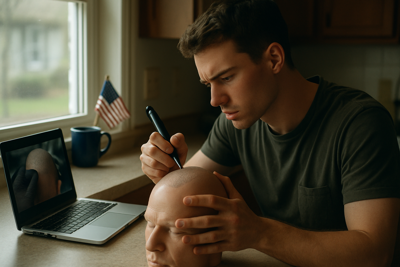
If you want to Learn Scalp Micropigmentation from Home, this beginner’s guide will walk you through the fundamentals, safety basics, and the practical steps to get started — all tailored for students based in the United States. Online learning makes it possible to master core SMP theory, workflow, and needle/ink knowledge before practicing hands-on under supervision.
Scalp micropigmentation (SMP) is a fast-growing, non-surgical cosmetic service that recreates the appearance of hair density through tiny pigment deposits into the superficial layers of the scalp. For many aspiring practitioners, the most efficient path is to combine structured online instruction with deliberate, supervised practice.
In this guide we’ll cover what SMP is, what you can realistically learn at home, common mistakes to avoid, how to build a portfolio, and how Skinart United States’ accredited online Scalp Micropigmentation course can help you transition professionally. Written by Gary Erskine, 25 years in Scalp Micropigmentation education.
Table of Contents
Jump to any section — we use semantic IDs to help search engines and make navigation quick.
- Learn Scalp Micropigmentation from Home: Overview
- Benefits and Drawbacks of Learning SMP Online
- What You Need to Learn (Core Curriculum)
- Common Mistakes to Avoid
- Practice, Models, and Building a Portfolio
- Health, Safety and Legal Requirements in the United States
- Course Structure, Accreditation and Assessment
- Frequently Asked Questions
- Final Thoughts & Next Steps
Learn Scalp Micropigmentation from Home: Overview
Scalp micropigmentation (SMP) is a specialized cosmetic technique that recreates the visual effect of hair follicles using pigment placed into the epidermal/dermal junction. When you Learn Scalp Micropigmentation from Home, you’ll focus first on the theoretical building blocks — skin anatomy, pigment science, color theory, and needle mechanics. These foundations are crucial: good theory reduces errors and builds confident technique.
Online courses for SMP are structured to deliver this theory through videos, close-up demonstrations, case studies, and assessments. The advantage is you can revisit technique breakdowns and theory modules as often as needed while planning supervised practical sessions. For learners in the United States, online training also helps you fit accreditation studies around your schedule and local licensing requirements.
At Skinart United States we emphasise a blended path: comprehensive online learning that primes you for safe, competent practice. This guide explains which parts of SMP learning are suitable for at-home study and which will require practical coaching or supervised practice.
Benefits and Drawbacks of Learning SMP Online
Online learning gives new SMP artists a flexible, resource-rich start. Below we summarise the main advantages and potential downsides to help you decide if at-home learning suits your goals.
- Pros:
- Structured theory modules you can revisit (skin anatomy, pigments, hygiene).
- Video demonstrations and slow-motion technique breakdowns.
- Access to accredited certification pathways (e.g., CPD/BAQA through Skinart United States).
- Cost-effective compared with immediate in-person tuition.
- Fit learning around work and family commitments in the United States.
Despite these advantages, online learning is not a complete substitute for hands-on practice. SMP requires fine motor control, live feedback, and experience reading varied skin types and textures. Online modules prepare you, but proficiency requires deliberate, supervised practice on models or practice skins.
Skinart United States provides a clear progression: in-depth online instruction, detailed assessments, and guidance on how to arrange supervised practice responsibly in your local area. Remember, we do not offer in-person training in the United States, and we do not supply SMP equipment to US students; practical training must be arranged independently.
What You Need to Learn (Core Curriculum)
To Learn Scalp Micropigmentation from Home effectively, your coursework should cover a range of technical and professional skills. A complete beginner curriculum typically includes theory, practical technique demonstrations, client consultation skills, and business basics.
Here are three foundational paragraphs describing each essential area:
1) Technical Foundations — Skin layers, wound healing, pigment composition, and how different skin tones accept pigment. This theoretical knowledge helps you predict how a pigment will look once healed and how to avoid common colour migration issues. In our online modules, these topics are illustrated with high-resolution images and case studies.
2) Needle and Device Technique — Understanding needle configurations, depth control, angle of entry and machine settings is critical. Many learners benefit from video slowdowns and frame-by-frame explanations that show how pressure and speed affect dot size and retention. Practicing on synthetic skins after watching demonstrations is an accepted at-home step before moving to supervised live models.
3) Consultation, Design and Aftercare — SMP is as much about design and expectation management as it is about technique. Learn how to map hairlines, match pigment density to client hair and skin, and communicate a realistic outcome. Aftercare protocols affect longevity and healed result; clients who follow aftercare achieve the best outcomes.
- Skin anatomy and healing cycles
- Pigment science and colour selection
- Device mechanics and needle choices
- Technique breakdowns: strokes, dot work and microfollicle patterns
- Client assessment, consent and realistic expectations
- Infection control, cross-contamination prevention and PPE
- Aftercare, touch-up planning and fading management
- Business basics: pricing, portfolio development and marketing for the US market
Common Mistakes to Avoid
- Working too deep (causes scarring and blown-out dots)
- Using pigments that are not formulated for SMP
- Poor colour selection for skin tone, leading to unnatural results
- Inadequate client consultation and expectation management
- Skipping proper sanitation and bloodborne-pathogens protocols
- Overworking an area to “fix” poor retention, causing damage
- Failure to document pre- and post-operative steps for client records
- Rushing technique practice without progressive competency checks
These mistakes are commonly made by eager beginners who attempt to rush practical experience. The online environment at Skinart United States is designed to reduce these errors by combining slow, repeatable demonstrations with practical checklists and assessment stages.
Another frequent issue is confusion over pigment behaviour — which is why colour theory, multiple healing-stage images and longitudinal case studies are central to our course. Learning the science behind how pigments fade and shift on different skin types is one of the highest-impact lessons you can study at home.
Practice, Models and Building a Portfolio
Practice is the bridge between theoretical knowledge and competent client work. At-home learners should follow a structured pathway: simulation practice, observation, supervised models, and progressive documentation. Start with synthetic skins and progress in small, supervised stages.
Document each practice session with high-resolution before/after images and notes about settings, needles, pigments and healing progression. These records form the backbone of a professional portfolio that demonstrates your learning curve to clients and potential employers.
Below is a list of practical exercises and portfolio-building activities you can complete while you Learn Scalp Micropigmentation from Home.
- Practice dot density and spacing on synthetic scalp skins
- Simulate hairline shapes for different face types
- Record machine settings and needle configuration for each attempt
- Practice fade and blending techniques across different “scalp” textures
- Work under timed sessions to build speed and consistency
- Collect model case studies under supervision, with detailed consent forms
- Create a portfolio site or Instagram gallery showcasing progressive results
- Solicit constructive feedback from mentors and peers and iterate
Health, Safety and Legal Requirements in the United States
Safety and compliance are non-negotiable. When you Learn Scalp Micropigmentation from Home, you must still meet all relevant local and state legal requirements for cosmetic tattooing in the United States. Regulations vary by state — some require specific bloodborne pathogen (BBP) training, facility inspections, or business licensing.
For BBP and infection control guidance, the CDC provides clear resources for healthcare and cosmetic practitioners on standard precautions. We recommend checking your state health department and municipal regulations before performing any live client work.
Skinart United States’ course aligns with accredited standards and highlights the documentation you’ll need for local compliance. We also embed practical sanitation checklists so that your at-home learning emphasizes legal and client safety practices.
- Complete local BBP training if your state requires it (see CDC guidance: https://www.cdc.gov)
- Understand the scope of practice defined by your state cosmetology or health board
- Obtain appropriate business licenses and insurance before accepting paid clients
- Follow written consent and record-keeping protocols for every client
- Establish clear aftercare instructions and emergency response procedures
Course Structure, Accreditation and Assessment
Skinart United States’ online Scalp Micropigmentation course is fully accredited with the CPD Standards Office and the Body Art Qualification Association (BAQA). Our modules are arranged to build competency in stages: theory, demonstration, self-assessment quizzes, and practical evidence submission for review.
Assessment includes multiple-choice knowledge checks, photo-based case reviews, and a final practical submission. The practical submission must demonstrate proper hygiene, correct pigment matching, consistent dot work, and effective client communication. The review is carried out by experienced tutors who provide actionable feedback.
While we support students to Learn Scalp Micropigmentation from Home, we also make clear where supervised, hands-on practice is required. Successful students receive accredited certification that supports professional practice within the regulatory framework of their state.
Frequently Asked Questions
Below are common questions prospective SMP students ask when they plan to Learn Scalp Micropigmentation from Home. Each answer is concise and practical.
Can I Learn Scalp Micropigmentation from Home? — Short Answers
Q: Can I learn the practical parts remotely?
A: You can learn the concepts and watch detailed demonstrations; practical skill requires staged, supervised practice.
Q: Are there state-specific rules I should check?
A: Yes — check your state health department and cosmetology board for rules on cosmetic tattooing and sanitary requirements.
Q: How does Skinart United States support hands-on learning?
A: Our tutors provide detailed feedback on submitted practical evidence and advise on arranging local supervised practice safely.
Final Thoughts & Next Steps
Learning Scalp Micropigmentation from Home is an efficient, modern route into the industry — especially when paired with accredited tutoring, practical evidence submission, and local supervised practice. The most successful learners treat online modules as the start of an intentional competency pathway rather than the finish line.
If you live in the United States and are committed to developing a professional SMP offering, start with a structured online course that includes assessments and tutor feedback. Then plan supervised practical sessions in compliance with your state laws. Keep detailed practice logs and photographs — they will become the evidence of your growth.
We’re here to support your journey. If you’re ready to take the next step, explore Skinart United States’ accredited online Scalp Micropigmentation course and find out how it maps to your professional goals.
Ready to Start Learning SMP?
Enroll in Skinart United States’ accredited online Scalp Micropigmentation course and receive tutor-led feedback, assessments and the framework to become a confident SMP practitioner.
Recent Blog Posts
- 🌙 Eid Mubarak: Celebrate with 5% Off in 2026!
 Eid Savings: 5% Off All Courses Celebrate Eid with a special offer: 5% off any course. Use code EID5 at checkout.… Read More »🌙 Eid Mubarak: Celebrate with 5% Off in 2026!
 - Top Mistakes New Body Artists Should Avoid (2026)
 Stay Ahead: Common Pitfalls for New Artists Read up on the most frequent errors new body artists make, and how to… Read More »Top Mistakes New Body Artists Should Avoid (2026)
 - Client Communication Skills: 2026 Body Art Success
 Master Consultation for Better Results Top communication strategies for client satisfaction and better outcomes in 2026 and beyond. X Send Chat