Real Student Stories from Scalp Micropigmentation Training
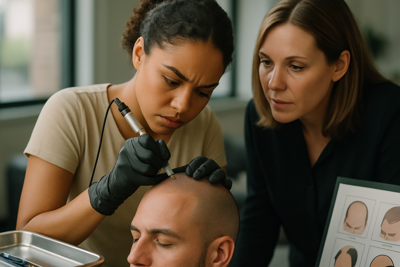
Student Stories from Scalp Micropigmentation Training are powerful. In the United States, hair loss affects millions and the growing interest in scalp micropigmentation (SMP) has created new career pathways for skilled technicians. This article gathers real student stories from scalp micropigmentation training with Skinart United States to help you understand what the course looks like, how graduates apply their skills, and why accredited training matters.
Whether you’re curious about the steps others took to switch careers, wondering how to build client confidence, or deciding if an online accredited course can give you the foundation to succeed, these first-hand accounts and practical takeaways will guide you. We focus on outcomes, realistic expectations, and the kinds of support that helped past students thrive across U.S. cities from Seattle to Miami.
Written by Gary Erskine, over 25 years in body art education and lead tutor at Skinart United States. Gary has trained thousands of students internationally and brings a practical, evidence-based perspective to each story we share.
Table of Contents
Use these links to jump to the sections below — they help both readers and search engines surface the right content quickly.
- Overview: Why Student Stories Matter
- Benefits and Trade-offs of Accredited SMP Training
- Real Student Experiences: From First Day to First Client
- Skills Learned and Career Outcomes
- Common Mistakes New Technicians Make
- Support, Certification, and Continued Learning
- Local U.S. Success Stories
- Frequently Asked Questions
- Final Thoughts
Overview: Why Student Stories Matter
Student stories from scalp micropigmentation training provide a lens into the real-world impact of accredited education. They demonstrate how the course content translates into client confidence, clinic workflows, and business growth across U.S. markets. For many prospective technicians, hearing from those who’ve walked the path helps clarify expectations, timelines, and the practical steps to build a successful SMP service rather than relying on marketing alone.
At Skinart United States we structure our scalp micropigmentation course to be CPD-aligned and BAQA-recognised. This means our graduates not only learn pigment and needle techniques but also hygiene, client consultations, and color theory in a way that meets industry benchmarks. Student stories validate that the curriculum is practical and aligned with what actual clients need.
Below we draw on multiple narratives — including career changers, barbers who expanded offerings, and studio owners who hired graduates — to highlight the breadth of outcomes. Each vignette is backed by lessons learned and specific steps future students can take to replicate success.
Benefits and Trade-offs of Accredited SMP Training
One clear theme across student stories from scalp micropigmentation training is the value of accredited education. Students often say that accreditation helped them win client trust and secure placements in existing studios. Accreditation signals a standard of practice — from biosafety to client record-keeping — that matters to both clients and regulators in U.S. jurisdictions.
That said, accreditation is not a shortcut. It requires time, practice, and careful study. Graduates who take the time to master the fundamentals and practice on models have better outcomes than those who pursue certification alone without adequate hands-on application.
- Pros: Credibility with clients, compliant hygiene standards, structured curriculum that covers color, density, and scalp blends.
- Cons: Time investment to reach a confident skill level; initial equipment purchase is required by students in the U.S. because Skinart United States does not supply SMP equipment locally.
Students tell us that the pros outweigh the cons when they approach training as an investment in a new service offering. In practice, many graduates recoup equipment and marketing costs within a few months by building a local client base or partnering with clinics.
Remember: our online scalp micropigmentation course is delivered in a way that emphasizes clinical best practice and business readiness. While we do not supply equipment in the United States, the course covers detailed equipment lists, product selection guidance, and safe supply sourcing practices so you can start confidently.
Real Student Experiences: From First Day to First Client
We interviewed several graduates and compiled their journey timelines. These student stories from scalp micropigmentation training emphasize a few consistent steps: foundational theory, hands-on practice on models, supervised case work, and focused marketing to attract the first paying client. Below are anonymized accounts that capture the variety of backgrounds our students bring.
Case study: “Jasmine, Seattle” — Jasmine was a barber with fifteen years of client experience. She completed the Skinart online scalp micropigmentation course, practiced pattern densities on synthetic skins, then offered discounted model sessions to build a before-and-after portfolio. Within six weeks of her first paid procedure she had three regular SMP clients and a referral pipeline from her barber shop.
Case study: “Marcus, Atlanta” — Marcus shifted from retail management and completed the course while working evenings. He focused on consultation skills and photographed healed results meticulously. His success came from offering clear aftercare instructions and follow-up appointments; clients cited the consultation clarity as a major reason they booked.
- Common early challenges: managing client expectations about density and healing, selecting the right pigment tone for various skin types, and pricing services competitively in local markets.
- Common early wins: building trust through transparent portfolio work, incremental price increases as skill and healed results improved, and repeat bookings for density top-ups.
- Practical tip from students: document every session with time-stamped photos and written client notes to build a reliable case history.
- Business tip: partner with a local hair clinic or barber shop for shared referrals — many students found their first clients through existing local relationships.
- Technical practice tip: early graduates emphasize repeated practice on synthetic scalp mats to master needle angles and pigment layering before working on live models.
- Client communication: clear pre-consult forms and written aftercare improved client satisfaction and reduced complications.
- Booking strategy: offering an introductory discount for the first two clients helped students gain portfolio material without undervaluing the service long-term.
- Legal/compliance tip: keep copies of client consent and medical questionnaires; these are essential for both client safety and for insurance/claims purposes.
Skills Learned and Career Outcomes
Graduates often describe a three-part skill set they gained from accredited scalp micropigmentation training: technical pigment application, client consultation and management, and business operations. Mastering these areas is what transitions someone from practicing on friends to running a booked calendar.
Technical skills include needle control, dot placement, hairline design, and blending techniques for different degrees of hair loss. Students report that the layered approach taught in the course — starting with lighter density and adding depth in follow-up appointments — produced the most natural healed results.
Career outcomes vary by ambition and local market conditions. Some graduates add SMP as an upscale service within an existing salon or barber shop; others establish mobile services or dedicated SMP studios. Across the United States, students from Skinart United States have opened practices in suburbs and city centres, offering both men’s hairline recreation and camouflage for scalp scars.
- Entry-level outcome: offering SMP sessions part-time with flexible scheduling.
- Mid-level outcome: establishing a regular client roster and working through bookings with deposit policies.
- Advanced outcome: building a small team, teaching assistants, or adding complementary services like medical tattoo camouflage.
- Complementary skills: photography for healed results, social media marketing, and client retention strategies.
- Income note: earnings are regionally variable. Many students transitioned to full-time SMP practice within 6–12 months after focused marketing and consistent client follow-ups.
- Insurance: graduates should consult local professional indemnity providers to confirm coverage for PMU/SMP services in their state.
- Continuing professional development: accredited CPD hours help maintain best practice standards and client safety.
- Regulatory compliance: be aware of state-level rules on infection control and consent forms — compliance is essential for long-term success.
Common Mistakes New Technicians Make
- Rushing density on the first session instead of planning staged layering.
- Using inappropriate pigment tones without testing healed results on similar skin types.
- Insufficient documentation of consent and medical history.
- Neglecting aftercare communication, resulting in avoidable complications.
- Poor photography technique leading to weak portfolio presentation.
- Underpricing services early and then struggling to raise rates later.
- Inconsistent needle angles that produce uneven dot patterning.
- Failing to create a clear business process for bookings, deposits, and cancellations.
Students often learn the most from early mistakes. For example, a technician in Phoenix shared that after an uneven healed result they revisited pigment layering theory and booked two supervised practice sessions with a mentor to refine their approach. That focused practice prevented further issues and restored client confidence.
Another student in New Jersey learned the importance of written aftercare when a client developed irritation after using an OTC topical not recommended for fresh SMP. The student revised their aftercare checklist and introduced a follow-up call 48 hours after treatment, which reduced complications and improved reviews.
Support, Certification, and Continued Learning
Many students highlight the continued support network as a deciding factor in their success. Our accredited course includes structured modules, clear assessments, and access to tutor feedback during learning. We encourage ongoing peer review and we provide guidance on how to join professional communities in the U.S.
Citations and third-party recognition matter to clients. Skinart United States courses are CPD registered and aligned with body art qualification standards — an important detail when marketing your services to clients who value accredited training. For more about CPD standards, see the CPD Standards Office.
- Certification: Graduates receive a CPD-recognised qualification upon successful completion.
- Tutor feedback: ongoing email and forum support during the learning phase.
- Peer communities: we recommend joining local professional Facebook groups and industry forums for referrals and mentorship.
- Clinical practice resources: templates for consent forms, medical histories, and aftercare instructions.
- Marketing resources: portfolio guidelines and sample social media posts to attract your first clients.
Local U.S. Success Stories
We include several regional snapshots to show how student stories from scalp micropigmentation training translate into local business outcomes. These examples highlight how different approaches work across varied U.S. markets.
Seattle & Pacific Northwest — stylists who added SMP to an existing barbershop often used local networking events and community bulletin boards to get initial bookings. A graduate in Tacoma reported that hyper-local Facebook groups helped fill her schedule within two months.
Southeast & Atlanta — many students used a partnership model with transplant clinics and dermatology offices for referrals. One graduate in Atlanta emphasized that a collaboration agreement with a clinic provided a steady stream of clients seeking non-surgical options.
- Midwest example: lower overhead studios focusing on value-priced SMP top-ups attracted repeat clients in suburban markets.
- Texas example: combining SMP with scar camouflage after hair transplant procedures increased average ticket price per client.
- Florida example: mobile SMP services catered to seasonal populations and produced high weekend demand.
- Northeast example: graduates used targeted Google Ads with location keywords to convert local clients searching for “hair loss solutions near me.”
- California example: studio-led workshops helped graduates build local brand authority and recruit assistants.
- Arizona example: focusing on scars and alopecia niche markets led to strong word-of-mouth referrals.
- Colorado example: offering SMP alongside scalp micropigmentation for cosmetic enhancements boosted studio visibility in urban centres.
- Washington D.C. area: partnership with veterans’ support groups provided pro-bono cases that led to paid referrals and media features.
Frequently Asked Questions
Below are answers to common queries people search for about real student stories from scalp micropigmentation training and what to expect if you enrol.
Q: What do students actually say about the course quality and outcomes?
A: Students repeatedly mention that the course provides a clear step-by-step progression from theory to practice, plus practical business tips. Many highlight the value of tutor feedback and how accreditation helped assure clients of their professional standards.
Q: How quickly can I start taking paying clients after completing the course?
A: Timelines vary, but most committed students secure their first paying client within 1–3 months after completion by offering portfolio sessions and local promotions. Consistent practice and good documentation of healed results speed up client acquisition.
Q: Do student stories reflect real earnings and realistic expectations?
A: Yes — student stories often include transparent earnings ranges and emphasize that income depends on local pricing, marketing effort, and how quickly the technician builds healed-result photos for their portfolio.
Q: Is equipment included for students in the United States?
A: No. Skinart United States does not supply scalp micropigmentation equipment in the U.S. The course provides detailed equipment lists and supplier guidance so students can source approved tools locally or from trusted international suppliers.
Q: Can I trust student testimonials when deciding to enroll?
A: Student testimonials are useful when they include specifics — like timelines, healed images, and lessons learned. We encourage prospective students to ask alumni about real healed results and how the training prepared them for client work.
Final Thoughts
Student stories from scalp micropigmentation training show that success is grounded in practice, accreditation, and genuine client care. Graduates who invest time in portfolio development, maintain clear documentation, and treat clients compassionately consistently report the best outcomes.
If you’re considering a career in SMP in the United States, use these stories to inform your plan: practice deliberately, document healed results, and build partnerships within your local market. Accredited training gives you the technical foundation and professional standards that clients value.
At Skinart United States we’re proud of our students’ achievements and we’re here to help you take the next step with structured, CPD-aligned training that prepares you for real client work.
Ready to Start Your SMP Journey?
Join other successful graduates who turned their interest into a career. Our accredited online scalp micropigmentation course is designed for busy people across the United States who want a practical, CPD-recognised pathway into SMP.
Recent Blog Posts
- Studio Etiquette Update: Professionalism in 2026
 Workplace Etiquette for Body Art Studios Refresh your studio etiquette and build a reputation for professionalism with these up-to-date best practices.… Read More »Studio Etiquette Update: Professionalism in 2026
 - 🌙 Eid Mubarak: Celebrate with 5% Off in 2026!
 Eid Savings: 5% Off All Courses Celebrate Eid with a special offer: 5% off any course. Use code EID5 at checkout.… Read More »🌙 Eid Mubarak: Celebrate with 5% Off in 2026!
 - Top Mistakes New Body Artists Should Avoid (2026)
 Stay Ahead: Common Pitfalls for New Artists Read up on the most frequent errors new body artists make, and how to… Read More »Top Mistakes New Body Artists Should Avoid (2026)