Do You Need a Tattoo License in United States?
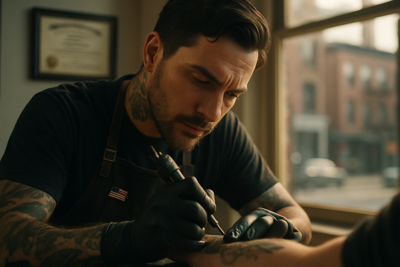
If you’re planning to tattoo professionally in the United States, one of the first and most important questions you’ll ask is: do you need a Tattoo License in United States? The answer isn’t a single yes or no — it depends on where you plan to work, the services you offer, and the rules set by state and local health departments. This guide explains how licensing works, what steps to take, and how Skinart United States’ accredited online Tattoo course prepares you to meet regulatory requirements and build a safe, compliant practice.
Understanding the landscape of tattoo regulation is essential whether you’re starting out, relocating between states, or simply making sure your studio meets the law. In this article we’ll clarify common licensing requirements, highlight typical training and bloodborne pathogen expectations, list common mistakes that put artists at risk, and point you to practical next steps. Our aim is to give you a clear, practical path from curiosity to certified professional.
Written by Gary Erskine, 25 years in tattoo education and industry mentorship — this guide draws on real training experience, conversations with municipal health officers, and best-practice standards used across the U.S. If you’re ready to learn the rules and get the accredited training that local authorities respect, keep reading — or jump to our course at the end for a direct next step.
Table of Contents
- What “Tattoo License in United States” Typically Means
- Where Licenses Are Required — State & Local Overview
- Training, Qualifications and Typical Requirements
- Common Licensing Mistakes to Avoid
- Working Across States: Portability & Reciprocity
- Health, Safety and Inspections
- Step-by-Step: How to Get Ready and Apply
- FAQs: Do You Need a Tattoo License in United States?
- Final Thoughts & Next Steps
What “Tattoo License in United States” Typically Means
When people ask about a “Tattoo License in United States,” they usually mean formal permission from a state or local health authority to operate as a tattoo artist or run a tattooing business. The precise meaning varies: in some places you need an individual artist registration, while in others you need a studio permit, or both. Local health departments often set minimums like bloodborne pathogen certification, proof of training, and inspection compliance.
Licensing is used to protect public health — ensuring practitioners follow strict infection control, waste disposal, and sterilization protocols. That is why the phrase “Tattoo License in United States” captures both legal authorization and the public-safety practices regulators want tattoo professionals to uphold. Whether you’re an apprentice, a freelance artist, or a studio owner, the licensing conversation will be grounded in safety and oversight.
For this reason, artists planning a professional career should consider both legal compliance and demonstrable competence. A recognised accredited training—like the Skinart United States accredited online Tattoo course—gives you documentation that many health departments accept or at least respect when you apply for local permits.
Where Licenses Are Required — State & Local Overview
In the U.S., there is no single federal “tattoo license.” Instead, regulations are primarily handled at the state and local levels. That means requirements differ from one state to another—and sometimes from city to city within the same state. Commonly required elements include an individual practitioner registration or license, a separate facility or studio permit, and proof of infection control training.
- Pros: Local regulation allows standards tailored to community health needs and can raise minimum safety norms.
- Cons: Inconsistent rules make working across state lines complicated and can create confusion for new artists.
For example, states like California and New York have detailed frameworks for tattoo and body art establishments that include permitted procedures, waste management rules, and mandatory inspections. Other states leave more discretion to county or city health departments, creating a patchwork of requirements. For reliable, up-to-date guidance on the legal expectations where you plan to work, consult your state health department’s body art or environmental health pages.
If you’re gearing up for an application, a good first step is to identify the local or county health department that issues body art permits in your area. Many departments publish checklists, fee schedules, and inspection criteria online. You can also contact them directly — officials often clarify what documentation they accept as proof of training or competency.
Training, Qualifications and Typical Requirements
Most health departments expect professional tattoo artists to demonstrate baseline knowledge of cross-contamination, infection control, and skin anatomy. That often means completing an approved course and holding a certification in bloodborne pathogens (BBP). While the specific training length varies, regulators generally want verifiable documentation you can present during your permit application or an inspection.
Skinart United States offers an accredited online Tattoo course that covers core safety, sanitation, and technique fundamentals. Our course is accredited with the CPD Standards Office and approved by the Body Art Qualification Association (BAQA), which provides widely recognized certificates many local authorities accept when assessing applicants. Completing an accredited course also helps you build a professional portfolio and learn practical studio workflows that inspectors look for.
Below are typical items regulators request in the U.S. when considering an artist or studio application. Exact lists vary, but this is a practical checklist you can use while preparing your application:
- Proof of identity and age (many states require artists to be 18+)
- Accredited training certificate or diploma
- Bloodborne pathogen (BBP) certification
- Studio permit application and fees
- Facility floor plan and evidence of appropriate handwashing/sterilization facilities
- Sharps disposal plan and waste handling procedures
- Evidence of equipment sterilization and single-use consumable policy
- Completed application forms and consent/medical forms for clients
Common Licensing Mistakes to Avoid
- Failing to check city or county rules (assuming state law is the whole story)
- Using non-accredited or informal training certificates that regulators won’t accept
- Missing required BBP certification or letting it lapse
- Operating without a studio permit while doing mobile or pop-up work
- Not keeping client consent and medical history forms on file
- Poor waste disposal procedures or lack of sharps containers
- Failure to pass an inspection because of inadequate sterilization equipment
- Assuming “freelance” or private work exempts you from regulation
These mistakes are common because rules are fragmented and sometimes not obvious to new artists. For example, a state may not require an individual license, but a county might require facility registration for any location where tattoos are performed. That’s why it’s essential to ask the local health department for their checklist before you start operating.
At Skinart United States we help new artists prepare documentation and portfolios that inspectors respect. Our online course focuses on the practical paperwork and studio hygiene practices that make the licensing process easier — not just the artistic techniques.
Working Across States: Portability & Reciprocity
One of the biggest challenges in the U.S. tattoo industry is portability — the ease with which a qualification or license earned in one state is recognised elsewhere. Unlike nationally regulated professions, tattooing lacks a single license you can carry from coast to coast. Some states recognise out-of-state certificates or accept accredited training, but others require additional proof or a separate local registration.
If you plan to do guest spots, conventions, or to relocate, it’s smart to: keep original course certificates, maintain up-to-date BBP training, and gather supporting documents like inspection reports or studio references. These documents help health departments or venue organisers verify your experience quickly.
- Keep digital and printed copies of accredited certificates and BBP cards
- Keep a record of recent inspections or letters of good standing from previous studios
- Maintain a client portfolio with dated work (may be useful in proving experience)
- Understand each state’s definition of “practicing” — some consider temporary guest spots regulated activity
- Check convention organisers’ requirements; many ask for proof of vaccination and current BBP certification
- When moving, plan for any local permit timelines and inspection bookings
- Consider joining professional associations that provide letter templates and support for mobility
- Be prepared to demonstrate infection control procedures in person
Health, Safety and Inspections
Public health is the reason most regulations exist. Inspections by local environmental health teams focus on preventing infections, ensuring safe use of sharps, and verifying proper sterilization. Typical inspection check points include: documented cleaning logs, working handwashing sinks, single-use needles, properly labeled and dated sterilization loads, and appropriate sharps disposal containers.
Many health departments publish inspection checklists; reviewing those documents before your opening or prior to an inspection is one of the best preparations. If you can demonstrate the procedures and documentation inspectors ask for, you’re much more likely to pass and retain a permit.
“Local health departments look for consistent, documented procedures more than a single ‘perfect’ day. Show up with your paperwork and protocols and you’ll reduce friction.” — Municipal Body Art Inspector
- Maintain sterilization and autoclave validation logs
- Keep BBP certification copies accessible for staff
- Use single-use disposables where required and document their disposal
- Post clear studio policies for client consent and aftercare
- Train staff to maintain and record surface cleaning schedules
- Ensure vaccination policies (e.g., Hepatitis B) are understood and documented where necessary
- Arrange regular equipment maintenance and keep records
- Respond promptly to inspection feedback and update protocols as needed
Step-by-Step: How to Get Ready and Apply
Whether you’re pursuing an individual artist registration or applying for a studio permit, follow these clear steps to improve your chances of a smooth application process:
Start by researching the exact requirements for the county or city where you intend to work. Contact the environmental health department and request their body-art permit checklist; most will email or link to their standard instructions. From there, gather your certificates, BBP training, identification, a studio plan (if applicable), and payment for fees.
- Find the local health department’s body art or environmental health page
- Download inspection and permit checklists
- Complete accredited training and BBP certification
- Prepare studio layout, handwash station and equipment lists (for studio permits)
- Collect IDs, application forms, and payment
- Submit application and book an inspection date if required
- Address inspector feedback promptly and provide any requested documentation
- Receive your permit and keep copies visible in the studio
In many jurisdictions, the inspection is the decisive step. Having documented cleaning schedules, staff training records, and an understanding of the inspector’s priorities will reduce the time it takes to achieve compliance. Skinart United States students often tell us that supplying an accredited training certificate during inspection significantly reduces follow-up questions.
Remember that requirements change; maintain contact with your health department for updates, and keep staff certifications current to avoid permit lapses or penalties.
FAQs: Do You Need a Tattoo License in United States?
Below are short answers to common search-style questions people type into Google when researching tattoo licensing in the United States.
What readers often search
Q: “How long does it take to get a tattoo license?” — A: Timing varies. In many places you can gather documents in a week and wait for an inspection slot; in other areas, processing can take several weeks. Preparing certificates and scheduling BBP courses early speeds things up.
Q: “Is bloodborne pathogen training mandatory?” — A: In most states and counties, yes. BBP training is commonly listed as a requirement for both individual artist registration and studio permits because it addresses the core infection risks associated with tattoo procedures.
Q: “Does Skinart United States provide equipment or in-person training?” — A: Skinart United States provides a fully accredited online Tattoo course focused on the knowledge and documentation many regulators accept. We do not offer in-person training or supply tattoo equipment in the United States.
Final Thoughts & Next Steps
“Do you need a Tattoo License in United States?” — in short: probably yes for the place you plan to work, and certainly yes if you want to operate professionally and responsibly. Regulations exist to protect clients and artists alike. Taking accredited training, maintaining BBP certification, and preparing your documentation will make the licensing journey much smoother.
At Skinart United States we’ve helped thousands of students understand regulatory expectations and prepare the documentation health departments value. Our online Tattoo course is accredited, focused on practical safety, and built by experienced tutors who have guided artists through local permit applications and inspections.
If you’re ready to move from questions to action, our course is designed to give you the confidence, certificates, and knowledge inspectors respect — and the practical studio workflows to build a professional, compliant business.
Ready to get started?
Enroll in Skinart United States’ accredited online Tattoo course to learn the fundamentals inspectors look for, gain respected certification, and prepare for local permit applications with confidence.
Recent Blog Posts
- Studio Etiquette Update: Professionalism in 2026
 Workplace Etiquette for Body Art Studios Refresh your studio etiquette and build a reputation for professionalism with these up-to-date best practices.… Read More »Studio Etiquette Update: Professionalism in 2026
 - 🌙 Eid Mubarak: Celebrate with 5% Off in 2026!
 Eid Savings: 5% Off All Courses Celebrate Eid with a special offer: 5% off any course. Use code EID5 at checkout.… Read More »🌙 Eid Mubarak: Celebrate with 5% Off in 2026!
 - Top Mistakes New Body Artists Should Avoid (2026)
 Stay Ahead: Common Pitfalls for New Artists Read up on the most frequent errors new body artists make, and how to… Read More »Top Mistakes New Body Artists Should Avoid (2026)