Tattoo Apprenticeship vs Online Tattoo Training
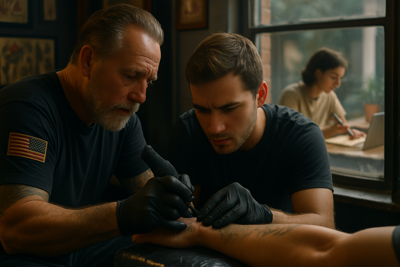
Deciding between a traditional tattoo apprenticeship and an accredited online tattoo course is one of the most important choices you’ll make when starting a career in the United States body art industry. Tattoo Apprenticeship vs Online Tattoo Training is a common search for aspiring artists who want clarity on skills, safety, compliance and career outcomes.
In this article we break down both paths—what each offers, where they differ, common pitfalls, and how to choose the best route for your goals. Whether you’re in New York, Los Angeles, Chicago or a smaller US city, understanding the practical, legal and educational differences will help you train smarter and faster.
Skinart United States specialises in accredited online tattoo education led by Gary Erskine — a tutor with over 25 years of industry experience. We’ll explain how accredited online training stacks up against on‑shop apprenticeships and how to maximise whichever route you choose.
Table of Contents
Use the links below to jump to sections. These semantic anchors help search engines show “Jump to” links in results.
What is a tattoo apprenticeship and what is online tattoo training?
A tattoo apprenticeship traditionally places a novice artist inside a working tattoo studio under the mentorship of an experienced tattooist. Apprentices learn hands‑on techniques, client interaction, sterilisation practices and shop culture by observing and gradually practising under supervision. Many apprenticeships include cleaning, setting up stations and drawing exercises before moving to live skin work.
Online tattoo training delivers theory, demonstrations, and assessment through structured modules you complete remotely. Accredited providers—like Skinart United States—combine video instruction, step‑by‑step guides, and assessments that meet recognised standards. For many learners the online route provides a complete foundational education in art, health & safety, machine techniques and professional practice without being tied to a single studio.
Both routes aim to prepare new artists for professional work, but they differ in access, pacing and how practical skills are developed. Understanding those differences is the first step when comparing Tattoo Apprenticeship vs Online Tattoo Training.
Apprenticeship: what to expect (pros & cons)
Tattoo apprenticeships have a reputation for offering the “real shop” experience: mentorship, direct feedback on needles, hand speed, and client management. This is invaluable to many students and it’s easy to see why apprenticeships remain popular.
- Pros: Real‑time mentorship, immediate practical feedback, immersion in studio workflow, networking with clients and artists.
- Cons: Availability is limited, quality of mentorship varies, apprentices can be expected to perform unpaid tasks, and some shops may not follow strong teaching methodology.
Apprenticeships vary widely. A good mentor will have structured lessons, skill milestones and a safety-first approach; a poor one may expect menial work with little instruction. Finding a committed, accredited or well-regarded mentor in the US can be difficult in larger metros where demand is high.
When comparing Tattoo Apprenticeship vs Online Tattoo Training, apprenticeships score highly for practical, supervised experience but can be inconsistent in content, duration and legal compliance. We recommend checking references, observing the mentor’s work, and confirming a clear training plan before committing.
Online Tattoo Training: benefits and structure
Accredited online tattoo courses provide a clear curriculum that covers art fundamentals, machine mechanics, pigments, contraindications, and infection control. For many US students the major advantage is consistent, auditable content that aligns with health‑and‑safety standards.
Skinart United States offers an online tattoo course designed around CPD and BAQA standards, taught by Gary Erskine. The course includes theory modules, high‑resolution demonstrations, and assessed practical tasks. While online learning doesn’t place you in a shop by default, it creates a solid technical and compliance base that employers recognise.
- Structured learning modules mapped to accredited standards
- Video demonstrations of technique, machine setup and aftercare
- Formal assessments and feedback from qualified tutors
- Flexible pacing suitable for students across the US
- Clear infection control and BBP (blood borne pathogen) instruction required by many states
- Portfolio development guidance and business preparation
- Accreditation with reputable bodies so employers and studios can verify training