Tattooing on Fake Skin: How to Practice as a Beginner
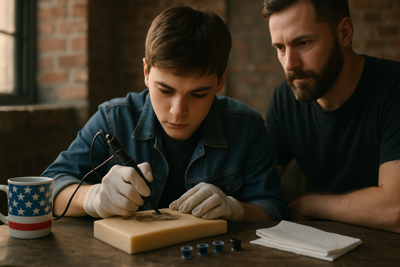
Starting out as a tattoo artist can feel daunting — your first steps often happen away from paying clients and in front of practice material. Tattooing on fake skin is an essential, low-risk way for beginners to learn machine handling, linework, shading, and colour packing before moving to living skin. In this comprehensive guide tailored for readers in the United States, we’ll walk you through realistic practice routines, the best fake skins to buy, common mistakes, and how to build confidence safely and responsibly.
Skinart United States provides accredited online training and clear guidance for new artists. This article will give you actionable steps you can take immediately — what to buy, how to set up your bench, and practical exercises you can repeat until your skills are consistent. Tattooing on fake skin isn’t a shortcut; it’s where discipline and technique are forged.
Written by Gary Erskine, 25 years in tattoo education and industry experience — lead tutor at Skinart United States. Gary has trained thousands of students internationally and helps beginners turn practice into professional progress.
Table of Contents
Use the links below to jump to any section — these semantic anchors help Google show “Jump to” links in search results.
Tip: Use Ctrl/Cmd+F to quickly find the section you want.
- Why Practice on Fake Skin First?
- What You Need: Tools & Materials
- Techniques to Practice on Fake Skin
- Common Mistakes Beginners Make
- Tracking Progress & Setting Goals
- Safety, Hygiene & Legal Notes (United States)
- Transitioning from Fake Skin to Live Skin
- FAQs — Tattooing on Fake Skin
- Final Thoughts & Next Steps
- Enrol with Skinart United States
Why Practice on Fake Skin First?
Tattooing on fake skin gives you a risk-free environment to develop essential motor skills. For beginners, the focus should be on developing consistent hand speed, depth control, and needle angle rather than rushing to produce portfolio pieces. Practicing on synthetic skin replicates the resistance and ink absorption properties of human skin closely enough to make the exercises meaningful without exposing anyone to infection or pain.
Fake skin also allows you to repeat the same strokes and designs multiple times in one sitting, which accelerates muscle memory and judgment. When you compare a week of consistent practice on synthetic skin with sporadic live practice, the difference in control and confidence is dramatic.
Professional tutors and accreditation bodies often recommend beginning work on fake skin as part of a structured curriculum. At Skinart United States our online tattoo course integrates targeted exercises with feedback so your practice on fake skin translates to reliable client work later.
What You Need: Tools & Materials
Before you begin tattooing on fake skin, make sure your setup mirrors a professional bench as closely as possible. While Skinart United States does not supply tattoo equipment in the United States, we teach how to use and choose equipment safely. Assemble your machine, power supply, grips, and disposable cartridges or traditional needle and tube sets based on the techniques you plan to practice.
- Disposable practice fake skins (silicone sheets, synthetic practice pads)
- A reliable tattoo machine (rotary or coil) and compatible power supply
- Disposable needle cartridges or sterile needle/tube sets
- Practice inks formulated for synthetic skin (or diluted standard inks per manufacturer guidance)
- Green soap, sterile water, and practice bench wipes
- Barrier film, gloves (nitrile), and proper waste disposal
- Marker pens, tracing paper, and stencil transfer solutions
- A camera or phone to record sessions for review
Not all fake skins are equal. Medical-grade silicone practice skins offer a more realistic feel than thin gel pads. Choose a thickness that simulates the part of the body you’ll work on: thicker skins for back-like resistance and thinner sheets for delicate areas like the wrist. Always follow the manufacturer guidelines for ink compatibility and cleaning.
If you are learning in the United States, pay attention to state regulations about equipment and infection control; these often apply only to licensed studios but are good practice for anyone training to work professionally.
Techniques to Practice on Fake Skin
When tattooing on fake skin, break practice sessions into focused drills. Start with single-line repetition and progress to shading transitions, colour packing, and small illustrative pieces. The goal is consistent depth and ink placement; don’t worry about making your practice pieces perfect at first.
Here are proven practice routines that have helped thousands of Skinart students improve quickly. Repeat these for at least 30–60 minutes daily, increasing complexity as your control improves.
Each exercise is designed to address a specific skill. Use a logbook to record settings, needle groupings, ink types, and the number of repetitions completed. Over weeks, you’ll notice measurable improvements in line steadiness and shading consistency.
- Straight Line Drills: 50 straight lines, 1/8″ apart — focus on consistent speed and pressure
- Circular Linework: concentric circles to improve pivoting and wrist control
- Stipple Shading: controlled dot density for textured fills
- Soft Shading Gradients: practice slow passes and ink dilution transitions
- Colour Packing Squares: fill 1″ squares with solid colour without overworking
- Lettering Mini-Blocks: simple sans-serif letters to build steady thin lines
- Stenciled Small Tattoos: transfer a small design and complete start-to-finish
- Needle Angle Tests: vary angle from 20° to 60° to hear and feel how the machine interacts with the skin
Pros and Cons of Practicing on Fake Skin
Using synthetic skin is broadly advantageous, but it also has limitations. Understand both sides so you can structure your training effectively.
- Pros: Safe, repeatable, no risk to real clients, inexpensive for high volume practice
- Cons: Doesn’t perfectly replicate human tissue, different ink absorption and healing dynamics
- Pros: Great for muscle memory and experimenting with machine settings
- Cons: Over-reliance can delay real-skin judgement if you avoid supervised live practice
- Pros: Excellent for building confidence and a portfolio of procedural photos
- Cons: Texture and elasticity differ by brand and price point
Balanced practice means combining synthetic work with supervised live practice when possible. The fake skin helps you build a reliable baseline; supervised live sessions train you for variables like client movement, blood flow, and real skin elasticity.
At Skinart United States we recommend a staged progression: intensive synthetic skin work, then controlled supervised live practice under a licensed mentor, and then independent client work when you demonstrate consistent competency.
Common Mistakes Beginners Make on Fake Skin
- Pushing too hard and “overworking” the same area repeatedly
- Using inconsistent machine speed or power settings between strokes
- Failing to replicate the correct needle angle (practice machines humming but hand angle wrong)
- Using practice inks not recommended by the fake skin manufacturer, causing unusual results
- Skipping stencil placement practice — the stencil is as important as the needle
- Ignoring ergonomics — poor posture leads to shaky lines
- Not documenting settings or the number of passes for later review
- Expecting fake skin to heal like human skin; overconfident transition to live clients
Make a habit of recording each practice session. Note machine type, voltage, needle grouping, ink brand, and how the skin reacted. Over time, this data avoids repeating bad habits and accelerates improvement.
Remember: mistakes on fake skin are learning opportunities. Correct them methodically and avoid rushing. When you’re ready to transition, look for mentoring opportunities — many studios in the United States offer supervised placements or observation sessions.
Tracking Progress & Setting Goals
Improvement is measurable if you set metrics. Track time-on-task, line consistency, evenness of fills, and the number of successful sessions without major issues. Use photographs taken under consistent lighting and angles to compare week-to-week.
- Set weekly goals: e.g., 5 hours of line drills, 3 completed shading gradients
- Record machine settings and needle groupings per exercise
- Use a simple rubric: Line (0–5), Shading (0–5), Consistency (0–5)
- Keep a practice journal with notes on what improved and what needs work
- Share weekly images with a mentor or class for feedback
- Celebrate milestones: first perfect straight line or even solid colour pack
- Rotate exercises to prevent plateaus and boredom
- Revisit old drills to ensure long-term retention
Progress tracking is one of the reasons our online Skinart Tattoo Course helps new artists structure practice effectively. The curriculum pairs guided modules with exercises designed specifically for realistic gains when tattooing on fake skin.
Safety, Hygiene & Legal Notes (United States)
Even though you’re practicing on fake skin, strict hygiene is non-negotiable. Treat every practice session as if it were client work: wear gloves, use barrier film, disinfect work surfaces, and dispose of needles and cartridges in proper sharps containers. This builds professional habits and reduces cross-contamination risk when you move to live work.
Local health departments in many U.S. states publish tattooing guidelines. For authoritative infection control guidance, consult your state’s health department and the CDC’s general resources on bloodborne pathogens. Many instructors also recommend a Bloodborne Pathogens (BBP) course before working on clients.
Quote from a regulatory perspective: “Training on synthetic skin is a responsible first step — it reduces early risk and reinforces control techniques,” says a municipal inspection officer from a major U.S. city who prefers to remain unnamed but supports accredited education paths for new artists.
Transitioning from Fake Skin to Live Skin
Knowing when to move from synthetic practice to supervised live work is critical. Some students progress after 50–100 hours of targeted fake skin practice; others require more. The deciding factor should be consistent results: stable lines, even shading, and the ability to complete entire small designs with predictable outcomes.
- Start with flat areas on consenting volunteers under supervision (e.g., simple black line designs)
- Work on pigmented or scarred areas only after experience on live skin under mentorship
- Accept that live skin introduces factors like bleeding, movement, and client discomfort — these require calm communication skills
- Document each supervised live session and ask your mentor to sign off on competency benchmarks
In the United States, many apprenticeships and studio mentorships expect trainees to have completed a baseline of synthetic practice before they’re allowed to tattoo clients. Use your practice hours as a bargaining chip when applying for placements: it shows commitment and responsibility.
Resources, Mentors & Further Learning
Combine self-driven practice with feedback. Skinart United States’ online tattoo course gives structured lessons on technique, health and safety, and industry practice. We also recommend joining local artist communities and attending conventions to see live demonstrations and network with potential mentors.
- Skinart United States Online Tattoo Course (accredited by CPD and BAQA) — designed for U.S. learners
- State health department pages — for local regulatory and BBP guidance
- Peer critique groups and mentor-based apprenticeships in U.S. cities (network at conventions)
- Authoritative guides on bloodborne pathogens and infection control (CDC)
- Manufacturer instructions for your chosen fake skin product
- Video archives of professional artists demonstrating set-up and technique
- Local studio observation and supervised practice sessions
- Documentation templates for logging practice hours and mentor sign-offs
For evidence-based infection control practices, consult the CDC’s resources on safe handling of sharps and bloodborne pathogen training. Combining accredited training with supervised practice shortens the learning curve and helps you meet local regulatory expectations.
FAQs — Tattooing on Fake Skin: How to Practice as a Beginner
Q: Is practicing on fake skin enough to become a tattoo artist?
A: Practicing on fake skin is a crucial foundation but not sufficient alone — you should pair it with supervised live practice, accredited health and safety training, and mentorship before offering paid work.
Q: What fake skin should a beginner buy?
A: Choose medium-to-thick medical-grade silicone sheets that match the body areas you plan to tattoo; research brand compatibility with your inks and read reviews from artists in the United States for real-world feedback.
Q: How long should I practice on fake skin before trying a supervised live tattoo?
A: There’s no one-size-fits-all timeline — many students complete 50–150 focused hours on fake skin and demonstrate consistent results before supervised live work; your mentor or tutor can help decide when you’re ready.
Q: Can I use regular tattoo ink on fake skin?
A: Some synthetic skins accept standard tattoo inks, but others require specific practice inks. Always follow manufacturer guidance to avoid ruining the pad or introducing misleading results.
Q: Will my machine settings be different on fake skin vs real skin?
A: You’ll likely need to adjust voltage and speed slightly when transitioning — fake skin can feel denser or more forgiving depending on brand; rely on mentor feedback and visual consistency rather than exact numbers alone.
Q: Where can I get accredited training in the United States?
A: Skinart United States offers a fully accredited online tattoo course with CPD Standards Office and BAQA recognition designed for beginners who wish to combine fake skin practice with structured instruction and assessment.
Final Thoughts & Next Steps
Tattooing on fake skin is where many professional careers begin. If you commit to deliberate, documented practice and pair that with accredited instruction and mentor review, you’ll accelerate from beginner to competent practitioner far faster than by trial and error alone. The synthetic skin stage builds the confidence and control you need to respect real clients’ safety and expectations.
Be methodical: set weekly goals, keep a practice journal, and ask for feedback. When feedback and results align, take the step to supervised live practice — the learning curve will continue, but you’ll have a solid foundation beneath you.
At Skinart United States we design our online tattoo course to complement fake skin practice with structured modules on technique, safety, and industry best practice — a responsible pathway to professional tattooing in the United States.
Latest Blog Posts
- 🌙 Eid Mubarak: Celebrate with 5% Off in 2026!
 Eid Savings: 5% Off All Courses Celebrate Eid with a special offer: 5% off any course. Use code EID5 at checkout.… Read More »🌙 Eid Mubarak: Celebrate with 5% Off in 2026!
 - Top Mistakes New Body Artists Should Avoid (2026)
 Stay Ahead: Common Pitfalls for New Artists Read up on the most frequent errors new body artists make, and how to… Read More »Top Mistakes New Body Artists Should Avoid (2026)
 - Client Communication Skills: 2026 Body Art Success
 Master Consultation for Better Results Top communication strategies for client satisfaction and better outcomes in 2026 and beyond. X Send Chat