Non-Laser Tattoo Removal: Methods and Questions to Ask
Non-laser tattoo removal is a broad label, not a single procedure. Understanding the exact method matters when comparing treatment information or choosing training. Start with what is being proposed, the evidence behind it and the limits of the course or service.
Tattoo pigment is deposited in the dermis, beneath the outer epidermis. Removal methods differ in how they reach or affect that pigment.
Compare how the methods differ →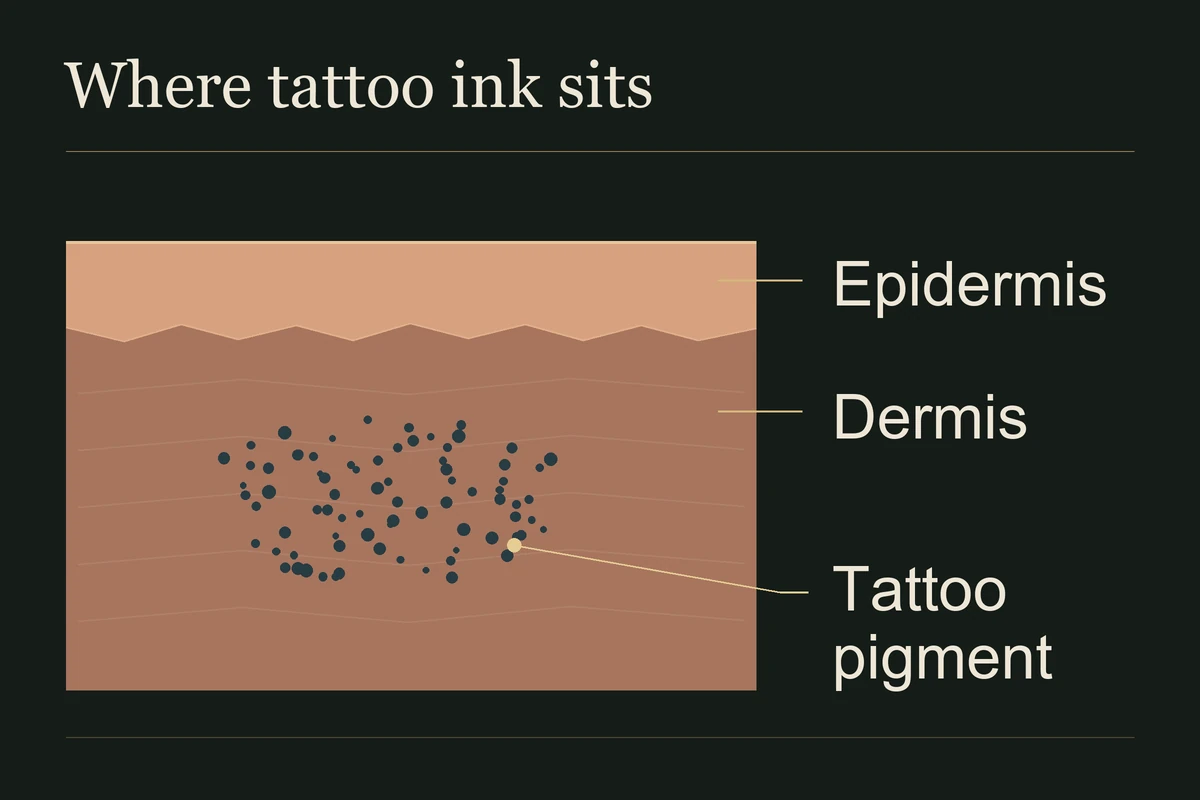
What Does Non-Laser Mean?
The label tells you that the procedure does not use a laser; it does not tell you the technique, products, practitioner requirements or likely result. Avoid treating every non-laser method as equivalent.
The FDA overview of tattoo removal discusses alternatives including dermabrasion and surgical removal, and warns about variable results and scarring. It also states that it has not approved tattoo-removal creams or do-it-yourself removal kits.
That overview does not establish the effectiveness of every method marketed as non-laser. Ask for evidence about the specific procedure rather than borrowing claims from a different technique.
One label does not mean one mechanism
- Laser · for comparison
- Light breaks ink into smaller particles, which the immune system clears over time.
- Dermabrasion
- An abrasive procedure affects the skin rather than using a tattoo-removal laser.
- Surgical removal
- Tattooed skin is removed surgically. This is a different intervention from light-based treatment.
- Ink rejection · course method
- A solution is introduced using tattoo equipment. The formulation, procedure and supporting evidence must be identified specifically.
These descriptions explain the distinction between approaches. They do not make the methods interchangeable or establish which one is suitable for a person.
Which Method Does Skinart Teach?
The Skinart US course page describes non-laser ink rejection, involving a formulated solution introduced using tattoo equipment. It is not simply plain saline, and the course is not training to operate a tattoo-removal laser.
Use the current written lesson guidance alongside the recordings. The course reviews the removal-solution recipe critically: a recipe alone does not establish sterility, stability or suitability for use on a person. Ask the team about prerequisites, practical work and assessment for your chosen option.
This article describes course scope; it is not a treatment protocol or a recipe for performing removal.
Compare Evidence, Not Broad Promises
A claim that a method works on every color, needs fewer sessions or preserves skin better requires evidence for that particular comparison. “Non-laser” alone supports none of those conclusions.
- What procedure and product were used in the evidence?
- Are photographs of healed results, and are their dates clear?
- Were lighting, angle and image editing consistent?
- What limitations and adverse outcomes are reported?
- Does the evidence relate to the situation being assessed?
A selected success photograph cannot predict an individual outcome. Ask a qualified health care professional about appropriate removal options and their risks.
Prepare Questions for a Consultation
Use a consultation to understand the proposal before agreeing to it. Keep the explanation, costs and follow-up arrangements together so you can compare options accurately.
- Why is this method being proposed for this tattoo?
- What result is realistic, and what might remain?
- What risks and alternatives should I understand?
- How will progress be assessed?
- What is included in the quoted price?
- Who provides aftercare instructions and responds to concerns?
Follow the instructions supplied for the actual procedure. A general blog timetable or product list should not replace individual advice.
Check Training and Professional Requirements Separately
What learning the method involves
The course combines recordings with current lesson notes, a printable study handbook and editable planning forms. Use the forms to study consultation, cleaning, exposure response, follow-up and solution traceability, with appropriate local review before client use.
Use the current ink-rejection study pack rather than treating the original legacy laser-document archive as instructions for this method. Compare the syllabus, practical requirements and assessment arrangements before buying, and ask whether you need to arrange supervision separately.
Course completion, insurance acceptance and permission to offer services are separate questions. Give the relevant authority and insurer the actual procedure and premises details when checking your proposed work.
Read what the online course covers and how to plan online study for learning-specific questions.
Choose an Informed Next Step
For treatment, seek an individual assessment and compare the explanation of benefits, risks and alternatives. For training, use the current course information and resolve unanswered questions about practical learning before enrolling.
Keep these decisions distinct: buying training does not establish which treatment is suitable for a person, and a course certificate does not guarantee a particular removal result.
Course Details and Next Steps
Review the current course details for US learners and contact Skinart with questions about your selected option. Existing students can return to their lessons in the academy.