How to Learn Fine-Line Tattooing: An Online Study Guide for US Artists
If you want to add minimalist outlines, delicate botanical work or fine lettering to your skills, start with a small, reviewable practice goal. Fine-line tattooing is now included in Skinart’s tattoo course. This US guide explains how to build a useful learning record, make remote feedback more effective and evaluate course scope without confusing a clean practice image with readiness to tattoo clients.
Define the fine-line skill you want to build
Fine line refers to a delicate visual style rather than a single mandatory needle configuration. Decide whether your current task is a smooth curve, a clean endpoint, consistent spacing or readable lettering. Choose a simple original design that lets your instructor evaluate that skill.
View the design at the intended practice size. Remove marks that crowd together and keep a second, simplified version. A design is not improved just by making every line thinner or shrinking it to fit a trend.
Use a repeatable paper exercise first
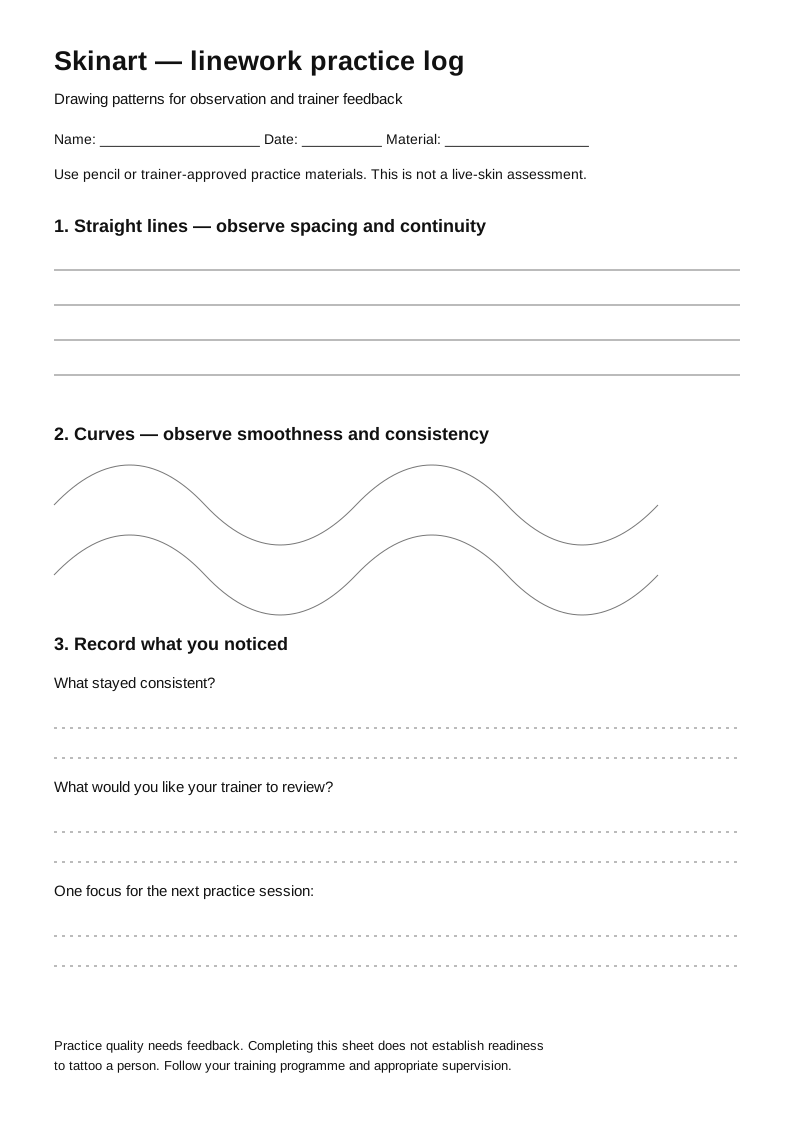
Start with Skinart’s free A4 line-control practice sheet for three pen or pencil exercises: lines between endpoints, curves and repeated circles. Choose one task and keep a note of what you want to improve. Practice straight segments, curves and closed shapes on paper. Keep your reference, date the attempts and note the part you want to improve. Use the linework practice sheet if you want a consistent format for the record.
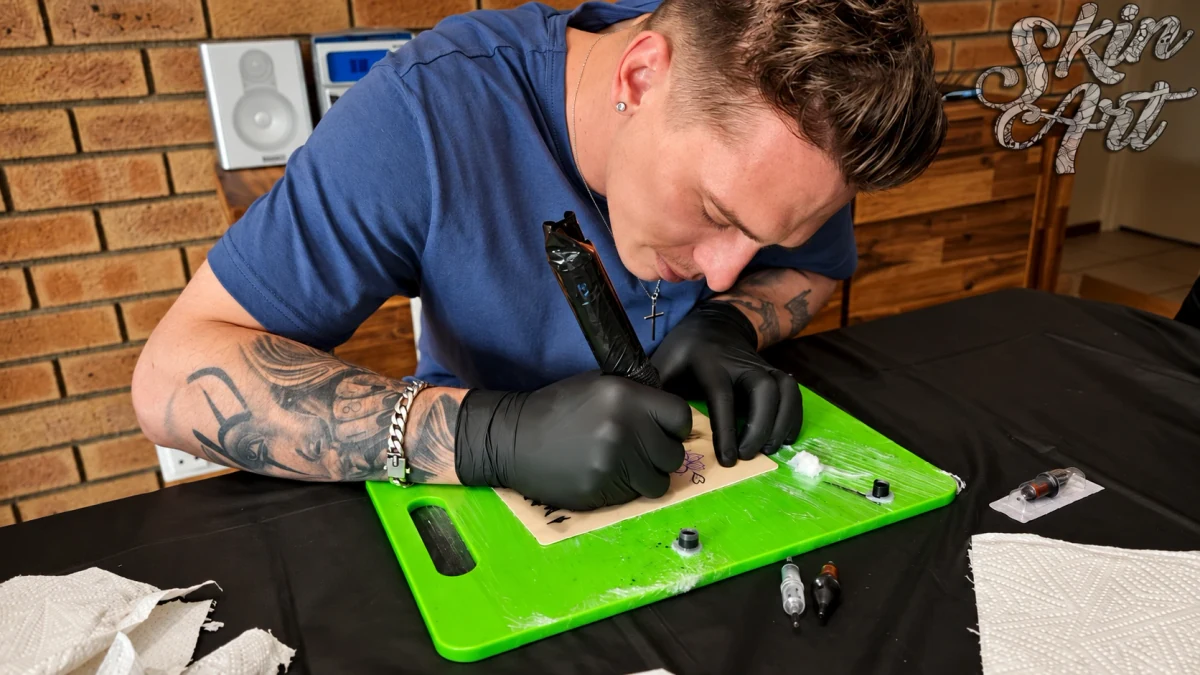
When the instructor assigns equipment-based practice, follow the course sequence, approved practice material and preparation instructions. The US regional offer does not supply equipment; check the requirements before purchasing supplies.
Keep tutor feedback connected to the next attempt
Send the complete work and a close-up without filters. Record the actual equipment setup and material, and ask one question about what you can see. For example: “The line becomes uneven at this join; which part of the exercise should I revisit?”
Keep the answer beside the next attempt. Avoid changing the design, material and approach all at once if the goal is a direct comparison. Do not copy a claimed universal voltage or depth from another artist’s video; the correct instruction must fit your equipment and task.
Build range alongside delicate linework
The tattoo course includes fine line, blackwork, tribal and Māori-inspired design exercises, traditional tattooing, watercolor and color realism. Explore how outline weight, contrast and color affect each assignment. A broader foundation helps you discuss a design beyond its style label.
Keep practice examples clearly identified as drawings or synthetic-skin work. When evaluating professional examples, distinguish fresh and healed photographs. Do not promise that a small, delicate design will stay unchanged or claim that one technique suits every client.
Connect the course to your US practice requirements
The US online tattoo course is the purchase route for the tattoo curriculum, including fine line. Enrolled students use the Academy for learning. You do not need a separate fine-line Academy checkout.
Before offering services, check the requirements for your state, locality, intended premises and scope. Ask which training evidence is accepted rather than assuming a certificate is a nationwide license. If adding another main discipline, compare the US course bundles against your actual learning plan.
For a US local example, NYC Health’s tattoo artist infection-control information links to the city’s study manual. Check the requirements for the state and locality where you plan to work; this reference describes New York City. For general information on caring for tattooed skin, the American Academy of Dermatology explains that UV light can fade some inks. No design or style guarantees an unchanged healed result.