Do You Need a License for Tattoo Removal in United States?
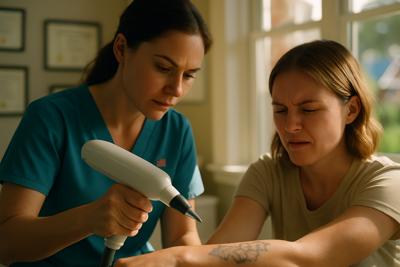
If you’ve been searching “License for Tattoo Removal in United States,” you’re asking the exact question millions of practitioners, salon owners, and curious clients ask every year. Whether you’re considering offering tattoo removal services or you simply want to understand the legal landscape, this guide walks you through what the laws typically look like, what varies by state, and practical steps to operate safely and legally.
The Tattoo Removal Method Taught in This Course
This course specifically teaches the saline syrem rejection method. This is a non-laser method that uses a specially formulated rejection syrem, which is tattooed into the skin over the unwanted pigment. It is more complex than simply tattooing saline. The course explains the ingredients, the full recipe, preparation and correct application, so you can learn how to mix your own syrem for use during the procedure.
The training also covers application, hygiene, safety and aftercare. Local licensing and health requirements still apply.
At Skinart United States we teach the ink-rejection tattoo removal technique — a safe, non-laser approach that differs from conventional medical laser removal. This article explains how licensing and oversight intersect with that method, and why it’s essential to confirm requirements in your specific state before offering services.
Gary teaches Skinart’s tattoo, piercing and body art courses. Review the course curriculum and lesson examples to understand the training offered.
Table of Contents
- What “License for Tattoo Removal in United States” Means
- Legal Overview: Federal, State, and Local Roles
- State Examples: How Different States Treat Tattoo Removal
- Common Requirements & Documentation
- Training, Certification and Why It Matters
- Common Mistakes Practitioners Make
- Insurance, Consent & Record-Keeping
- Frequently Asked Questions
- Final Thoughts
What “License for Tattoo Removal in United States” Means
When people ask “Do I need a License for Tattoo Removal in United States?”, they’re usually asking a layered question: who can legally perform removal, what credentials they must hold, and whether the procedure is governed by a medical board, a cosmetology board, or local health department rules. The answer is: it depends — and the specifics depend on the state, the technique used, and how local authorities classify the service.
At the federal level there is no single licence that covers tattoo removal nationwide. Instead, states and municipalities set rules. Those rules often hinge on whether the removal method is considered a medical procedure or a cosmetic/tattoo-related service. For example, laser-based removal is commonly treated as medical or delegated medical treatment in many states, while non-laser ink-rejection removal may be regulated more like tattooing or cosmetic tattooing depending on local law.
Understanding the phrase “License for Tattoo Removal in United States” means being curious about two things: 1) the legal classification of the removal method where you work, and 2) what documentation or oversight local regulators expect. Both matters affect what you need to open doors and protect clients.
Legal Overview: Federal, State, and Local Roles
Federal agencies like OSHA and the CDC influence safe practice standards — particularly around blood-borne pathogens (BBP) and infection control — but they do not issue practitioner licenses for tattoo removal. OSHA’s Bloodborne Pathogens Standard and CDC guidance are critical references for any removal provider handling skin penetration or bodily fluids.
State boards and departments of health are the primary regulators. They determine whether a procedure is considered “tattooing” (typically overseen by local health departments or cosmetology/tattoo boards) or a “medical procedure” (often requiring physician supervision, delegation, or performance by licensed medical personnel). That distinction is key for anyone asking about the License for Tattoo Removal in United States.
For practitioners offering the ink-rejection tattoo removal method (the technique taught in our online Tattoo Removal course), the classification will still depend on state law. Some states treat any skin-penetrating pigment work as tattooing and allow licensed tattooists to perform it with appropriate BBP certification; others limit pigment-altering procedures to medical settings. Because of this, it’s essential to check state statutes and local health codes before marketing removal services.
- Federal: OSHA/CDC provide safety and infection control standards but not practitioner licensure.
- State: Health boards, medical boards, or cosmetology boards often determine whether removal is medical or tattooing.
- Local (county/city): Health department inspections, facility permits, and tattoo parlor licensing can apply.
Tip: If your state is silent, the safest route is to obtain a tattooist license (where possible), complete BBP and first aid training, and adopt medical-grade infection-control practices. Always keep written confirmation from the licensing authority about what is permitted under local rules.
State Examples: How Different States Treat Tattoo Removal
Because state rules vary, let’s look at representative examples to illustrate the landscape. These are summaries to show common regulatory patterns — always confirm current laws directly with the state or local health department.
California: Laser tattoo removal is often performed under medical oversight or by licensed physicians and practitioners delegated by physicians in many clinical settings. Municipalities may require facility permits for laser devices and set rules on advertising and record-keeping.
Texas: Some forms of tattooing and cosmetic tattooing fall under local health department regulation; laser removal commonly is restricted to medical settings, while non-laser pigment removal methods can be allowed under tattooist licenses depending on the city’s ordinances.
- New York: Variable by county — New York City Health Code has specific rules for tattooing; laser procedures typically require medical oversight.
- Florida: Laser-based removal often connected to medical act definition; local health departments regulate tattoo studios and blood-borne pathogen controls.
- Oregon/Washington: Strong local health department oversight for tattooing; tattoo removal may require adherence to tattoo establishment permits.
- Smaller municipalities: May have minimal rules or none — the absence of rules is not permission. Confirm in writing if possible.
These examples show a clear pattern: laser removal is more frequently tied to medical licensing than needle-based tattooing techniques. Because Skinart teaches ink-rejection tattoo removal — an approach that involves pigment disruption via tattoo-style application of removal solution — many practitioners can operate under tattoo licensing frameworks where permitted. Still, always check your state and local code for the final word on whether a License for Tattoo Removal in United States is needed where you plan to work.
Helpful resource: OSHA’s Bloodborne Pathogens Standard provides a federal baseline for handling sharps and exposures; consult your state health department website for licensing rules and contact details for confirmation.
Common Requirements & Documentation
While license specifics differ, many jurisdictions ask for similar documentation, training, and facility provisions. The list below represents the most commonly requested items when regulators evaluate whether you can legally provide tattoo removal.
- Business license / DBA for your practice.
- Establishment permit or tattoo studio license issued by the city or county health department.
- Individual tattooist or operator license where applicable (often tied to apprenticeship, training hours, or an exam).
- Blood-borne pathogen (BBP) training certificate — many areas require up-to-date BBP completion for anyone performing skin penetration.
- Client consent forms, intake forms, and aftercare instructions stored per record-keeping rules.
- Sharps disposal procedures and documentation (contract with medical waste company or safe disposal plan).
- Proof of liability insurance that covers tattooing and pigment removal activities.
- If method is deemed medical: physician supervision or delegation documents as required by state medical board.
Many cities also require tattoo businesses to pass health inspections and maintain client records for a specified period. If you plan to offer removal services in the same studio where you tattoo, clarify whether a separate permit or a different area is necessary. Keep in mind that even if a state doesn’t explicitly require a specific license for non-laser removal, local ordinances may impose additional rules.
When in doubt, ask for written guidance from the licensing authority — an email or official letter clarifying whether the ink-rejection technique is allowed can protect you later if an inspector visits.
Training, Certification and Why It Matters
Completing a recognized training program is an essential step toward lawful and safe practice. For many regulators, training demonstrates competency and familiarity with infection control, consent processes, complication management, and client aftercare. At Skinart United States we offer an accredited online Tattoo Removal course (ink rejection method) geared to meet professional standards and prepare you for local compliance checks.
Important: The Skinart online Tattoo Removal course is fully accredited with the CPD Standards Office and BAQA, and includes modules on hygiene, consent, complication management, and the ink-rejection technique. However, accreditation of the course does not by itself override state licensure requirements; it supports your application for permits or registrations where required.
Below are core training components regulators and clients expect from a credible tattoo removal program. If you can show documented completion of these elements, you’ll be far better placed when applying for licenses or responding to local inquiries.
- Understanding of skin anatomy, wound healing, and pigment behavior.
- Infection control, sterile technique, and blood-borne pathogen training.
- Client assessment, contraindications, and medical referral protocols.
- Practical knowledge of ink-rejection technique, expected outcomes, and realistic client counseling.
- Emergency responses to adverse events and pathways to escalate to medical care.
- Record-keeping, consent forms, and aftercare documentation templates.
- Professional ethics, advertising rules, and scope-of-practice clarity.
Our course includes step-by-step modules, case studies, and guidance on how to approach regulators and draft compliant consent forms. Because Skinart teaches ink-rejection tattoo removal — which typically requires fewer sessions and can reduce scarring compared to laser — it’s important you train properly and document your competency when seeking local permissions or informing clients.
Note: We do not provide equipment in the United States, and we do not offer in-person training there. Our online course is designed to give you the clinical know-how and the paperwork templates you need to approach licensing authorities confidently.
Common Mistakes Practitioners Make When Addressing Licensing
- Assuming federal guidance replaces state licensing — it does not.
- Failing to check local city/county ordinances even when the state lacks explicit rules.
- Offering removal services before obtaining required permits or written approvals.
- Relying solely on “tattoo studio” permits without confirming the method (ink-rejection vs. laser) is allowed.
- Not completing or documenting BBP training and infection-control competencies.
- Inadequate record-keeping for client consent, treatments, and complications.
- Underestimating the importance of liability insurance specific to tattoo removal.
- Assuming the same rules apply to mobile services; many jurisdictions have strict restrictions for mobile tattooing/removal.
When you avoid these pitfalls, you reduce regulatory risk and protect clients. If you’re uncertain about a single item, call the local health department and ask for the name of the person handling tattooing or cosmetology permits; a short recorded phone call or email exchange can offer clarity and a paper trail.
Real-world example: One Skinart graduate in Ohio contacted the county health board before launching removal services. The board confirmed that ink-rejection procedures could be performed under the county’s tattoo parlor permit provided the operator had BBP training and a dedicated procedure room. That short step prevented costly enforcement later and allowed the graduate to advertise with confidence.
Insurance, Consent & Record-Keeping
Even where a specific license isn’t mandated, insurance providers want to know what procedures you perform, what training you have, and how you manage infection control and adverse outcomes. Many insurers provide coverage options tailored to tattooists and cosmetic practitioners that will also cover ink-rejection removal if appropriately documented.
Key documents to maintain and present to insurers or regulators include:
- Current BBP training certificate and CPR/first aid where requested.
- Detailed client intake, informed consent that explains the removal technique, likely outcomes, and risks.
- Treatment notes for each session, photos (with client permission), and aftercare notes.
- Contracts with medical waste disposal and evidence of safe sharps handling.
- Facility checklists and cleaning logs showing compliance with infection control.
- Proof of continuing education and any relevant accreditation certificates (such as CPD/BAQA).
Having this documentation not only helps when applying for permits and insurance, it also increases client trust and reduces liability. If a client experiences a complication, clear records and consent forms are often the single best defense in any inquiry.
Quote from a municipal official: “We encourage practitioners to bring documentation of training and infection-control protocols when applying for permits — it speeds the review and often prevents follow-up requests.” — City Health Inspector, Midwest County Health Department.
Why Proper Licensing and Training Benefits Your Business and Clients
Clients increasingly seek providers who can demonstrate safe practice and transparent processes. A clear licensing or permit status is a customer-facing benefit: it shows you’ve met local standards and reduces perceived risk for clients seeking tattoo removal.
From a business perspective, compliance reduces the risk of fines, forced closures, and costly retrofits. It also opens opportunities: many clinics and aesthetic practices prefer to partner with providers who can show recorded competency and liability coverage.
Here are practical business and client benefits of making licensing and accredited training a priority:
- Stronger client trust and referrals.
- Lower risk of enforcement actions from regulators.
- Access to professional networks and clinic partnerships.
- Better insurance terms and coverage availability.
- Clear guidelines for escalation to medical care when needed.
- Consistency in outcomes and fewer complications when trained properly.
- Improved client counseling and management of expectations.
- Professional credibility in local advertising and directories.
Industry Perspectives & What Officials Recommend
Industry voices — public health officials, municipal inspectors, and professional associations — consistently emphasize training and infection control as primary concerns when permitting tattooing and removal work. Below is an embedded quote representing that consensus.
“When evaluating tattoo and removal services, departments focus first on whether the operator understands and practices proper infection prevention and client safety. Licensing status helps establish that baseline.” — Municipal Health Inspector
That perspective aligns with our approach at Skinart: teach a solid clinical foundation, emphasize BBP compliance, and provide paperwork and protocols to present to regulators. If you want to be confident when inspectors knock or when a client asks for credentials, training matters.
Next Steps: How to Confirm Requirements in Your Area
Follow these practical steps to determine if you need a license for tattoo removal in your state or city:
- Search your state’s statutes for terms like “tattoo,” “body art,” “cosmetic procedure,” and “laser removal.”
- Contact the state department of health or medical board to ask about classification of non-laser ink-rejection removal.
- Call your county or city health department for establishment permit requirements and inspection protocols.
- Ask about mobile service restrictions if you plan to offer offsite removal.
- Request written confirmation or guidance so you can keep a record in case of future questions.
Don’t forget to ask about advertising rules and whether certain claims (e.g., “medical-grade” or “scarless”) require substantiation. Being proactive reduces compliance risk and positions your business as professional and trustworthy.
If you want to move confidently from training to offering services, the Skinart Tattoo Removal course for the United States walks you through all the documentation templates and provides advice on how to present your competencies to local regulators.
Frequently Asked Questions
Below are concise answers to questions many prospective practitioners ask as they consider licensing and offering removal services.
Do I need a license to perform tattoo removal in the United States?
The need for a license depends on your state and local regulations, and on the removal method used; some states treat laser removal as medical, while needle-based ink-rejection techniques may fall under tattooing regulations. Always verify with your state and local health departments.
Is the ink-rejection method we teach considered a medical procedure?
Ink-rejection removal is a pigment disruption technique performed using tattoo-style application of a removal solution. Its classification varies: some regulators view it as tattooing, others as a cosmetic procedure; check local guidance. Our course trains you on safety, client selection, and documentation that regulators expect.
What certifications are commonly required to satisfy regulators?
Commonly requested items include a tattooist or establishment permit, blood-borne pathogen (BBP) certification, business license, and proper facility documentation. If the jurisdiction requires medical supervision, you may need delegation documents from a licensed practitioner.
Can I offer removal services in the same studio where I tattoo?
Often yes, but local rules vary. Some jurisdictions require separate rooms or additional permits for removal services. Confirm with local health departments and ensure your facility meets any extra sanitation or record-keeping requirements.
Do I need special insurance for tattoo removal?
Yes — confirm with insurers that your policy covers tattoo removal specifically. Many insurers offer endorsements for pigment removal if you can provide proof of accredited training and BBP compliance.
Where can I find authoritative guidance?
Start with your state department of health or state medical board for official classifications; for infection control standards, consult OSHA and CDC guidance. When in doubt, request written confirmation from local authorities.
Final Thoughts: Take the Right Steps and Protect Your Practice
If you want to offer tattoo removal services in the United States, start by learning the ink-rejection method thoroughly, complete BBP and infection-control training, and then verify state and local licensure requirements. Taking those steps will help you build a reputable service, minimize risk, and provide better outcomes for your clients.
Skinart United States is here to support you. Our accredited online Tattoo Removal course teaches the ink-rejection method, client assessment, aftercare, and the regulatory considerations to look for in your state. While we do not provide equipment or in-person training in the United States, our course equips you to approach regulators confidently and to set up a safe, compliant practice.
Ready to learn a safer non-laser approach and prepare yourself for local compliance checks? Enrol in an accredited course and get the knowledge and documentation you need to move from curiosity to confident practice.
Start Your Accredited Tattoo Removal Training
Learn the ink-rejection method, get accredited training, and prepare the documentation regulators expect. Our online course is designed for practitioners across the United States who want a professional, compliant pathway into tattoo removal.