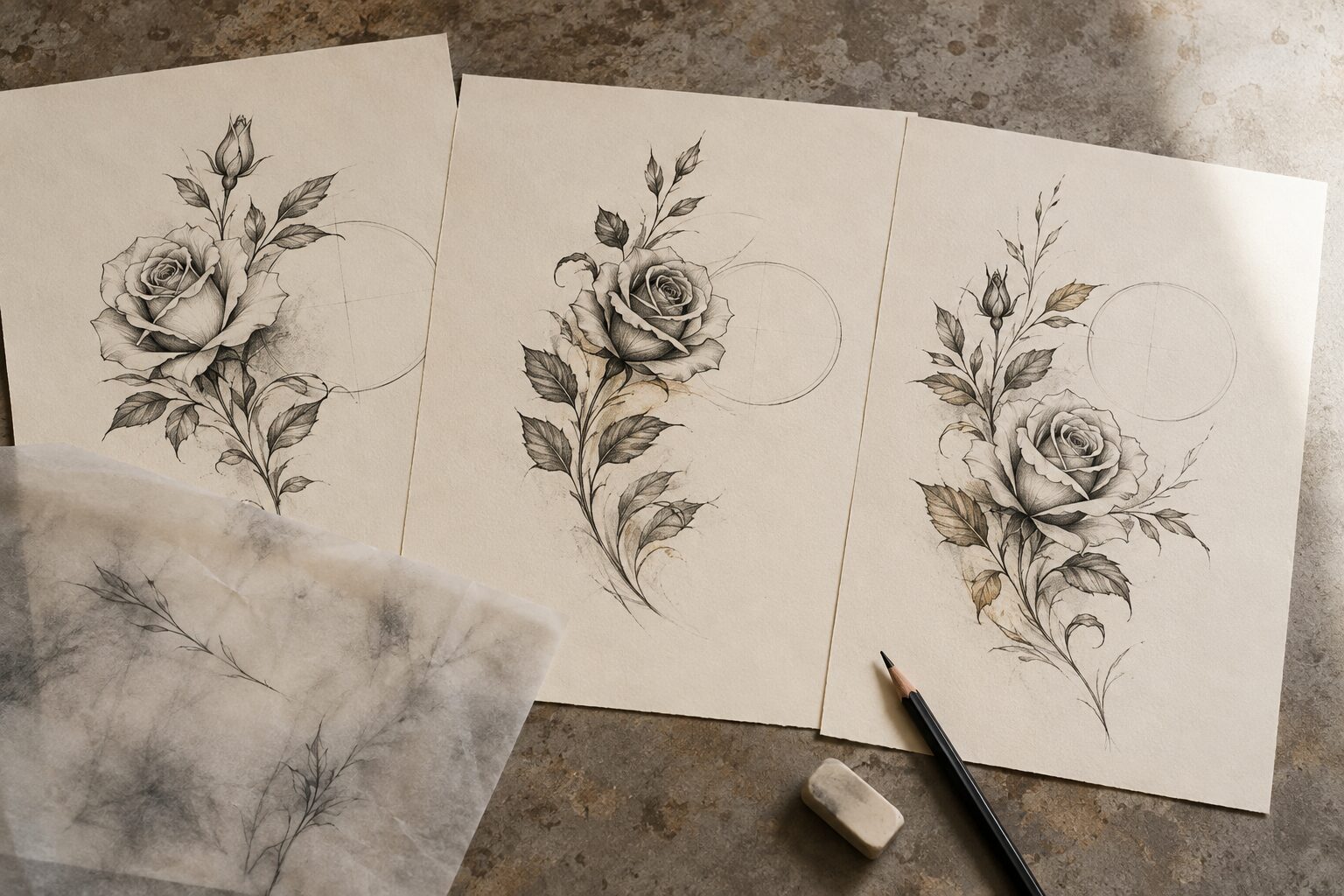
It is tempting to respond to a disappointing practice result by immediately trying again. A short review can reveal whether you understand the cause or are only repeating the same approach.
Describe the result without assigning blame. Compare it with the exercise brief, the reference and your earlier work. List what is known and what remains uncertain. Keep the original example so the next review has something concrete to compare.
Ask your trainer to help distinguish a learning issue from a question that needs a different assessment. Do not turn a practice observation into advice about correcting work on a person. Agree the scope of any next exercise before starting it.
Use a drawing comparison to isolate one problem
Imagine a lettering study on paper where the word becomes difficult to read at the intended display size. Before drawing it again, compare the spaces within letters, the spaces between letters and the balance of heavy and light strokes. Mark the location of the problem on a copy of the drawing. That is more useful than labelling the whole page a failure.
Choose one variable for the next paper study. For example, keep the letterforms and overall width while reviewing spacing. If you change the style, scale and layout together, you may like the result more without learning which decision helped. This is a design-analysis exercise, not advice for touching up a tattoo or correcting PMU on a client.
Keep this checklist
- Original brief and original image retained
- Problem location marked
- One design variable selected
- Comparable second version created
- Question for trainer attached
Separate observation from a proposed correction
Place an earlier paper design beside a later version. Describe what you can actually see before suggesting how to change it. This exercise concerns design review, not treatment of a healed tattoo or cosmetic result.
- Write three neutral observations about spacing, balance or contrast.
- Circle the observation most relevant to the original brief.
- Draw one alternative on a fresh sheet and retain the original.
A useful review explains the reason for a change and what remains uncertain. It does not label every difference a defect.