Skip to content

Pros and Cons of Becoming a Piercer


Deciding whether to train is much easier when you understand the trade-offs. The profession offers creativity and independence, but also responsibility and ongoing learning.

Pros

  • Creative, hands-on work with immediate client satisfaction
  • Flexible working models — studio, mobile or freelance
  • Typically lower startup costs than tattooing
  • Strong repeat business through aftercare and referrals

Cons

  • High responsibility for health and safety — mistakes can cause infection or litigation
  • Irregular income early on while you build a client base
  • Physical demands: standing, fine motor control, and repetitive tasks
  • Need for continuous CPD to meet evolving standards

For many, the pros outweigh the cons. If you enjoy detail work, client contact and a small-business mindset, becoming a piercer can be extremely rewarding. Skinart’s course focuses on the skills that reduce risks and increase client satisfaction, making it a good fit if you’re serious about a professional career in the UK.

Whether you plan to work in an established studio in Brighton or launch a mobile service in Edinburgh, proper training and recognised accreditation make it significantly easier to secure employment and build trust with clients and local councils.
Skills, Tools and Clinical Requirements


To answer How to Become a Body Piercer in United Kingdom effectively, you should know the essential technical skills and equipment required. The list below includes what experienced piercers commonly use and what you will need to be familiar with in training and assessment.

Skill development spans: safe needle technique, client consultation and consent, recognition of contraindications, infection control, wound management and smile-building aftercare instructions. Your competence must be supported by clear documentation and record-keeping which local authorities often inspect.

Equipment and consumables are usually provided by studios or purchased by the practitioner — Skinart United Kingdom does not supply piercing equipment in the UK, so plan equipment sourcing as part of your start-up costs.

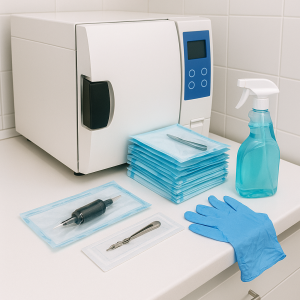
  • Sterile single-use needles (appropriate gauges)
  • Sterile jewellery (implant-grade titanium, PTFE where indicated)
  • Disposable gloves (nitrile) and aprons
  • Antiseptic solutions (chlorhexidine/alcohol wipes as per guidance)
  • Autoclave or validated single-use instruments — and logbooks
  • Sharps containers and clinical waste disposal contract
  • Clinical pack: sterile dressings, antiseptics, swabs
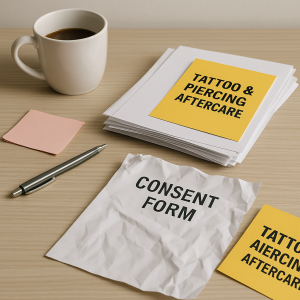
  • Record-keeping system and client consent/medical history forms
  • Marking pens, calipers and measuring tools
  • Aftercare leaflets customised for the UK audience

Many councils also expect piercers to follow Health and Safety Executive (HSE) guidance on safe disposal of clinical waste and blood-borne pathogen (BBP) procedures. A course that includes BBP awareness and first aid is essential.

Common Mistakes New Piercers Make


  • Poor documentation: missing consent forms or incomplete medical histories
  • Skipping or rushing aftercare advice — clients need clear written instructions
  • Using inappropriate jewellery material or incorrect gauge for anatomy
  • Insufficient marking and measurement before piercing — asymmetry risks
  • Poor glove discipline or cross-contamination between procedures
  • Inadequate sterilisation records or reliance on unvalidated sterilisation
  • Attempting advanced placements before competence is assured
  • Failure to recognise contraindications such as uncontrolled diabetes or certain medications
  • Not maintaining accurate clinical waste logs and disposal contracts
  • Under-insuring or misunderstanding coverage for mobile services

Each of the mistakes above is avoidable with structured training, clear studio protocols and disciplined record-keeping. Skinart United Kingdom’s training emphasises the administrative as well as the clinical skills so you begin your career with best practice built in.

Local authority Environmental Health Officers (EHOs) will inspect practices, so expect to show your training certificates, insurance documents, written procedures and client records during inspections. Being inspection-ready reduces stress and builds reputation.


Starting a business as a piercer in the UK requires clarity on registration, tax, insurance, and local regulations. If you operate from a studio, it must meet Environmental Health standards. If you plan to operate mobile, you must ensure safe, clean, and private working areas in clients’ homes, and that your insurance covers mobile work.

Recommended practical steps:

  • Register as self-employed with HMRC or set up a limited company
  • Obtain appropriate public liability and professional indemnity insurance — confirm coverage for mobile piercing if applicable
  • Agree a clinical waste collection contract and maintain disposal logs
  • Have documented health & safety procedures and infection control policies
  • Ensure compliance with local council guidance; some councils provide checklists for body art practices
  • Keep CPD records and training certificates available for inspection
  • Set pricing based on local market, time, materials and aftercare support
  • Use a secure system for client records and GDPR-compliant storage

Insurance is essential. Speak to insurers who cover aesthetic and body art practitioners in the UK and ask specifically about mobile work, new trainee status, and whether you need extra cover while assessed by a mentor or assessor.

Career Paths: Studio, Mobile, Teaching and Beyond


There are multiple directions your career can take after initial training. Many start as studio assistants or junior piercers and then expand into mobile work or niche specialisations (e.g., dermal anchors, microdermal). Experienced practitioners may become assessors, course tutors, or open their own studios.

Progression typically depends on practical experience, client feedback, and maintaining up-to-date CPD. A common strategy is to build a strong local reputation through consistent results and clear aftercare — this leads to referrals and the option to increase pricing over time.

Examples from the UK: a former Skinart trainee in Bristol expanded from weekend studio shifts to a full-time mobile service within 18 months by focusing on excellent aftercare and clear communication. Another graduate in Leeds moved into teaching local workshops while working part-time in a studio. Both cases show how flexible pathways can be.

How to Become a Body Piercer in United Kingdom — Step-by-Step


Below is a practical step-by-step plan you can follow to become a professional piercer in the UK. The emphasis is on gaining accredited training, building practical experience, and preparing for inspections and employment.

Step 1: Research accredited courses. Choose a BAQA/CPD-aligned course (like Skinart United Kingdom’s online piercing course) that includes theoretical modules and documented practical assessment.

Step 2: Complete BBP and infection control modules. These are essential for both client safety and Environmental Health inspections. Keep certificates organised.

  • Step 3: Complete supervised practicals — practice on referral models or under a mentor to build competence.
  • Step 4: Compile a portfolio with photos, consent forms (redacted for privacy), and assessor feedback.
  • Step 5: Register your business with HMRC and arrange insurance before performing paid piercings.
  • Step 6: Maintain CPD and seek continuous feedback; consider mentoring with an experienced piercer.
  • Step 7: Keep records and be prepared for local authority inspections.

These steps will help you not only pass assessments but to present yourself as a safe, trustworthy practitioner — the most important factor in attracting long-term clients.

Standards, Local Authority Expectations and Official Guidance


Although there is no single national licence for piercing, local councils (via Environmental Health) set expectations for cleanliness, training and record keeping. Many councils publish body art guidance — searching “[your town] body piercing guidance” often returns local checklists.

The Health and Safety Executive (HSE) provides general workplace guidance and controls for hazardous materials; EHOs will expect piercers to follow safe disposal, sharps handling and infection control practices. Where available, refer to your local council’s official body art guidance to ensure compliance.

Quote from an Environmental Health officer (example):

“We expect practitioners to demonstrate current training, clear documentation and consistent infection-control practices. Proper records and visible CPD evidence make inspections straightforward.”

Linking to authoritative sources can help — for example, consult the HSE website for waste handling advice and BAQA for recognised qualification frameworks when selecting your training.

Voices from the Field


Hearing from those already working in the industry helps you plan realistically. The following quote is representative of feedback from studio owners who assess trainees in the UK.

“Trainees who arrive with tidy portfolios, proof of CPD and a clear understanding of infection control are the ones we hire. Skill is important, but pro-active professionalism sets you apart.” — Studio Owner, Manchester

Embed this practical advice into your preparation — keep neat records, photograph your work professionally (with client consent), and stay current with CPD to keep your skills attractive to employers and clients alike.

Further Practical Advice for Trainees


Practical experience is central to demonstrating competence. Look for opportunities to assist experienced piercers, attend supervised clinic days, and practice non-invasive skills such as marking anatomy and aftercare consultations before performing your first paid piercing.

Record every supervised procedure in your portfolio, including the assessor’s feedback and signed client consent. These records are invaluable during job applications and inspections.

Remember: Skinart United Kingdom’s course supports trainees with assessment templates and guidance on building a portfolio that meets BAQA and CPD expectations. While we do not supply equipment in the UK, our training prepares you to shop for and evaluate the right instruments.

Frequently Asked Questions


Below are concise answers to common queries about how to become a body piercer in United Kingdom. If you need more detail, our course team at Skinart United Kingdom is available to help.

Do I need a licence to pierce in the UK?

There is no single national licence for piercing, but local councils set expectations; most employers and EHOs expect recognised training and documented infection control procedures.

How long does it take to qualify as a piercer?

That depends on your chosen pathway — an accredited course plus supervised practicals can be completed over weeks to months; gaining sufficient experience to work independently typically takes several months of focused practice.

Does Skinart United Kingdom provide equipment?

No — Skinart United Kingdom does not supply piercing equipment in the UK. Our course teaches how to identify and safely use professional-grade equipment, but you should budget for purchasing instruments.

Can I work mobile after training?

Yes, but ensure your insurance explicitly covers mobile work and that you can meet clinical standards in clients’ homes, including privacy, cleanliness and safe waste disposal.

What qualifications should I list on my CV?

List accredited course certificates (BAQA/CPD), BBP training, first aid (if held), and any supervised practical assessments with assessor signatures; employers and councils expect clear evidence of training.

Final Thoughts & Next Steps


Becoming a professional piercer in the UK is a practical, achievable goal when you follow accredited training, document your learning and prioritise client safety. The path we’ve described emphasises competence, good record-keeping, and local compliance — the factors that most reliably lead to employment and sustainable business.

If you’re ready to take the next step, consider an accredited course that covers clinical theory, BBP awareness, and supervised practical assessment. Skinart United Kingdom provides industry-aligned online piercing training to help you meet BAQA and CPD expectations — guiding you from theory to confident practice.

We’re here to support you at every stage: from selecting the right training pathway to preparing a portfolio that gets you hired. When you’re ready to begin, our course includes the templates, tutor support and assessment guidance that will help you launch a credible piercing career in the UK.

Ready to Start? Get Accredited with Skinart United Kingdom


Our online piercing course is accredited and built for UK learners who want a professional, CPD-aligned pathway into piercing. Click below to view course details, modules and enrolment options.

Recent Blog Posts

Pros and Cons of Becoming a Piercer


Deciding whether to train is much easier when you understand the trade-offs. The profession offers creativity and independence, but also responsibility and ongoing learning.

Pros

  • Creative, hands-on work with immediate client satisfaction
  • Flexible working models — studio, mobile or freelance
  • Typically lower startup costs than tattooing
  • Strong repeat business through aftercare and referrals

Cons

  • High responsibility for health and safety — mistakes can cause infection or litigation
  • Irregular income early on while you build a client base
  • Physical demands: standing, fine motor control, and repetitive tasks
  • Need for continuous CPD to meet evolving standards

For many, the pros outweigh the cons. If you enjoy detail work, client contact and a small-business mindset, becoming a piercer can be extremely rewarding. Skinart’s course focuses on the skills that reduce risks and increase client satisfaction, making it a good fit if you’re serious about a professional career in the UK.

Whether you plan to work in an established studio in Brighton or launch a mobile service in Edinburgh, proper training and recognised accreditation make it significantly easier to secure employment and build trust with clients and local councils.

Skills, Tools and Clinical Requirements


To answer How to Become a Body Piercer in United Kingdom effectively, you should know the essential technical skills and equipment required. The list below includes what experienced piercers commonly use and what you will need to be familiar with in training and assessment.

Skill development spans: safe needle technique, client consultation and consent, recognition of contraindications, infection control, wound management and smile-building aftercare instructions. Your competence must be supported by clear documentation and record-keeping which local authorities often inspect.

Equipment and consumables are usually provided by studios or purchased by the practitioner — Skinart United Kingdom does not supply piercing equipment in the UK, so plan equipment sourcing as part of your start-up costs.

  • Sterile single-use needles (appropriate gauges)
  • Sterile jewellery (implant-grade titanium, PTFE where indicated)
  • Disposable gloves (nitrile) and aprons
  • Antiseptic solutions (chlorhexidine/alcohol wipes as per guidance)
  • Autoclave or validated single-use instruments — and logbooks
  • Sharps containers and clinical waste disposal contract
  • Clinical pack: sterile dressings, antiseptics, swabs
  • Record-keeping system and client consent/medical history forms
  • Marking pens, calipers and measuring tools
  • Aftercare leaflets customised for the UK audience

Many councils also expect piercers to follow Health and Safety Executive (HSE) guidance on safe disposal of clinical waste and blood-borne pathogen (BBP) procedures. A course that includes BBP awareness and first aid is essential.

Common Mistakes New Piercers Make


  • Poor documentation: missing consent forms or incomplete medical histories
  • Skipping or rushing aftercare advice — clients need clear written instructions
  • Using inappropriate jewellery material or incorrect gauge for anatomy
  • Insufficient marking and measurement before piercing — asymmetry risks
  • Poor glove discipline or cross-contamination between procedures
  • Inadequate sterilisation records or reliance on unvalidated sterilisation
  • Attempting advanced placements before competence is assured
  • Failure to recognise contraindications such as uncontrolled diabetes or certain medications
  • Not maintaining accurate clinical waste logs and disposal contracts
  • Under-insuring or misunderstanding coverage for mobile services

Each of the mistakes above is avoidable with structured training, clear studio protocols and disciplined record-keeping. Skinart United Kingdom’s training emphasises the administrative as well as the clinical skills so you begin your career with best practice built in.

Local authority Environmental Health Officers (EHOs) will inspect practices, so expect to show your training certificates, insurance documents, written procedures and client records during inspections. Being inspection-ready reduces stress and builds reputation.


Starting a business as a piercer in the UK requires clarity on registration, tax, insurance, and local regulations. If you operate from a studio, it must meet Environmental Health standards. If you plan to operate mobile, you must ensure safe, clean, and private working areas in clients’ homes, and that your insurance covers mobile work.

Recommended practical steps:

  • Register as self-employed with HMRC or set up a limited company
  • Obtain appropriate public liability and professional indemnity insurance — confirm coverage for mobile piercing if applicable
  • Agree a clinical waste collection contract and maintain disposal logs
  • Have documented health & safety procedures and infection control policies
  • Ensure compliance with local council guidance; some councils provide checklists for body art practices
  • Keep CPD records and training certificates available for inspection
  • Set pricing based on local market, time, materials and aftercare support
  • Use a secure system for client records and GDPR-compliant storage

Insurance is essential. Speak to insurers who cover aesthetic and body art practitioners in the UK and ask specifically about mobile work, new trainee status, and whether you need extra cover while assessed by a mentor or assessor.

Career Paths: Studio, Mobile, Teaching and Beyond


There are multiple directions your career can take after initial training. Many start as studio assistants or junior piercers and then expand into mobile work or niche specialisations (e.g., dermal anchors, microdermal). Experienced practitioners may become assessors, course tutors, or open their own studios.

Progression typically depends on practical experience, client feedback, and maintaining up-to-date CPD. A common strategy is to build a strong local reputation through consistent results and clear aftercare — this leads to referrals and the option to increase pricing over time.

Examples from the UK: a former Skinart trainee in Bristol expanded from weekend studio shifts to a full-time mobile service within 18 months by focusing on excellent aftercare and clear communication. Another graduate in Leeds moved into teaching local workshops while working part-time in a studio. Both cases show how flexible pathways can be.

How to Become a Body Piercer in United Kingdom — Step-by-Step


Below is a practical step-by-step plan you can follow to become a professional piercer in the UK. The emphasis is on gaining accredited training, building practical experience, and preparing for inspections and employment.

Step 1: Research accredited courses. Choose a BAQA/CPD-aligned course (like Skinart United Kingdom’s online piercing course) that includes theoretical modules and documented practical assessment.

Step 2: Complete BBP and infection control modules. These are essential for both client safety and Environmental Health inspections. Keep certificates organised.

  • Step 3: Complete supervised practicals — practice on referral models or under a mentor to build competence.
  • Step 4: Compile a portfolio with photos, consent forms (redacted for privacy), and assessor feedback.
  • Step 5: Register your business with HMRC and arrange insurance before performing paid piercings.
  • Step 6: Maintain CPD and seek continuous feedback; consider mentoring with an experienced piercer.
  • Step 7: Keep records and be prepared for local authority inspections.

These steps will help you not only pass assessments but to present yourself as a safe, trustworthy practitioner — the most important factor in attracting long-term clients.

Standards, Local Authority Expectations and Official Guidance


Although there is no single national licence for piercing, local councils (via Environmental Health) set expectations for cleanliness, training and record keeping. Many councils publish body art guidance — searching “[your town] body piercing guidance” often returns local checklists.

The Health and Safety Executive (HSE) provides general workplace guidance and controls for hazardous materials; EHOs will expect piercers to follow safe disposal, sharps handling and infection control practices. Where available, refer to your local council’s official body art guidance to ensure compliance.

Quote from an Environmental Health officer (example):

“We expect practitioners to demonstrate current training, clear documentation and consistent infection-control practices. Proper records and visible CPD evidence make inspections straightforward.”

Linking to authoritative sources can help — for example, consult the HSE website for waste handling advice and BAQA for recognised qualification frameworks when selecting your training.

Voices from the Field


Hearing from those already working in the industry helps you plan realistically. The following quote is representative of feedback from studio owners who assess trainees in the UK.

“Trainees who arrive with tidy portfolios, proof of CPD and a clear understanding of infection control are the ones we hire. Skill is important, but pro-active professionalism sets you apart.” — Studio Owner, Manchester

Embed this practical advice into your preparation — keep neat records, photograph your work professionally (with client consent), and stay current with CPD to keep your skills attractive to employers and clients alike.

Further Practical Advice for Trainees


Practical experience is central to demonstrating competence. Look for opportunities to assist experienced piercers, attend supervised clinic days, and practice non-invasive skills such as marking anatomy and aftercare consultations before performing your first paid piercing.

Record every supervised procedure in your portfolio, including the assessor’s feedback and signed client consent. These records are invaluable during job applications and inspections.

Remember: Skinart United Kingdom’s course supports trainees with assessment templates and guidance on building a portfolio that meets BAQA and CPD expectations. While we do not supply equipment in the UK, our training prepares you to shop for and evaluate the right instruments.

Frequently Asked Questions


Below are concise answers to common queries about how to become a body piercer in United Kingdom. If you need more detail, our course team at Skinart United Kingdom is available to help.

Do I need a licence to pierce in the UK?

There is no single national licence for piercing, but local councils set expectations; most employers and EHOs expect recognised training and documented infection control procedures.

How long does it take to qualify as a piercer?

That depends on your chosen pathway — an accredited course plus supervised practicals can be completed over weeks to months; gaining sufficient experience to work independently typically takes several months of focused practice.

Does Skinart United Kingdom provide equipment?

No — Skinart United Kingdom does not supply piercing equipment in the UK. Our course teaches how to identify and safely use professional-grade equipment, but you should budget for purchasing instruments.

Can I work mobile after training?

Yes, but ensure your insurance explicitly covers mobile work and that you can meet clinical standards in clients’ homes, including privacy, cleanliness and safe waste disposal.

What qualifications should I list on my CV?

List accredited course certificates (BAQA/CPD), BBP training, first aid (if held), and any supervised practical assessments with assessor signatures; employers and councils expect clear evidence of training.

Final Thoughts & Next Steps


Becoming a professional piercer in the UK is a practical, achievable goal when you follow accredited training, document your learning and prioritise client safety. The path we’ve described emphasises competence, good record-keeping, and local compliance — the factors that most reliably lead to employment and sustainable business.

If you’re ready to take the next step, consider an accredited course that covers clinical theory, BBP awareness, and supervised practical assessment. Skinart United Kingdom provides industry-aligned online piercing training to help you meet BAQA and CPD expectations — guiding you from theory to confident practice.

We’re here to support you at every stage: from selecting the right training pathway to preparing a portfolio that gets you hired. When you’re ready to begin, our course includes the templates, tutor support and assessment guidance that will help you launch a credible piercing career in the UK.

Ready to Start? Get Accredited with Skinart United Kingdom


Our online piercing course is accredited and built for UK learners who want a professional, CPD-aligned pathway into piercing. Click below to view course details, modules and enrolment options.

Recent Blog Posts

How to Become a Body Piercer in United Kingdom

How to Become a Body Piercer in United Kingdom

How to Become a Body Piercer in United Kingdom is a question we’re asked every week at Skinart United Kingdom. Whether you’re exploring a creative new career, want to work in an established studio, or plan to develop a mobile service in cities such as London, Manchester or Glasgow, this guide walks you through the practical steps, legal requirements and professional skills you’ll need to succeed.

This article is written by Gary Erskine, lead tutor at Skinart United Kingdom — 25 years in the body art industry, accredited trainer and ex-studio owner. You’ll find clear, localised advice about training options, safety standards, business setup and how to build a respected portfolio to launch your piercing career in the UK.

Table of Contents


Use these links to jump to the sections you need. We include clear section IDs to help search engines offer “Jump to” results in SERPs.

Tip: Press Ctrl/Cmd + F to search this page for specific topics such as training, legalities, or equipment.

Overview: What a Professional Piercer Does


Learning how to become a body piercer in United Kingdom involves more than learning needle technique — it requires knowledge of anatomy, hygiene protocols, client consultation, jewellery selection, aftercare instructions and record keeping. A professional piercer must balance creative skill with clinical responsibility, ensuring every client leaves safely and well-informed.

As a trainee you’ll practice on simulators, models and under supervision before performing independent procedures. The industry values demonstrable competence, clean technique and excellent client communication — and these are core parts of Skinart United Kingdom’s online piercing course that align with national guidance and BAQA accreditation.

Throughout this guide we use UK-specific examples — such as local council requirements, HSE advice, and national standards — so you can make informed choices about training, insurance and operating safely in towns and cities across the UK.

Training Pathways and Accreditation


How to become a body piercer in United Kingdom starts with choosing credible training and accreditation. In the UK there is no single national licence to pierce, but professional standards are set by bodies like the Body Art Qualifications Association (BAQA) and the CPD Standards Office. Employers and councils expect piercers to hold recognised qualifications and demonstrable competence.

Popular valid pathways include accredited online courses (with supervised practicals arranged), blended programmes combining distance learning with in-person assessment, and formal vocational schemes. Skinart United Kingdom’s online piercing course is CPD and BAQA-aligned and designed for UK learners who want robust, accredited training that fits around work or study.

Key things to confirm when choosing a course: is the syllabus comprehensive (anatomy, aseptic technique, BBP), are practical assessments included, does the course include documentation templates (consent forms, medical questionnaire) and does the provider offer support during assessments?

  • Accredited CPD/BAQA course (recommended)
  • Apprenticeship-style mentorship (studio-based)
  • Workshops and supervised practical days
  • Self-directed practice with external assessor

Pros and Cons of Becoming a Piercer


Deciding whether to train is much easier when you understand the trade-offs. The profession offers creativity and independence, but also responsibility and ongoing learning.

Pros

  • Creative, hands-on work with immediate client satisfaction
  • Flexible working models — studio, mobile or freelance
  • Typically lower startup costs than tattooing
  • Strong repeat business through aftercare and referrals

Cons

  • High responsibility for health and safety — mistakes can cause infection or litigation
  • Irregular income early on while you build a client base
  • Physical demands: standing, fine motor control, and repetitive tasks
  • Need for continuous CPD to meet evolving standards

For many, the pros outweigh the cons. If you enjoy detail work, client contact and a small-business mindset, becoming a piercer can be extremely rewarding. Skinart’s course focuses on the skills that reduce risks and increase client satisfaction, making it a good fit if you’re serious about a professional career in the UK.

Whether you plan to work in an established studio in Brighton or launch a mobile service in Edinburgh, proper training and recognised accreditation make it significantly easier to secure employment and build trust with clients and local councils.
Skills, Tools and Clinical Requirements


To answer How to Become a Body Piercer in United Kingdom effectively, you should know the essential technical skills and equipment required. The list below includes what experienced piercers commonly use and what you will need to be familiar with in training and assessment.

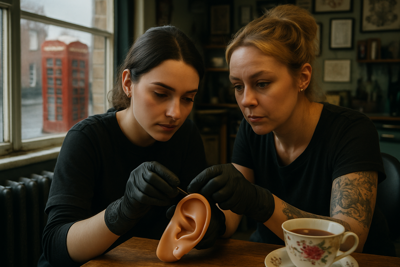
Skill development spans: safe needle technique, client consultation and consent, recognition of contraindications, infection control, wound management and smile-building aftercare instructions. Your competence must be supported by clear documentation and record-keeping which local authorities often inspect.

Equipment and consumables are usually provided by studios or purchased by the practitioner — Skinart United Kingdom does not supply piercing equipment in the UK, so plan equipment sourcing as part of your start-up costs.

  • Sterile single-use needles (appropriate gauges)
  • Sterile jewellery (implant-grade titanium, PTFE where indicated)
  • Disposable gloves (nitrile) and aprons
  • Antiseptic solutions (chlorhexidine/alcohol wipes as per guidance)
  • Autoclave or validated single-use instruments — and logbooks
  • Sharps containers and clinical waste disposal contract
  • Clinical pack: sterile dressings, antiseptics, swabs
  • Record-keeping system and client consent/medical history forms
  • Marking pens, calipers and measuring tools
  • Aftercare leaflets customised for the UK audience

Many councils also expect piercers to follow Health and Safety Executive (HSE) guidance on safe disposal of clinical waste and blood-borne pathogen (BBP) procedures. A course that includes BBP awareness and first aid is essential.

Common Mistakes New Piercers Make


  • Poor documentation: missing consent forms or incomplete medical histories
  • Skipping or rushing aftercare advice — clients need clear written instructions
  • Using inappropriate jewellery material or incorrect gauge for anatomy
  • Insufficient marking and measurement before piercing — asymmetry risks
  • Poor glove discipline or cross-contamination between procedures
  • Inadequate sterilisation records or reliance on unvalidated sterilisation
  • Attempting advanced placements before competence is assured
  • Failure to recognise contraindications such as uncontrolled diabetes or certain medications
  • Not maintaining accurate clinical waste logs and disposal contracts
  • Under-insuring or misunderstanding coverage for mobile services

Each of the mistakes above is avoidable with structured training, clear studio protocols and disciplined record-keeping. Skinart United Kingdom’s training emphasises the administrative as well as the clinical skills so you begin your career with best practice built in.

Local authority Environmental Health Officers (EHOs) will inspect practices, so expect to show your training certificates, insurance documents, written procedures and client records during inspections. Being inspection-ready reduces stress and builds reputation.


Starting a business as a piercer in the UK requires clarity on registration, tax, insurance, and local regulations. If you operate from a studio, it must meet Environmental Health standards. If you plan to operate mobile, you must ensure safe, clean, and private working areas in clients’ homes, and that your insurance covers mobile work.

Recommended practical steps:

  • Register as self-employed with HMRC or set up a limited company
  • Obtain appropriate public liability and professional indemnity insurance — confirm coverage for mobile piercing if applicable
  • Agree a clinical waste collection contract and maintain disposal logs
  • Have documented health & safety procedures and infection control policies
  • Ensure compliance with local council guidance; some councils provide checklists for body art practices
  • Keep CPD records and training certificates available for inspection
  • Set pricing based on local market, time, materials and aftercare support
  • Use a secure system for client records and GDPR-compliant storage

Insurance is essential. Speak to insurers who cover aesthetic and body art practitioners in the UK and ask specifically about mobile work, new trainee status, and whether you need extra cover while assessed by a mentor or assessor.

Career Paths: Studio, Mobile, Teaching and Beyond


There are multiple directions your career can take after initial training. Many start as studio assistants or junior piercers and then expand into mobile work or niche specialisations (e.g., dermal anchors, microdermal). Experienced practitioners may become assessors, course tutors, or open their own studios.

Progression typically depends on practical experience, client feedback, and maintaining up-to-date CPD. A common strategy is to build a strong local reputation through consistent results and clear aftercare — this leads to referrals and the option to increase pricing over time.

Examples from the UK: a former Skinart trainee in Bristol expanded from weekend studio shifts to a full-time mobile service within 18 months by focusing on excellent aftercare and clear communication. Another graduate in Leeds moved into teaching local workshops while working part-time in a studio. Both cases show how flexible pathways can be.

How to Become a Body Piercer in United Kingdom — Step-by-Step


Below is a practical step-by-step plan you can follow to become a professional piercer in the UK. The emphasis is on gaining accredited training, building practical experience, and preparing for inspections and employment.

Step 1: Research accredited courses. Choose a BAQA/CPD-aligned course (like Skinart United Kingdom’s online piercing course) that includes theoretical modules and documented practical assessment.

Step 2: Complete BBP and infection control modules. These are essential for both client safety and Environmental Health inspections. Keep certificates organised.

  • Step 3: Complete supervised practicals — practice on referral models or under a mentor to build competence.
  • Step 4: Compile a portfolio with photos, consent forms (redacted for privacy), and assessor feedback.
  • Step 5: Register your business with HMRC and arrange insurance before performing paid piercings.
  • Step 6: Maintain CPD and seek continuous feedback; consider mentoring with an experienced piercer.
  • Step 7: Keep records and be prepared for local authority inspections.

These steps will help you not only pass assessments but to present yourself as a safe, trustworthy practitioner — the most important factor in attracting long-term clients.

Standards, Local Authority Expectations and Official Guidance


Although there is no single national licence for piercing, local councils (via Environmental Health) set expectations for cleanliness, training and record keeping. Many councils publish body art guidance — searching “[your town] body piercing guidance” often returns local checklists.

The Health and Safety Executive (HSE) provides general workplace guidance and controls for hazardous materials; EHOs will expect piercers to follow safe disposal, sharps handling and infection control practices. Where available, refer to your local council’s official body art guidance to ensure compliance.

Quote from an Environmental Health officer (example):

“We expect practitioners to demonstrate current training, clear documentation and consistent infection-control practices. Proper records and visible CPD evidence make inspections straightforward.”

Linking to authoritative sources can help — for example, consult the HSE website for waste handling advice and BAQA for recognised qualification frameworks when selecting your training.

Voices from the Field


Hearing from those already working in the industry helps you plan realistically. The following quote is representative of feedback from studio owners who assess trainees in the UK.

“Trainees who arrive with tidy portfolios, proof of CPD and a clear understanding of infection control are the ones we hire. Skill is important, but pro-active professionalism sets you apart.” — Studio Owner, Manchester

Embed this practical advice into your preparation — keep neat records, photograph your work professionally (with client consent), and stay current with CPD to keep your skills attractive to employers and clients alike.

Further Practical Advice for Trainees


Practical experience is central to demonstrating competence. Look for opportunities to assist experienced piercers, attend supervised clinic days, and practice non-invasive skills such as marking anatomy and aftercare consultations before performing your first paid piercing.

Record every supervised procedure in your portfolio, including the assessor’s feedback and signed client consent. These records are invaluable during job applications and inspections.

Remember: Skinart United Kingdom’s course supports trainees with assessment templates and guidance on building a portfolio that meets BAQA and CPD expectations. While we do not supply equipment in the UK, our training prepares you to shop for and evaluate the right instruments.

Frequently Asked Questions


Below are concise answers to common queries about how to become a body piercer in United Kingdom. If you need more detail, our course team at Skinart United Kingdom is available to help.

Do I need a licence to pierce in the UK?

There is no single national licence for piercing, but local councils set expectations; most employers and EHOs expect recognised training and documented infection control procedures.

How long does it take to qualify as a piercer?

That depends on your chosen pathway — an accredited course plus supervised practicals can be completed over weeks to months; gaining sufficient experience to work independently typically takes several months of focused practice.

Does Skinart United Kingdom provide equipment?

No — Skinart United Kingdom does not supply piercing equipment in the UK. Our course teaches how to identify and safely use professional-grade equipment, but you should budget for purchasing instruments.

Can I work mobile after training?

Yes, but ensure your insurance explicitly covers mobile work and that you can meet clinical standards in clients’ homes, including privacy, cleanliness and safe waste disposal.

What qualifications should I list on my CV?

List accredited course certificates (BAQA/CPD), BBP training, first aid (if held), and any supervised practical assessments with assessor signatures; employers and councils expect clear evidence of training.

Final Thoughts & Next Steps


Becoming a professional piercer in the UK is a practical, achievable goal when you follow accredited training, document your learning and prioritise client safety. The path we’ve described emphasises competence, good record-keeping, and local compliance — the factors that most reliably lead to employment and sustainable business.

If you’re ready to take the next step, consider an accredited course that covers clinical theory, BBP awareness, and supervised practical assessment. Skinart United Kingdom provides industry-aligned online piercing training to help you meet BAQA and CPD expectations — guiding you from theory to confident practice.

We’re here to support you at every stage: from selecting the right training pathway to preparing a portfolio that gets you hired. When you’re ready to begin, our course includes the templates, tutor support and assessment guidance that will help you launch a credible piercing career in the UK.

Ready to Start? Get Accredited with Skinart United Kingdom


Our online piercing course is accredited and built for UK learners who want a professional, CPD-aligned pathway into piercing. Click below to view course details, modules and enrolment options.

Recent Blog Posts