Ear Piercing Healing and Aftercare Guide
Welcome — this Ear Piercing Healing and Aftercare Guide is written for people in the United Kingdom who want clear, practical steps to support safe, timely healing after an ear piercing. Whether you’re about to pierce your own ears, care for a child’s first piercing, or run a professional piercing service, this guide covers the healing timeline, cleaning routines, common complications, and pro tips grounded in industry best practice.
Good aftercare reduces infection risk, minimises scarring, and helps you enjoy your jewellery sooner. This guide uses evidence-based recommendations and practical experience from Skinart United Kingdom’s training programmes to help you make informed choices after a piercing.
Written by Gary Erskine, 25 years in ear piercing education and training, this article reflects classroom-tested methods used by Skinart United Kingdom and includes local UK notes — from NHS wound-care reminders to practical tips used by piercers across London, Manchester and Glasgow.
- What to expect after an ear piercing
- Ear piercing healing timeline
- Cleaning and dressing routine
- Common mistakes to avoid
- Products, jewellery and materials
- When to seek professional help
- Special circumstances (children, allergies, sensitivities)
- Frequently asked questions
- Final thoughts & next steps
What to expect after an ear piercing
Understanding the immediate stages after a piercing helps you respond appropriately. Most ears are pierced through the earlobe, a soft tissue area with good blood flow that typically heals faster than cartilage. It’s normal for the area to feel tender, slightly swollen, and warm for the first 24–72 hours. The Ear Piercing Healing and Aftercare Guide emphasises expectation-setting so you know what is normal and what needs attention.
Immediately after piercing you may see a small amount of clear or lightly coloured fluid; this is lymph and a normal part of healing. Small scabs may form around the piercing site as this fluid dries, and gentle cleaning will help prevent crust build-up from obscuring the jewellery. Avoid over-handling the piercing — touching increases infection risk.
In the UK context, piercers working to industry standards provide an information sheet with aftercare instructions and contact details. Keep that sheet, note any advised follow-up appointments, and keep jewellery in place for the minimum period recommended by your piercer (commonly 6–8 weeks for lobes, longer for cartilage).
Ear piercing healing timeline
Every person heals differently, but the following timeline gives a clear framework for what to expect and when to step up care.
- Days 0–3: Fresh piercing, redness and tenderness at peak. Keep initial cleaning to the routine advised by your piercer.
- Week 1–2: Lymph may continue and scabbing may form. Avoid sleeping directly on the piercing and reduce movement of jewellery.
- Weeks 3–6: Tenderness should ease; lobe piercings often feel much better by week 6. Cartilage may remain tender for longer.
- 6–12 weeks: Many lobe piercings can be considered healed for basic jewellery changes, but continued gentle care prevents relapse.
- 3–6 months: Deeper tissue remodeling occurs; full strength may take longer and cartilage can take the longest to stabilise.
Pros and cons of early jewellery changes:
- Pros: Reduces irritation from heavy starter jewellery, allows aesthetic change.
- Cons: Premature changes can trap bacteria and restart inflammation; the channel may still be fragile.
In practice, many experienced piercers in the UK recommend keeping the original jewellery in place for the full minimum recommended period — this protects the forming tract and reduces complications when the jewellery is first exchanged.
If you’re training or working professionally, the healing timeline in this Ear Piercing Healing and Aftercare Guide should be used to set client expectations and schedule follow-up contacts.
Cleaning and dressing routine
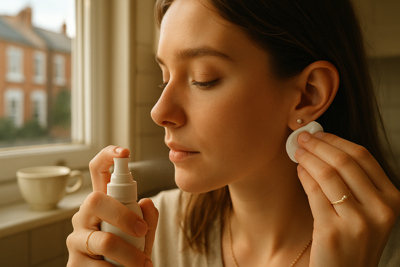
Cleaning is the cornerstone of ear piercing aftercare. The objective is to remove crusted lymph and environmental debris without irritating the tissue. Over-cleaning or the wrong product can dry the tissue and prolong healing, so follow gentle, consistent steps.
Recommended daily routine (general guidance, adapt if your piercer advises otherwise): morning and evening rinse and clean — two short sessions a day are sufficient for most lobe piercings. For cartilage or reactive piercings you may discuss a tailored plan with your piercer.
Use a sterile saline solution or a gentle saline wound wash. A simple saline can be prepared by mixing 1 teaspoon of non-iodised salt into 500ml of boiled then cooled water, but many professionals recommend pharmacy-made sterile saline for consistency. Do not use alcohol, hydrogen peroxide or harsh antiseptics on a fresh piercing.
- Wash hands thoroughly with soap before touching the area.
- Soak a sterile gauze or cotton pad in saline and hold against the piercing for 1–2 minutes to soften crusts.
- Gently wipe away softened crusts with a clean pad; avoid twisting the jewellery when removing crusts.
- Rinse with clean water if required and pat dry with disposable paper towel or allow to air dry.
- If your piercer recommends, rotate minimal movement only when instructed; many piercers now advise against deliberate rotation.
- Avoid creams, oils or antibiotic ointments unless prescribed to treat a specific issue.
- Keep hair, hats and helmets clear of the piercing to reduce snagging and contamination.
- Sleep on a clean pillowcase and avoid direct pressure on the piercing for the first few weeks.
For professional piercers and students in the UK, this Ear Piercing Healing and Aftercare Guide forms the basis of written aftercare you provide to clients — include a clear cleaning schedule and emergency contact details if problems arise.
Skinart training emphasizes realistic instructions: two gentle saline cleans each day, no harsh chemicals, and careful observation. If swelling or redness worsens after 48–72 hours, escalate care — see the “When to seek professional help” section below.
Common mistakes and how to avoid them
- Touching the piercing with unwashed hands — introduces bacteria.
- Using alcohol, hydrogen peroxide or harsh antiseptics — they damage healing tissue and delay recovery.
- Removing starter jewellery too soon — this can close the tract or trap bacteria.
- Twisting or forcefully rotating jewellery to “clean” it — can tear healing tissue and increase scarring.
- Sleeping directly on the piercing or applying pressure — increases swelling and irritation.
- Submerging the piercing in communal pools, hot tubs, or open water too early — raises infection risk.
- Using homemade unsterile solutions — inconsistent salinity or contamination can harm healing.
- Switching to non-hypoallergenic metals too early — may cause allergic reactions and prolonged irritation.
Avoiding these mistakes is straightforward with the right preparation. Give clients (or yourself) a clear checklist for the first 2–6 weeks, including cleaning schedule, activity modifications and what to do if symptoms worsen.
Many UK piercers provide printed aftercare leaflets and a follow-up contact; Skinart United Kingdom recommends including a local GP or sexual health clinic contact for people with underlying health concerns (diabetes, immunocompromised status) who may need additional oversight.
Products, jewellery and materials
Choosing the right initial jewellery and aftercare products impacts healing. Starter studs used by reputable UK piercers are often titanium or surgical stainless steel — both are good options for most people. The Ear Piercing Healing and Aftercare Guide highlights materials and product categories rather than specific brands.
Recommended categories and why:
- Sterile saline solution — consistent, non-irritating cleaning.
- Titanium studs (for initial piercing) — low-allergy risk for most clients.
- Surgical stainless steel — acceptable for many, ensure ASTM/ISO compliance.
- Non-latex disposable gloves — for piercers or carers when touching the piercing.
- Sterile gauze/sterile cotton pads — single-use for cleaning to avoid contamination.
- Hypoallergenic replacement jewellery (post-healing) — e.g., solid 9–18ct gold or implant-grade titanium.
- Sterile saline wound wash sprays — useful for on-the-go cleaning when recommended by a piercer.
- A clear aftercare leaflet — essential to ensure consistent care and reduce follow-up queries.
Important UK notes: Skinart United Kingdom does not supply ear-piercing equipment for UK students or clients — our courses train you to select, evaluate and source appropriate materials from trusted suppliers, and we teach the regulatory and hygiene standards you must follow when practising professionally.
When buying jewellery, check manufacturer certificates and ensure your piercer records the material used on the aftercare leaflet. For clients with metal sensitivities, patch testing or referral to a dermatologist may be recommended.
When to seek professional help
Most piercings heal uneventfully, but complications can occur. Seek professional help from your piercer or a medical professional if you notice signs of infection or severe allergic reaction. Use local NHS guidance when in doubt — for persistent redness, increasing pain, pus, or a fever, contact NHS 111 or your GP.
Direct signs that need prompt attention include rapidly worsening swelling, spreading redness beyond the immediate area, continuous pus, or systemic symptoms such as fever. If jewellery becomes embedded or you can’t remove a clogged earring due to swelling, professional intervention is required.
- Increasing redness or warmth spreading from the piercing
- Thick yellow/green pus that continues after cleaning
- Fever, chills or feeling generally unwell
- Severe pain not controlled with simple analgesia
- Jewellery embedded into swollen tissue
- Signs of severe allergic reaction (widespread rash, breathing difficulty — call 999)
- Concerns for children or people with underlying health conditions — seek medical advice early
- Any sudden, unexplained deterioration in the wound’s appearance
Quote from the NHS guidance: “If a wound becomes infected, contact your GP or NHS 111 for advice.” Combining this official advice with industry aftercare reduces risk and ensures timely management of complications.
Special circumstances and client considerations
This section covers special situations: children, allergies, piercings on medications or with health conditions, and cartilage piercings which often need longer healing. Skinart United Kingdom teaches trainees how to assess these scenarios and tailor aftercare accordingly.
Children and teenagers: obtain appropriate parental consent and provide guardians with clear written aftercare instructions. For younger children, extra monitoring is needed since they may not reliably follow cleaning instructions and are more likely to touch or sleep on the piercing.
Medications and conditions: people taking immunosuppressants, or with uncontrolled diabetes, have increased infection risk. In these cases, piercers should recommend medical consultation before piercing, and clients should understand the added risk. Always document health disclosures as part of client records.
- Children & parental guidance — clearly written, simple steps
- Cartilage piercings — expect longer tenderness and higher risk of bump formation
- Allergy history — document and recommend patch tests if in doubt
- Medications — consult GP if immunosuppressive therapy is present
- Travel & swimming — avoid pools and open water for at least 2 weeks, longer for cartilage
- Piercing location — some anatomical spots require modified aftercare
- Occupational exposures — workers in healthcare or food handling may need special timing
- Mental health & neurodivergence — adapt communication and provide simple checklists
Frequently asked questions
Below are common questions people search about the Ear Piercing Healing and Aftercare Guide, with concise answers to guide safe practice and recovery.
How long does it take for an ear piercing to heal?
Most earlobe piercings show substantial healing within 6–8 weeks, but full tissue remodelling can continue for several months; cartilage piercings generally take longer, often 3–6 months or more.
What is the best cleaning solution for a new ear piercing?
A sterile saline solution is the most recommended and gentle option — avoid alcohol, hydrogen peroxide and strong antiseptics that damage healing tissue.
Can I swim with a new ear piercing?
Avoid swimming pools, hot tubs and open water until the piercing has developed a stable tract and is no longer producing lymph — typically at least 2 weeks, often longer for cartilage; follow your piercer’s advice.
What are signs of infection after an ear piercing?
Watch for increasing redness, spreading warmth, thick yellow/green discharge, persistent pain or systemic symptoms like fever — if these occur, contact NHS 111, your GP, or your piercer for assessment.
When can I change my jewellery?
Wait until the minimum recommended healing period has passed and the piercing is stable; for lobes this is usually at least 6–8 weeks — consult your piercer before changing starter jewellery.
Final thoughts and next steps
Ear piercing is a small procedure with a large payoff — new jewellery and personal expression — when paired with the right aftercare. The Ear Piercing Healing and Aftercare Guide summarises core principles: cleanliness, minimal trauma, appropriate materials, and early escalation when signs of infection occur.
If you’re a client, follow the aftercare advice given by your piercer and keep the original jewellery in place for the recommended period. If you’re a professional, use this guide to set client expectations, prepare written guidance and build your standard operating procedures.
Skinart United Kingdom trains piercers to professional standards — our online Ear Piercing course covers assessment, hygiene, aftercare counselling and record-keeping for UK practice. We do not offer in-person ear piercing training in the United Kingdom; our online course is designed for practitioners who will operate to local regulations and source their own equipment responsibly.
Ready to learn professional ear piercing aftercare?
Enroll in Skinart United Kingdom’s accredited online Ear Piercing course to learn safe technique, client communication and comprehensive aftercare counselling. Our course is accredited with the CPD Standards Office and BAQA and is delivered by Gary Erskine, with over 25 years’ industry experience.
Latest Blog Posts
- 🌙 Eid Mubarak: Celebrate with 5% Off in 2026!
 Eid Savings: 5% Off All Courses Celebrate Eid with a special offer: 5% off any course. Use code EID5 at checkout.… Read More »🌙 Eid Mubarak: Celebrate with 5% Off in 2026!
 - Top Mistakes New Body Artists Should Avoid (2026)
 Stay Ahead: Common Pitfalls for New Artists Read up on the most frequent errors new body artists make, and how to… Read More »Top Mistakes New Body Artists Should Avoid (2026)
 - Client Communication Skills: 2026 Body Art Success
 Master Consultation for Better Results Top communication strategies for client satisfaction and better outcomes in 2026 and beyond. X Send Chat