Tools and Pigments Needed to Start Microblading
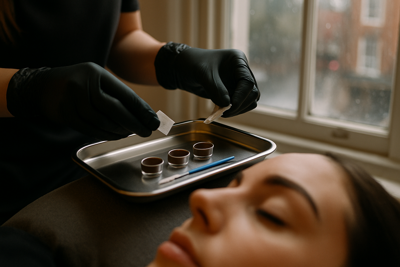
Starting in microblading can feel overwhelming — from choosing the right blade configuration to selecting pigments that match the wide variety of British skin and hair tones. In this guide we’ll walk you through the essential tools and pigments needed to start microblading in the United Kingdom, helping you make confident choices that protect your clients and grow your business.
Tools and Pigments Needed to Start Microblading are the foundation of a safe, professional service. Whether you’re training online with Skinart United Kingdom or preparing to practise as a qualified technician, understanding the correct equipment, pigment chemistry and the regulatory context in the UK matters.
Written by Gary Erskine, 25 years in Tools and Pigments Needed to Start Microblading education — Gary has trained thousands of artists worldwide and authored the Skinart microblading syllabus used across CPD-accredited programmes.
Table of Contents
Use the links to jump to sections — these anchor IDs help Google and users find what they need quickly.
- Tools and Pigments Needed to Start Microblading
- Microblading Tools: Pros and Cons
- Essential Pigments and How to Mix Them
- Common Mistakes When Choosing Tools & Pigments
- Aftercare, Storage and Pigment Stability
- Safety, Hygiene and UK Regulation
- Sourcing Equipment in the United Kingdom
- FAQs: Tools and Pigments Needed to Start Microblading
- Final Thoughts & Next Steps
- Get Started Today (Course Link)
- Latest Blog Posts
Tools and Pigments Needed to Start Microblading
At the heart of every professional microblading service are the right tools and stable pigments. Choosing the correct microblading blades, manual or digital handles, measuring tools and pigment formulations is the first step towards consistent, beautiful results. The focus keyword — Tools and Pigments Needed to Start Microblading — is central to this article because these choices define quality and safety in practice.
Microblading tools vary from simple, reusable handles (where the technician fits single-use cartridges) to disposable blade-rows that create crisp hair-strokes. Each option affects stroke crispness, depth control and healing dynamics. We will break down what you need, why it matters, and how to choose the best kit for UK clients and skin types.
Beyond the physical tools, pigments — their concentration, carrier solution, and lightfast pigments — are equally important. Poorly chosen pigments can oxidise, fade to unintended colours, or react unpredictably with clients’ skin chemistry. Later sections provide a practical, UK-focused pigment reference and mixing guide for neutralising warm or cool undertones.
Microblading Tools: Pros and Cons
Choosing between manual microblading tools and powered devices is a common decision. Each approach has strengths depending on your style, training, and client needs.
- Pros (Manual Microblading)
- Exceptional control for hair-stroke realism
- Lower consumable cost per treatment (if you source tools wisely)
- Preferred for fine, crisp strokes on normal and mature skin
- Cons (Manual)
- Steeper learning curve for depth control
- Less suitable for oily or very lax skin
- Pros (Digital/Powered)
- Consistent needle depth with many machines
- Better for patchy or scarred areas, and faster sessions
- Cons (Digital)
- Some artists find the finish less natural for ultra-fine hair strokes
- Higher initial equipment cost and maintenance
Whether you use manual blades or machine cartridges, the single-use consumables (blades, cartridges, gloves) are non-negotiable for infection control. In the UK, disposing of sharps and single-use items must follow local clinical waste guidance — we’ll cover regulatory requirements in the safety section.
Ultimately, the “best” tool is the one you are trained to use consistently. Skinart United Kingdom’s Online Microblading Course focuses on technique and decision-making so you can match tools to individual client needs, skin types and desired results.
Essential Pigments and How to Mix Them
Pigments for microblading are formulated specifically for cosmetic tattooing and differ from decorative tattoo inks. Key considerations are pigment stability, particle size, carrier solution, and how the pigment ages within the epidermis. Choosing pigments suitable for the local market — including a palette that covers fair, olive, medium and deeper skin tones common in the UK — is essential.
Neutral pigments that allow for tinting and warm/cool adjustments are preferred by many professionals. A good starter palette often includes neutral browns, ash browns, warm browns and a few corrective shades for neutralising unwanted undertones. We’ll list common pigment types below and explain mixing approaches.
Remember: pigment behaviour can vary with skin type, sun exposure and the client’s metabolic rate. Patch testing and careful record-keeping (batch numbers, shade, dilution) are professional practice essentials.
- Neutral Browns — base shades for most clients; mix to match undertone
- Ash Brown — useful to neutralise warm (reddish/orange) tendencies
- Warm Brown — for clients with golden or warm undertone hair
- Deep Brown/Black-Brown — for darker hair and higher contrast looks
- Corrective Grey/Blue-Neutral — small quantities to adjust over-warm pigments
- Pink/Rose Neutraliser — to lift yellowed or overly amber pigments
- Carrier Solutions — glycerin or PG mixes affect flow and retention
- Disinfectant-Compatible Pigments — stable in antiseptic environments
- Pre-made Blends — reputable suppliers offer pre-balanced starter sets
Common Mistakes When Choosing Tools & Pigments
- Buying the cheapest pigments without reviewing safety data sheets (SDS)
- Using pigments not intended for microblading or cosmetic tattooing
- Ignoring pigment batch numbers and failing to record them for each client
- Over-diluting pigments and expecting the same retention as full-strength formulas
- Using the wrong blade angle or depth for the client’s skin type
- Not patch-testing for allergic reactions or pigment intolerance
- Attempting to correct oxidised pigment with aggressive colour removers
- Assuming one pigment suits all skin tones (no custom mixing)
- Not following correct sharps disposal and clinical waste practices
Each of these mistakes can result in poor aesthetic outcomes, client dissatisfaction, and potential regulatory breaches. Always consult the pigment manufacturer’s SDS and recommended application guides before use.
Mistakes with tools and pigments are avoidable with structured training and clear protocols. Skinart’s microblading course teaches practical decision-making, pigment theory and safe practice to reduce learning errors and help you build a reliable client record system.
Aftercare, Storage and Pigment Stability
Proper aftercare advice influences pigment retention more than most novices expect. Educate clients on sun exposure, skincare products to avoid (retinols, acids), and the importance of a follow-up top-up session. Explain how these factors interact with pigment chemistry and the healing process.
Storage of pigments demands attention: keep pigments sealed, out of direct sunlight, and at manufacturer-recommended temperatures. Many pigment manufacturers recommend refrigeration between 2–8°C, but always follow the SDS and product guidelines.
Record-keeping helps diagnose retention issues. Track pigment brand, batch, dilution, needle/blade used, and client aftercare compliance. These data points are invaluable when training to interpret why a pigment behaved as it did in a particular individual.
- Store pigments in original, sealed containers away from direct sunlight
- Label opened containers with the date opened and batch code
- Use sterile, single-use mixing cups to avoid contamination
- Do not use expired pigments — discard following manufacturer guidelines
- Maintain a clean, temperature-stable storage area in the studio
- Avoid cross-mixing pigments across clients without proper documentation
- Be cautious with diluents — use manufacturer-approved carriers only
- Keep SDS documents for every pigment and make them available to clients on request
Safety, Hygiene and UK Regulation
Safety and hygiene are non-negotiable. In the United Kingdom, local councils set hygiene requirements for cosmetic tattooing, and training that is CPD-accredited and aligned with Body Art Qualification Association (BAQA) guidance is recommended. Skinart United Kingdom’s microblading course is fully accredited with the CPD Standards Office and BAQA to ensure your learning matches best practice.
Useful guidance often referenced by practitioners includes local environmental health regulations, the Health and Safety Executive (HSE) for workplace practice, and manufacturer SDS for products used. Maintaining a portfolio of your training certificates and a Client Consent and Aftercare pack helps show compliance during inspections.
As one municipal environmental health officer said: “Consistent record-keeping, proper sharps disposal and use of single-use consumables are key to protecting public health.” This practical approach aligns with professional risk management — and it’s what clients expect when paying for microblading services.
- Complete accredited training (CPD and BAQA-aligned) before practising
- Use single-use, sterile blades and dispose of sharps to local approved clinical waste contractors
- Keep SDS and batch records for every pigment used
- Carry appropriate insurance for cosmetic procedures
- Follow local council registration rules for tattooing body art services
- Conduct thorough medical consultations and patch tests where indicated
- Maintain a clean, documented workspace and sterilisation log
- Provide written aftercare and emergency contact information for clients
Sourcing Equipment in the United Kingdom
Finding reputable UK suppliers is crucial. Look for vendors with clear product labelling, SDS documents, and positive industry reviews. Reputable distributors will support practitioners with technical data on pigment formulations and guidance for safe use. Skinart United Kingdom does not supply microblading equipment in the UK — our courses teach technique, pigment theory and business-ready record-keeping but equipment must be sourced independently.
When sourcing, consider:
- Supplier transparency: SDS, ingredient lists, and batch traceability
- CE marking where applicable for electrical devices (power supplies, machines)
- Availability of single-use consumables and sterile packaging
- UK-based customer support and return policies
- Contract terms for bulk sharps disposal and clinical waste handling
- Training and technical support offered by the supplier
- Compatibility of pigments with the devices you plan to use
- Community reviews and references from UK-based studios
Recommended starting points include well-known UK distributors and manufacturer-authorised dealers. For regulatory alignment and CPD verification, it’s also wise to choose suppliers that can provide SDS and certification upon request. If in doubt, check supplier references or ask your training provider for recommendations.
FAQs: Tools and Pigments Needed to Start Microblading
Below are common questions prospective students and new technicians ask about tools and pigments needed to start microblading.
What basic tools do I need to start microblading?
Start with a reputable manual handle or a beginner-friendly digital machine, single-use blades/cartridges, pigment starter set (neutral, warm and ash browns), sterile mixing cups, measuring calipers, microbrushes, disposable gloves, and appropriate clinical waste containers for sharps.
How do I choose the right pigment shade for UK clients?
Assess the client’s natural hair colour, skin undertone and existing eyebrow pigment (if any). Use neutral pigments as a base and tint for warmth or coolness. For complex cases, mix small test samples and document the formula carefully.
Are microblading pigments safe?
Reputable pigments manufactured for cosmetic tattooing and supported by SDS documentation are safe when used correctly. Avoid uncertified products and always check batch records and manufacturer guidance for contraindications.
Can I use tattoo inks for microblading?
No — decorative tattoo inks and cosmetic microblading pigments have different particle sizes, carriers, and formulations. Use pigments specifically designed for cosmetic tattoo procedures to minimise adverse outcomes.
Do you supply microblading kits with the course?
Skinart United Kingdom provides full training and accreditation but does not supply microblading equipment in the UK. Students are taught what to buy and how to choose suppliers, but equipment must be purchased separately.
Final Thoughts: Confidently Start Microblading
Tools and Pigments Needed to Start Microblading are not just items on a shopping list — they are central to the quality, safety and reputation of your service. With the right education, record-keeping and supplier choices, you can minimise risk and deliver consistent, attractive results for your clients across the United Kingdom.
Training matters. A qualified technician understands pigment selection, how to adapt technique to skin types common in the UK, and how to maintain meticulous hygiene and documentation. Skinart United Kingdom’s online microblading course gives you the structured knowledge you need to start working professionally and confidently.
Take the next step: learn the why behind every tool and pigment choice, practise under expert guidance, and build a studio standard that clients trust.
Ready to Learn Tools and Pigments Needed to Start Microblading?
Join Skinart United Kingdom’s fully accredited online Microblading Course and learn pigment theory, tool selection, client assessment and best-practice hygiene from industry experts. Our course is CPD Standards Office and BAQA accredited and taught by Gary Erskine, with over 25 years of industry experience.
Recent Blog Posts
- 🌙 Eid Mubarak: Celebrate with 5% Off in 2026!
 Eid Savings: 5% Off All Courses Celebrate Eid with a special offer: 5% off any course. Use code EID5 at checkout.… Read More »🌙 Eid Mubarak: Celebrate with 5% Off in 2026!
 - Top Mistakes New Body Artists Should Avoid (2026)
 Stay Ahead: Common Pitfalls for New Artists Read up on the most frequent errors new body artists make, and how to… Read More »Top Mistakes New Body Artists Should Avoid (2026)
 - Client Communication Skills: 2026 Body Art Success
 Master Consultation for Better Results Top communication strategies for client satisfaction and better outcomes in 2026 and beyond. X Send Chat