Permanent Makeup Certification & Insurance in United Kingdom
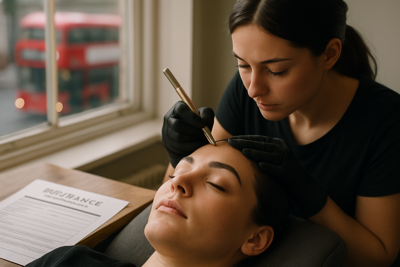
If you’re building a career in the UK beauty industry, understanding Permanent Makeup Certification & Insurance in United Kingdom is essential. Whether you plan to work from a salon, mobile service or as an independent artist, knowing how certification, regulation and professional indemnity intersect will protect your clients, your reputation and your livelihood.
In this in-depth guide we unpack what certification means in the UK context, the types of insurance PMU (permanent makeup) artists need, the most common compliance pitfalls, and how Skinart United Kingdom’s online Permanent Makeup course supports your accreditation journey. This article is tailored for UK practitioners and covers local examples, regulatory expectations, and practical next steps.
Written by Gary Erskine, 25 years in Permanent Makeup education and training — this guide combines industry insight, local case studies and clear action points so you can move confidently from training to insured, compliant practice in the United Kingdom.
Table of Contents
- Overview: Certification & Insurance Basics
- Why Certification Matters for PMU Artists
- Qualifications, CPD & Recognised Standards
- Insurance Requirements for PMU in the UK
- Common Compliance Mistakes to Avoid
- Regulations and Local Authority Guidance
- Training and Accreditation Pathway
- Frequently Asked Questions
- Final Thoughts & Next Steps
- Get Started
Overview: Certification & Insurance Basics
The phrase “Permanent Makeup Certification & Insurance in United Kingdom” covers two linked but distinct areas: the formal training and qualifications a practitioner holds, and the insurance protections they carry to operate safely and professionally. Certification demonstrates competence; insurance protects you and your clients if things go wrong. In the UK market, both are expected by clients and many local authorities.
Certification for permanent makeup typically includes practical training, theoretical knowledge (such as anatomy, infection prevention and colour theory) and assessment. Insurance commonly needed includes public liability, professional indemnity, and sometimes medical malpractice or product liability depending on how you work.
Understanding how certification and insurance interact will help you price services correctly, meet local licensing conditions, and reassure clients. Below we break down the practical elements every UK-based PMU artist should know and show how Skinart United Kingdom’s accredited online Permanent Makeup course aligns with these expectations.
Why Certification Matters for PMU Artists
Certification does more than tick boxes — it gives clients confidence in your skills and shows that you understand the health and safety obligations intrinsic to Permanent Makeup Certification & Insurance in United Kingdom practice. A recognised certificate can be the difference between a client choosing you or another artist.
Below are practical pros and cons to consider when choosing a certification route.
- Pros: Improved client trust, easier insurance approval, better local authority relationships.
- Cons: Cost and time to complete training; varying quality between courses; ongoing CPD expectations.
Many insurers ask for evidence of certified training before offering professional indemnity or public liability for PMU. An accredited course (for example, a CPD-registered programme) will usually satisfy underwriters more readily than an informal apprenticeship or short workshop.
At Skinart United Kingdom we design our online Permanent Makeup course around recognised standards so graduates can demonstrate the competencies insurers and local authorities expect when they ask for proof of training.
Qualifications, CPD & Recognised Standards
In the UK there is no single national licence for permanent makeup, but professional standards and recognised qualifications are taken seriously. Organisations such as CPD Standards Office and the Body Art Qualification Association (BAQA) offer frameworks and registers that insurers and local authorities recognise.
When evaluating courses look for:
- Evidence of formal assessment (practical and theory)
- Affiliation or accreditation with recognised bodies (e.g., CPD Standards Office, BAQA)
- Clear learning outcomes and modules covering cross-infection control, consent, aftercare and anatomy
- Documented experience and tutor credentials
- Access to practical support or mentoring after training
- Assessments that produce certification suitable for insurers
- CPD opportunities to maintain and update skills
- Transparency about what the certificate covers (scope and limitations)
Skinart United Kingdom’s online Permanent Makeup course is accredited with the CPD Standards Office and aligned to BAQA guidance, giving students a solid foundation to present to insurers and local regulators. Our teaching emphasises infection prevention, client assessment and record-keeping — elements insurers scrutinise when underwriting a PMU policy.
In practice, keep copies of your certificates, a detailed logbook of practical cases, evidence of CPD and a portfolio of healed work. These items speed up insurance acceptance and help when registering with local councils that request proof of competency.
Insurance Requirements for PMU in the UK
Insurance protects you, your client and your business. For Permanent Makeup Certification & Insurance in United Kingdom practice, the minimum policies many professionals carry are:
- Public Liability Insurance — covers third-party injury or property damage on your premises or while you’re working mobile.
- Professional Indemnity Insurance — covers claims arising from professional advice or treatment that causes harm or dissatisfaction.
- Product Liability — important if you retail aftercare products or use manufacturer-supplied pigments that could cause reactions.
- Employers’ Liability — legally required if you employ staff in the UK.
- Medical Malpractice — sometimes requested if you treat clients with medical conditions or perform procedures closely linked to healthcare.
- Cyber Insurance — useful for practitioners who hold client medical records electronically.
- Business Contents Insurance — protects your equipment and stock in the event of theft or damage.
- Legal Expenses Cover — provides support in disputes, employment claims or regulatory hearings.
When applying for insurance, insurers will ask about your training (certificates), experience, annual turnover, whether you work from home or a commercial salon, and the number of clients you treat. They may also want to see your infection control procedures and client consent forms.
Some UK insurers specialise in beauty and aesthetics. If you’re new to the industry, ask your insurer whether they offer a graded policy (reduced cover while you build hours) or mentorship schemes that help bridge the early years of your practice.
Common Compliance Mistakes to Avoid
- Assuming a short workshop qualifies you for full insurance without practical assessment.
- Failing to update your insurance when your scope of services changes (e.g., adding microblading or scalp pigmentation).
- Not keeping client medical histories or consent forms in writing.
- Using unapproved or non-CE compliant pigments without checking liability implications.
- Operating as a mobile practitioner without confirming mobile cover is included in your policy.
- Relying on a salon’s insurance without being explicitly named on the policy.
- Not recording aftercare or failing to follow up on adverse reactions.
- Underinsuring because of cost — saving a few pounds can leave you exposed to large claims.
These pitfalls often lead to delayed claims payments or refused cover. Insurers routinely decline claims when the policyholder cannot provide proof of adequate training, up-to-date CPD or proper client records. Prevention is always cheaper than remediation.
We recommend maintaining a clear file system: scanned certificates, digital and paper consent forms, photographic progress records, and a dated logbook of all PMU treatments. Keep your insurer informed about significant changes to your practice and review your policy annually.
Regulations and Local Authority Guidance
In the UK, tattooing and beauty treatments are often governed at a local level. Local councils set premises and hygiene standards and may require registration. Always check your local council’s guidance for the area(s) you work in — requirements can differ between boroughs and councils.
For national health guidance, the UK Health Security Agency (UKHSA) publishes best-practice infection control guidance relevant to body modification services. Familiarity with these documents will help you demonstrate competence to both inspectors and insurers.
- Check with your local council about registration and inspection requirements.
- Keep a copy of your council correspondence, inspection reports and any remedial actions you undertake.
- Follow UKHSA and local NHS guidance on infection prevention and sharps disposal.
- Display relevant certifications in your premises and keep client-facing aftercare information available.
- Ensure your cleaning schedule is documented and evidenced for inspections.
- Consult your insurer before changing premises or expanding services.
- Report adverse events according to local authority or health body requirements.
- Retain client records for an appropriate period as local guidance requires.
Quote from a local environmental health officer: “We want to see practitioners taking infection prevention seriously — clear records, clean premises and appropriate training make inspections straightforward.” This reflects the consistent message from councils across the UK when inspecting PMU or tattoo premises.
Where to find official guidance: visit GOV.UK and search for your local council’s health and safety pages, and consult the UKHSA resources for infection prevention in non-clinical settings.
Training and Accreditation Pathway
Selecting the right accredited course makes a significant difference to your insurance options. The course should deliver both practical skills and a clear record of assessment that insurers will accept as proof of competency.
What to expect from an accredited Permanent Makeup course:
- Modules covering hygiene, cross-infection control, anatomy, colour theory and client consultation
- Practical assessment with documented cases and tutor sign-off
- Written examinations or assignments demonstrating theoretical knowledge
- CPD credits or pathway to further accredited qualifications
- Clear certification suitable for insurers and local authority records
- Support on creating client records, consent forms and aftercare instructions
- Guidance on insurance and starting your hygiene-compliant business
- Mentoring or access to tutor feedback during your early cases (where available)
Skinart United Kingdom’s online Permanent Makeup course is structured to match these needs. It is fully accredited with the CPD Standards Office and BAQA — giving graduates documented evidence to present to insurers and councils. Note: Skinart United Kingdom provides theoretical and assessment training but does not supply PMU equipment in the UK; students must source their own tools following recommended specifications.
Because we operate online for UK students, our training focuses on the knowledge, case-logging and assessment that insurers value — pairing flexibility with rigorous standards so you can progress at your own pace and still meet UK regulatory expectations.
Practical Checklist & Resources
Use this practical checklist as you pursue Permanent Makeup Certification & Insurance in United Kingdom practice. Completing each item reduces friction when applying for insurance and helps satisfy local council inspectors.
- Obtain an accredited PMU certificate (CPD/BAQA recognised) and keep scanned copies.
- Compile a portfolio of healed case photos and documented client consent forms.
- Secure public liability and professional indemnity cover appropriate to your turnover and client numbers.
- Confirm whether your insurer covers mobile work or off-site events, and add endorsements if necessary.
- Register with local council where required and maintain recording of inspections or communications.
- Follow UKHSA guidance for sharps disposal, cleaning and waste management.
- Maintain CPD records and seek refresher modules annually, especially for infection control.
- Keep an incident log and a process for reporting and responding to adverse events.
- Create clear aftercare instructions and follow-up procedures for clients.
- Discuss coverage with your insurer before introducing new techniques or products.
Outbound resources: for national guidance check UKHSA and GOV.UK pages related to infection control and local authority registration. These resources are frequently updated and should be part of your regular CPD reading.
Industry Voices: Advice from Insurers and Regulators
“Insurers want evidence of training, documented casework, and consistent infection control procedures. When those are in place, we can offer sensible cover that helps practitioners grow their businesses without exposing clients to unnecessary risk.” — CPTP (Consumer & Practitioner Training Panel) advisor
This industry perspective reinforces why Permanent Makeup Certification & Insurance in United Kingdom practice is handled as a combined responsibility: you are accountable for standards; insurers verify them before offering cover.
- Keep your certificates, logbook and client records accessible — insurers will ask.
- Notify insurers about new services or premises changes promptly.
- Use CPD to refresh skills that insurers consider high risk (e.g., advanced colour correction).
Real UK Examples & Success Stories
Local success stories show how certification and appropriate insurance support a flourishing PMU career. For example, a Skinart United Kingdom graduate in Manchester used the online Permanent Makeup course certification to secure a salon placement and obtain professional indemnity cover within three months. Clear documentation of casework and healing photos sped up the insurer’s onboarding process.
Another student based in Brighton used her CPD-accredited certificate when registering with the local council; because she demonstrated up-to-date training and robust record-keeping, the registration and inspection were straightforward and she was able to open to clients quickly.
These case studies illustrate a common truth: accreditation and documented practice reduce friction when dealing with insurers and regulators and give clients confidence that they are in safe hands.
Frequently Asked Questions
Below are answers to common questions about Permanent Makeup Certification & Insurance in United Kingdom.
Do I need insurance to perform permanent makeup in the UK?
While insurance is not legally mandated for independent practitioners in every UK jurisdiction, most clients, salons and insurers will expect you to have appropriate public liability and professional indemnity insurance before you work. Many local councils require evidence of insurance when registering premises.
Will any PMU course allow me to get insurance?
Not all courses are equal: insurers often look for accredited, assessed training from recognised providers. A CPD-accredited and BAQA-aligned course, with practical assessment and documentation, is more likely to meet insurer requirements than an informal, short workshop.
Can I use the insurer recommended by my salon?
Always check whether salon insurance explicitly names you as an insured party. Some salon policies cover the business but not individual freelance practitioners. If you work as a freelancer, it’s usually safer to hold your own policy or be named on the salon’s policy.
How much insurance cover do I need?
Cover amounts depend on your turnover, location and risk profile. Many UK practitioners choose public liability of at least £1–3 million and professional indemnity starting from similar levels, but discuss your individual needs with a specialist insurer to set appropriate limits.
Does Skinart United Kingdom provide equipment or supplies?
Skinart United Kingdom provides fully accredited online training and assessment, but we do not supply permanent makeup equipment in the United Kingdom. Students should source their own devices and pigments following recommended specifications and safety standards.
Final Thoughts & Next Steps
Pursuing recognized Permanent Makeup Certification & Insurance in United Kingdom practice is an investment in your professional future. Certification demonstrates to clients and insurers that you meet accepted standards; insurance provides the financial protection every responsible practitioner should have. Together they form the foundation for a sustainable PMU career.
Start by choosing an accredited training provider, keeping meticulous records of your practical work, and speaking with insurers who specialise in cosmetic and aesthetic practice. If you are based in the UK, check your local council’s requirements and align your paperwork and premises accordingly.
Skinart United Kingdom’s accredited online Permanent Makeup course is designed to help you meet these expectations. Our tuition, assessment and CPD-aligned approach give you the documentation insurers and councils typically request — helping you move from learning to practising with confidence.
Ready to Start Your PMU Journey?
If you want accredited training that aligns with insurance and regulatory expectations in the United Kingdom, Skinart United Kingdom’s online Permanent Makeup course is a practical, evidence-led choice. Our tutors combine industry experience with rigorous assessment to help you take the next step.
Recent Blog Posts
- 🌙 Eid Mubarak: Celebrate with 5% Off in 2026!
 Eid Savings: 5% Off All Courses Celebrate Eid with a special offer: 5% off any course. Use code EID5 at checkout.… Read More »🌙 Eid Mubarak: Celebrate with 5% Off in 2026!
 - Top Mistakes New Body Artists Should Avoid (2026)
 Stay Ahead: Common Pitfalls for New Artists Read up on the most frequent errors new body artists make, and how to… Read More »Top Mistakes New Body Artists Should Avoid (2026)
 - Client Communication Skills: 2026 Body Art Success
 Master Consultation for Better Results Top communication strategies for client satisfaction and better outcomes in 2026 and beyond. X Send Chat