Tattoo Apprenticeship vs Online Tattoo Training
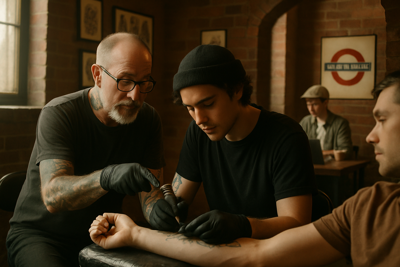
Deciding between a traditional tattoo apprenticeship and online tattoo training can feel like choosing between two very different worlds. Whether you’re in London, Manchester, Glasgow, or a small town in the United Kingdom, the route you take will shape your skills, speed of learning, and how you enter the professional tattoo industry. This article tackles “Tattoo Apprenticeship vs Online Tattoo Training” in depth so you can choose the path that best fits your goals.
At Skinart United Kingdom we’ve trained thousands of artists worldwide and accredited our courses through the CPD Standards Office and the Body Art Qualification Association. In this guide, I’ll break down the strengths and trade-offs of each route, explain legal and health considerations for the UK, and show how our accredited online Tattoo course can give you the practical knowledge and CPD-backed certification you need to start professionally and responsibly.
Table of Contents
- What is a Tattoo Apprenticeship and What is Online Tattoo Training?
- Apprenticeship Pros & Cons — Tattoo Apprenticeship vs Online Tattoo Training
- Benefits of Online Tattoo Training
- Common Mistakes Students Make
- Legal & Safety Requirements in the UK
- Cost, Time & Career Paths
- How Skinart United Kingdom Approaches Online Tattoo Education
- Frequently Asked Questions
- Final Thoughts & Next Steps
Use the anchors above to jump to sections; Google may show “Jump to” links for these headings.
What is a Tattoo Apprenticeship and What is Online Tattoo Training?
A tattoo apprenticeship is the traditional way aspiring tattoo artists learn the craft: you work under an experienced artist in a shop, observe, assist, and gradually practise under supervised conditions. Apprenticeships emphasise hands-on repetition, studio etiquette, client consultations, and real-world hygiene protocols. Historically, apprenticeships were the primary way most artists entered the industry.
Online tattoo training is an educational pathway delivered through structured digital modules, videos, downloadable resources, and assessments. Modern online programs—when accredited—cover the same foundational topics as apprenticeships: sterilisation, blood-borne pathogen control (BBP), design preparation, machine setup, skin theory, and aftercare. The difference is delivery: theory, demonstrations, and guided practical exercises are provided remotely.
Both approaches teach the craft, but the balance between supervised practical hours and theoretical understanding varies. In the United Kingdom context, accreditation and compliance with local public health guidance are essential regardless of the learning format.
Apprenticeship Pros & Cons — Tattoo Apprenticeship vs Online Tattoo Training
When comparing Tattoo Apprenticeship vs Online Tattoo Training, apprenticeships score highly for face-to-face mentoring and early exposure to shop life. However, they can vary greatly in structure and quality, and finding a reputable mentor can be difficult.
- Pros of Apprenticeships: Intensive hands-on learning, direct supervision, immediate feedback, client management experience, and immersion in studio etiquette.
- Cons of Apprenticeships: Highly variable quality, possible unpaid work, limited access if you don’t have local mentorship, slow progression if the shop is very busy, and potential lack of structured, accredited theory.
In the UK, some apprenticeships include formal BBP training or first aid, but others rely on the mentor’s approach. A common problem is that many apprenticeships assume prior drawing ability and a strong portfolio before they begin—this can be a barrier for newcomers who need guided skill development first.
If you’re comparing options, check whether a prospective mentor follows formal hygiene protocols, has clear learning goals for you, and whether there’s a path to accredited qualification. In many cases, blending learning approaches—online theory plus in-studio practice—gives the best outcomes.
Benefits of Online Tattoo Training
Online tattoo training has evolved from simple video guides to fully structured, accredited courses that blend demonstration videos with assessments, downloadable resources, and tutor feedback. For many students in the United Kingdom, online learning unlocks access to high-quality training without geographical constraints.
Skinart’s accredited online Tattoo course lays out staged learning so students work from basic theory to practical exercises, supported by experienced tutors. This structure is ideal if you have limited access to local apprenticeship placements or need flexible study around work and family commitments.
Below are practical advantages that regularly make online training the smarter choice for many UK learners.
- Accessibility: Complete coursework anywhere in the UK — useful for remote areas or busy city schedules.
- Consistent curriculum: Accredited online courses cover the same required theory for safe practice across all students.
- Structured assessments: Regular quizzes and assignments ensure you’re meeting learning outcomes.
- Expert feedback: Tutors (like Gary) review practical submissions and provide actionable critique.
- Flexible pacing: Study around your life while still following a proven learning path.
- Documentation: Digital records of completion and CPD credits help with insurance and studio applications.
- Health & safety emphasis: Clear BBP and aftercare modules reduce risk and align with UK local authority expectations.
- Portfolio development: Many online courses include guidance on building digital portfolios for studio placements and client bookings.
- Cost transparency: Online courses provide clear pricing; there are no hidden costs or expectations of unpaid labour.
Common Mistakes Students Make When Choosing Between Paths
- Skipping formal theory: Relying solely on observation without structured BBP and skin theory learning.
- Assuming all apprenticeships are equal: Not vetting mentors for hygiene, teaching ability, or workload balance.
- Neglecting portfolio work: Focusing only on practice without documenting progress for future studio applications.
- Ignoring accreditation: Choosing unaccredited online programs that don’t align with insurer or local authority expectations.
- Underestimating time: Believing apprenticeship always equals a quick path to working solo — it can still take years to be fully studio-ready.
- Missing health compliance: Overlooking local council registration, BBP certificates, and proper waste disposal requirements.
- Expecting equipment supply: Assuming training providers will supply machines and inks — in the UK, course fees often exclude equipment.
- Poor communication: Not clarifying expectations with a mentor or course tutor about assessment criteria and practical practice opportunities.
- Not asking for references: Failing to request testimonials or references from past tutors or employers.
Recognising these common missteps helps you plan better. For example, if you take an online course, build a local network for practice sessions; if you take an apprenticeship, check whether the mentor supports accredited theory training or whether you’ll need to complement it online.
Skinart recommends a blended approach for many students: complete an accredited online curriculum for theory and structured practice before seeking a studio apprenticeship for supervised client work. This reduces the time apprentices spend on remedial learning in the studio and makes you a stronger candidate for paid placements.
Legal & Safety Requirements in the United Kingdom
Regardless of training format, UK artists must meet local authority requirements and follow best practices for infection control. Many councils will require registration of premises, safe sharps disposal, and demonstrable knowledge of blood-borne pathogen (BBP) protocols.
Accredited training, such as CPD-aligned courses, make it easier to show insurers and local health officers that you understand risk mitigation. For more on accreditation and standards, the CPD Standards Office provides guidance on continued professional development that helps when applying for insurance or joining professional bodies. See CPD Standards Office for further information.
Below are practical safety tasks that you should be able to demonstrate after training.
- Understanding BBP transmission and prevention
- Correct use of personal protective equipment (PPE)
- Procedure for client consultation and consent
- Aseptic technique for working on skin
- Sharps and clinical waste disposal in line with local council rules
- Basic recognition of adverse reactions and when to refer to medical care
- Record-keeping and client aftercare instructions
- Understanding tattoo inks and potential allergens
Cost, Time & Career Paths: Choosing the Right Investment
One of the most practical comparisons when considering Tattoo Apprenticeship vs Online Tattoo Training is cost and career impact. Apprenticeships can be low-cost in terms of course fees but may rely on unpaid labour and implicit costs. Online courses usually charge a fixed tuition fee and outline exactly what’s included, without hidden studio obligations.
Time is another factor. Apprenticeships vary widely: some are intensive full-time placements lasting 12–24 months; others are casual and can extend further. Accredited online courses often use competencies and assessments to measure readiness rather than fixed hourly targets, which can speed up or slow down learning depending on your commitment.
Your career path will also influence the choice. If you plan to work in a high-volume studio immediately, an apprenticeship might provide faster exposure to clients. If you aim for mobile, boutique studio work, or specialise (e.g., fine-line, realism), structured online training combined with targeted mentorship may be better.
- Apprenticeship: Potentially lower cash cost but possible hidden labour expectations and inconsistent training scope.
- Online Course: Transparent fees, documented outcomes, CPD/BAQA recognition, accessible evidence for insurers and councils.
- Time-to-competence: Varies with both — online can accelerate theory learning, apprenticeships accelerate real-client practice.
- Career mobility: Accredited online qualifications make it easier to demonstrate competency when moving between studios or applying for insurance.
How Skinart United Kingdom Approaches Online Tattoo Education
At Skinart United Kingdom our online Tattoo course is built for UK learners who want comprehensive, accredited learning that prepares them for studio life. The course combines step-by-step practical demonstrations, downloadable templates, assessment tasks, and tutor feedback delivered by experienced tutors led by Gary Erskine.
We emphasise the safety frameworks required across the UK, plus the professional behaviours studios expect. Our accreditation with the CPD Standards Office and recognition by BAQA helps our students present credible certification when seeking insurance or registering with local councils.
Important: We do not offer in-person training in the United Kingdom and we do not supply tattoo equipment within the UK course package. Our online Tattoo course is designed so students can learn the correct techniques safely and then practise locally under appropriate supervision or in controlled practice settings.
“Structured, accredited online education closes the knowledge gap swiftly, so when students enter a studio placement they’re ready to practice with confidence.”
— Gary Erskine, Lead Tutor, Skinart United Kingdom
Additional Considerations: Mentorship, Practice & Portfolio
Beyond certification and technique, successful tattoo artists combine technical skill with client communication, portfolio presentation, and ongoing learning. Whether you choose apprenticeship or online training, plan how you will access supervised practical hours and build client-facing experience.
Some students arrange mentorship sessions with local artists for supervised practicals after completing online modules. Others complete an online course first to build theoretical confidence, then apply for apprenticeships with a demonstrable portfolio and CPD certificate — this often leads to faster progression inside the studio.
Here are practical next steps to maximise your learning regardless of route.
- Create a weekly practice schedule; consistent short sessions beat sporadic long ones.
- Keep a learning journal with images and tutor feedback to track progress.
- Build a digital portfolio focused on healed work, practice pieces, and design sketches.
- Seek out short supervision sessions with experienced local artists for live feedback.
- Attend local industry events in the UK to network and learn from peers.
- Secure your BBP certificate and any required local registrations early.
- Understand insurance requirements and provide course accreditation evidence when applying.
- Keep up with ink regulation and allergy guidance in the UK as this landscape evolves.
Industry Voices & Accreditation
Accreditation matters in Tattoo Apprenticeship vs Online Tattoo Training decisions. An accredited course helps with insurance applications and demonstrates to local UK authorities that you have studied standardised safety and professional practices. For example, the CPD Standards Office supports professional development frameworks that many studios recognise—this makes accredited online study a credible alternative to informal apprenticeships.
“Quality online training that is assessed and accredited should be seen as a valid route for demonstrating competency in tattooing.”
— Statement from an industry training representative, CPD Standards Office (paraphrased)
We also recommend checking membership and guidance from recognised UK bodies such as the Body Art Qualification Association for up-to-date standards in training and practice. Where possible, request written guidance from your local council about registration requirements before offering client services.
Frequently Asked Questions
Q: Which is better for beginners: an apprenticeship or online tattoo training?
A: Both paths can work, but accredited online tattoo training provides structured theory and assessed practice that many beginners find essential before seeking studio placements. Apprenticeships offer supervised practical client work; combining both often yields the best result.
Q: Will an online course qualify me to tattoo clients in the UK?
A: An accredited online course equips you with theory, BBP knowledge, and assessed competencies, but you must also meet local council requirements and insurance conditions to tattoo clients; some councils expect evidence of practical supervision or studio registration.
Q: Does Skinart supply equipment for UK students?
A: No. Skinart United Kingdom does not supply tattoo equipment as part of the online Tattoo course. Students must source appropriate tools locally following the course guidance.
Q: How does Skinart support practical learning without in-person classes?
A: We provide detailed practical tasks, video demonstrations, templates and tutor feedback. We recommend local supervised practice following online completion to apply skills.
Q: How long does the course take?
A: Completion time varies by learner; dedicated students often finish core modules in a few months, while others prefer a slower pace. The course is structured to build competency rather than push a fixed timetable.
Final Thoughts: Make a Plan — Then Progress Confidently
Choosing between Tattoo Apprenticeship vs Online Tattoo Training depends on your personal circumstances and goals. If you live near a reputable studio and can secure a structured apprenticeship with clear learning outcomes, that path offers invaluable hands-on experience. If you need flexibility, transparency, and accredited theory, an online course is a strong and practical route.
Many successful artists in the UK combine both: they use accredited online training to build a solid theoretical foundation, then enter an apprenticeship or supervised placement to gain client-facing practice. This blended route reduces the chance of gaps in safety knowledge and shortens the time spent learning on the job.
Written by Gary Erskine, Lead Tutor at Skinart United Kingdom — over 25 years in the tattoo industry and extensive experience training artists through accredited programmes. If you’re ready to take the next step, we’d love to support your journey.
Recent Blog Posts
- 🌙 Eid Mubarak: Celebrate with 5% Off in 2026!
 Eid Savings: 5% Off All Courses Celebrate Eid with a special offer: 5% off any course. Use code EID5 at checkout.… Read More »🌙 Eid Mubarak: Celebrate with 5% Off in 2026!
 - Top Mistakes New Body Artists Should Avoid (2026)
 Stay Ahead: Common Pitfalls for New Artists Read up on the most frequent errors new body artists make, and how to… Read More »Top Mistakes New Body Artists Should Avoid (2026)
 - Client Communication Skills: 2026 Body Art Success
 Master Consultation for Better Results Top communication strategies for client satisfaction and better outcomes in 2026 and beyond. X Send Chat