
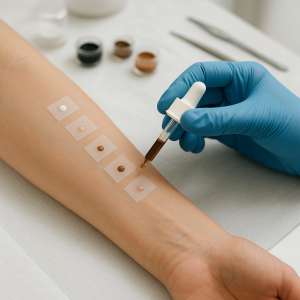
Why Patch Tests Matter: Protecting Clients and Your Reputation
Allergic reactions to pigments, metals, or aftercare products can be serious—sometimes even life-altering. That’s why patch testing is a crucial step before performing tattoos, piercings, or permanent makeup procedures. A simple test protects your clients and gives everyone peace of mind.
Patch Testing: Best Practices
- Explain the process: Let clients know what a patch test is, why it’s done, and how it can prevent complications.
- Use the actual products: Always test the specific pigments, jewelry materials, or aftercare products you plan to use in the procedure.
- Observe for 24–48 hours: Watch for redness, swelling, itching, or any unexpected reactions.
- Document the results: Record every patch test outcome for your records and your client’s safety file.
- Never skip it for new clients: When in doubt, patch test! Safety and trust always come first.
By making patch testing a routine part of your service, you show clients you care—and you protect both their health and your reputation as a professional.