Tattooing on Fake Skin: How to Practice as a Beginner
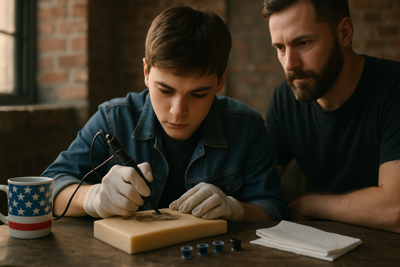
Synthetic practice material can be part of an assigned tattoo-learning exercise. This guide explains what to confirm before buying materials, how to document the assignment and how to ask for feedback. It does not provide machine settings or a timetable for moving to client work.
Use this guide to organize questions about assigned practice on synthetic material. Confirm the exercise, equipment and feedback arrangements with your tutor before beginning; a practice result does not establish readiness for client work.
Table of Contents
Choose a section to find the information you need.
Tip: Use Ctrl/Cmd+F to quickly find the section you want.
- Why Practice on Fake Skin First?
- What You Need: Tools & Materials
- Documenting an Assigned Practice Exercise
- Common Mistakes Beginners Make
- Tracking Progress & Setting Goals
- Safety, Hygiene & Legal Notes (United States)
- Questions Before Further Practical Work
- FAQs — Tattooing on Fake Skin
- Final Thoughts & Next Steps
- Enrol with Skinart United States
Why Practice on Fake Skin First?
Synthetic material does not reproduce living skin or healing. Use it for the specific learning task your tutor has assigned, with the required handling instructions. Work involving equipment and sharps should not be described as risk-free.
Keep repeat attempts so the tutor can compare them with the exercise brief. A change in appearance on a practice pad is an observation to discuss, not proof of an equivalent result on a person.
Ask how synthetic-material exercises fit into the course assessment. They can provide work to review, but they do not demonstrate every skill needed for tattooing a person.
What You Need: Tools & Materials
Confirm the equipment and setup requirements for the assigned activity before assembling a kit. Use the instructions for the actual equipment and clarify any uncertainty with the tutor.
- Disposable practice fake skins (silicone sheets, synthetic practice pads)
- A reliable tattoo machine (rotary or coil) and compatible power supply
- Disposable needle cartridges or sterile needle/tube sets
- Only the ink or other marking material specified for the assignment and compatible with the practice product
- Cleaning materials specified by the equipment and practice-material instructions
- Barrier film, gloves (nitrile), and proper waste disposal
- Marker pens, tracing paper, and stencil transfer solutions
- A camera or phone to record sessions for review
Before buying practice skin, check the materials specified for your course assignment. Ask your tutor about the appropriate size and thickness, and follow the manufacturer’s instructions for ink compatibility and cleaning. Do not assume that a marketing label establishes how closely a product represents work on a person.
Ask the responsible authority about the requirements for any proposed work on people. Do not assume a home practice setup is suitable or permitted for client procedures.
Documenting an Assigned Practice Exercise
Begin with the actual assignment brief. Confirm its purpose, materials and review criteria before trying to reproduce a demonstration or increasing the exercise complexity.
Use these exercises as topics to discuss with your instructor. Follow the assigned practice schedule and assessment criteria, and use feedback to decide when to increase complexity.
Record what you attempted, the specified materials and your questions. Keep the equipment details requested by the tutor; do not change settings merely to chase a better-looking photograph.
- Exercise brief: retain the original task and its stated learning goal.
- Material: record the product and any preparation instructions supplied.
- Equipment: identify the configuration specified for the task.
- Demonstration: note the lesson or instruction you are following.
- Attempt: date the work and describe what you completed.
- Observation: describe visible features without diagnosing a technical cause.
- Question: identify the specific part you want reviewed.
- Feedback: record the response before repeating or changing the exercise.
Pros and Cons of Practicing on Fake Skin
Understand what practice material can and cannot show:
- It provides a separate surface on which to complete assigned exercises.
- It cannot show how a tattoo will heal on a person.
- It can provide examples for a tutor to review against a brief.
- A satisfactory practice result does not establish permission or readiness for client work.
- Dated photographs can help document the particular exercise completed.
- Different products may behave differently; follow the instructions for the actual material.
Keep synthetic-material work clearly labelled in your portfolio. Discuss any further practical learning separately with the person responsible for assessment instead of treating completion of a pad as an automatic next-step approval.
Discuss the next stage of practical preparation with the person responsible for assessing your work. Establish appropriate supervision and operating requirements separately before any work involving people.
Common Mistakes Beginners Make on Fake Skin
- Repeating an exercise without checking the tutor’s feedback
- Changing equipment settings without instruction and losing track of what was tested
- Treating an angle or setting from an unrelated demonstration as a universal rule
- Using practice inks not recommended by the fake skin manufacturer, causing unusual results
- Skipping stencil placement practice — the stencil is as important as the needle
- Continuing when uncomfortable rather than pausing and reviewing the setup
- Not documenting settings or the number of passes for later review
- Expecting fake skin to heal like human skin; overconfident transition to live clients
Keep the brief, dated images and feedback together. Record the equipment information requested by the tutor so the next attempt can be reviewed in context.
Ask prospective mentors directly about their experience, availability and assessment arrangements. Do not assume a studio offers placements or that practice hours guarantee acceptance.
Tracking Progress & Setting Goals
Use the actual assignment criteria to review work. Photographs taken in consistent lighting can help comparison, but a self-awarded score is not an independent practical assessment.
- Agree the next exercise with your tutor rather than setting a universal hour target
- Record machine settings and needle groupings per exercise
- Use the assessment criteria supplied for the assignment
- Keep a practice journal with notes on what improved and what needs work
- Submit images through the agreed feedback process
- Record both progress and unresolved difficulties
- Change exercises when that fits the learning plan
- Revisit old drills to ensure long-term retention
Keep dated exercises and feedback together. Ask which criteria apply to each assignment and what needs improvement before the next attempt.
Safety, Hygiene & Legal Notes (United States)
Before handling equipment, obtain the practical setup, cleaning and disposal instructions for the activity. Resolve uncertainty with your instructor; this article is not a complete hygiene protocol or permission to work on clients.
Confirm any required health-and-safety training with the organisation that needs to accept it. Keep course content, practical assessment and local operating requirements as separate checks.
Questions Before Further Practical Work
There is no universal practice-hour threshold that establishes readiness to tattoo a person. The responsible supervisor must assess the proposed practical work and resolve applicable arrangements before it takes place.
- Ask how practical readiness will be assessed and by whom.
- Confirm the scope of the proposed activity and any outstanding preparation.
- Clarify supervision, client communication and operating arrangements before booking.
- Keep an accurate record of the assessment and its limits.
When applying to a studio, ask what evidence it expects. Provide honestly labelled work and describe the feedback received; time spent practising is not a substitute for assessment.
Resources, Mentors & Further Learning
Use the current course syllabus to identify relevant lessons and ask how feedback is provided. If you seek a separate mentor, confirm their experience, the activities covered and how progress will be assessed.
- Skinart online tattoo course — review the current syllabus and assessment arrangements
- State health department pages — for local regulatory and BBP guidance
- Peer critique groups and mentor-based apprenticeships in U.S. cities (network at conventions)
- Authoritative guides on bloodborne pathogens and infection control (CDC)
- Manufacturer instructions for your chosen fake skin product
- Video archives of professional artists demonstrating set-up and technique
- Local studio opportunities, where actually offered and appropriately arranged
- Documentation templates for logging practice hours and mentor sign-offs
Use authoritative sources and the actual training instructions to resolve safety questions. Neither a course label nor a practice log guarantees compliance or a faster route to working with clients.
FAQs — Tattooing on Fake Skin: How to Practice as a Beginner
Q: Is practicing on fake skin enough to become a tattoo artist?
A: No. A practice pad cannot demonstrate every skill or requirement involved in work on a person. Discuss further preparation and assessment with the responsible instructor before arranging client work.
Q: What fake skin should a beginner buy?
A: Check the materials specified for your course assignment and the practice-skin manufacturer’s instructions. Ask your tutor about size, thickness and compatibility with the equipment you will use before purchasing.
Q: How long should I practice on fake skin before trying a supervised live tattoo?
A: Do not use a universal hour count as permission to work on a person. Ask your tutor or supervising practitioner how readiness is assessed, what further training is needed and which requirements apply before any live work.
Q: Can I use regular tattoo ink on fake skin?
A: Check the practice-material and equipment instructions and ask your tutor which product is required. Do not improvise dilution or substitute materials without confirming suitability for the assigned task.
Q: Will my machine settings be different on fake skin vs real skin?
A: Do not transfer settings or sensations from a practice pad to a person. That decision belongs within suitable practical instruction and assessment, not a generic adjustment from an article.
Q: Where can I get accredited training in the United States?
A: Review the current online tattoo course for its syllabus and assessment details. Ask which synthetic-material exercises are assigned and what feedback is available before choosing an option.
Final Thoughts & Next Steps
Use synthetic work as a clearly labelled part of your learning record. Its value is in the assigned task, feedback and documented response, not a promise of rapid professional readiness.
Keep the next step specific: clarify the brief, complete the assigned work or resolve a question with your tutor. Further practical work requires separate assessment and arrangements.
Compare the current course requirements with your study goals and equipment budget. Resolve practical assessment and support questions before enrolling.
Latest Blog Posts
 How to pause a consultation without losing claritySometimes the most useful outcome of a consultation is a clear next step rather than an immediate booking. A calm pause…
 Read product instructions before making a practice planA familiar product name does not tell you everything about its intended use. Product-specific questions belong at the start of planning,…
 Build a practice journal you will actually useA useful practice journal makes the next session easier to plan. It does not need to become a second project or…