BBP Course Requirements for Artists in United Kingdom
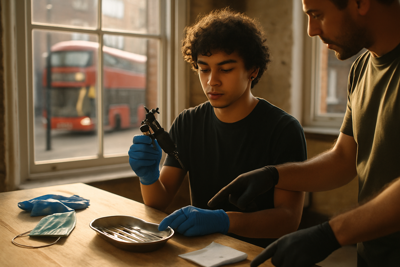
Understanding BBP Course Requirements for Artists in United Kingdom is essential for anyone working in tattooing, piercing, micropigmentation or other body art professions. Whether you’re just starting out or already operating a studio, knowing the legal expectations, best practice infection-control standards and CPD-aligned certification requirements will protect your clients, your reputation and your business.
This comprehensive guide breaks down the training expectations, the practical competencies you should master, what local councils check during inspections, common mistakes to avoid and how Skinart United Kingdom’s accredited online Blood Borne Pathogen course aligns with UK regulations and industry best practice. Read on for locally-relevant tips, official guidance links and actionable next steps to get compliant and confident.
Table of Contents
Use the links below to jump to the section you need. We recommend bookmarking this page or using the anchor links so Google can surface “Jump to” SERP links for quick reference.
- Overview: BBP Course Requirements for Artists in United Kingdom
- Why BBP Training Matters (Pros & Cons)
- Core Competencies and Course Curriculum
- Common Mistakes Inspectors See
- Local Regulation & Council Approvals
- How to Choose a Validated BBP Course
- Certification Expectations & Record Keeping
- Frequently Asked Questions
- Final Thoughts & Next Steps
Overview: BBP Course Requirements for Artists in United Kingdom
The baseline expectation across the UK is that artists working with skin-breaking procedures have appropriate training in blood borne pathogen (BBP) risks and infection control. BBP Course Requirements for Artists in United Kingdom are shaped by public health guidance, local authority licensing standards and recognised competency frameworks. While there’s no single national licence for most body art activities, councils and environmental health officers routinely require demonstrable knowledge and safe systems of work.
A proper BBP programme for artists covers how blood borne viruses such as Hepatitis B, Hepatitis C and HIV are transmitted, measures to reduce risk, correct use of PPE, sharps handling, waste disposal, decontamination of equipment and emergency procedures for needlestick injuries. Accredited courses will also map learning to CPD points and national health guidance so your certificate is accepted by councils and clients.
At Skinart United Kingdom we designed our Blood Borne Pathogen course to meet these real-world expectations and to be fully accredited with the CPD Standards Office and the Body Art Qualification Association (BAQA). The course emphasises practical risk assessment and robust record-keeping that local authorities in the UK expect to see during inspections.
Why BBP Training Matters (Pros & Cons)
BBP training is not just a bureaucratic hurdle — it’s fundamental to client safety, professional credibility and legal compliance. Below is a compact summary to help you weigh the benefits and trade-offs.
- Pros: reduces infection risk, increases client confidence, supports council approval, provides CPD points and demonstrable competence.
- Cons: time investment to complete training, need to refresh knowledge periodically, and cost to access accredited courses.
For most UK artists the benefits far outweigh the cons. A small time and financial investment yields stronger client trust and reduces the chance of costly complaints or enforcement action. Well-structured BBP courses will give you practical workflows (from preparing the workspace to post-procedure cleaning) that you can apply immediately.
Local authorities often treat BBP certificates as evidence that an operator understands the risks and has a documented approach to control them. If your city or borough requires registration or licensing for tattooing or ear piercing, presenting a CPD-accredited BBP certificate can make inspections smoother and faster.
Core Competencies and Course Curriculum
A robust BBP course for artists should deliver practical knowledge and clear, auditable records of learning. Skinart United Kingdom’s online Blood Borne Pathogen course covers the topics UK councils expect and maps each module to CPD and BAQA outcomes. Below we expand on the curriculum areas and explain why each matters.
First, learners must understand virology basics — how blood borne viruses are transmitted, incubation periods, and what constitutes infectious material. This knowledge underpins all practical controls and helps artists make sensible risk assessments for individual clients.
Second, the curriculum must emphasise practical infection control measures: clinical hand hygiene, glove use, appropriate PPE selection, streamlined client flow to avoid cross-contamination, and daily studio cleaning protocols. These are often tested during local authority inspections.
- Introduction to blood borne viruses (Hep B, Hep C, HIV) and transmission pathways
- Risk assessment for procedures that break the skin
- PPE selection and correct donning/doffing
- Sharps handling and safe working with needles
- Waste segregation, containment and disposal procedures
- Studio decontamination and instrument cleaning
- Incident management: needlestick injuries and post-exposure actions
- Record-keeping, client screening and consent considerations
- Legal and regulatory framework relevant to the UK (local council expectations)
Common Mistakes Inspectors See
- Poor or absent documentation of sterilisation cycles and cleaning logs
- Inadequate sharps disposal (overfilled or unlabelled containers)
- Improper glove change procedures — e.g., touching non-sterile surfaces and returning to client
- Insufficient client screening for contra-indications or infections
- Lack of a clear needlestick incident procedure
- Improper storage or misuse of single-use items
- Failure to clean and disinfect work surfaces between clients
- Poor training records or certificates not from recognised accreditors
These mistakes are common because they often stem from shortcuts in busy studios, poor training or unclear workflows. Our course emphasises pragmatic systems that fit realistic studio schedules while remaining compliant with UK expectations.
Addressing these issues improves client safety and reduces the chance of enforcement. A single documented needlestick policy, clear logs and evidence of CPD-compliant training will typically satisfy environmental health officers during a routine inspection.
Local Regulation and Council Approvals
Local councils vary in the exact wording of their requirements, but most UK authorities expect artists to demonstrate knowledge of infection control via accredited training and to maintain clear records. When registering or applying for a licence, councils commonly request copies of CPD certificates, written procedures for sterilisation, and waste disposal arrangements.
Environmental health officers will check that your studio has a robust system for waste (sharps and clinical waste), appropriate cleaning schedules and evidence that you’ve considered vulnerable clients and medical contra-indications. Having a recognised BBP certificate makes these conversations straightforward.
- Check your local council’s body art guidance page before applying for registration
- Keep copies of BBP and CPD certificates in a central, auditable file
- Document waste contractors and contracts for clinical waste collection
- Maintain instrument cleaning and decontamination logs
- Display appropriate aftercare and consent materials for clients
- Establish VIP flows for clients with medical considerations (e.g., anticoagulant therapy)
- Schedule regular refresher training and keep dates on file
- Demonstrate a needlestick incident log and post-exposure procedure
How to Choose a Validated BBP Course
Not all BBP courses are equal. You should look for accreditation, mapping to CPD outcomes and clarity around what the certificate evidences. Skinart United Kingdom’s online Blood Borne Pathogen course is accredited by the CPD Standards Office and BAQA, which ensures recognition by UK councils and adds credibility for clients.
Key features to check when comparing courses: an evidence-based curriculum, clear learning objectives, assessment and a certificate you can present to local authorities. Also check whether the provider offers support for queries and how the course maps to recognised competency frameworks relevant to body art.
- Is the course accredited by CPD or BAQA?
- Does it include assessment or a knowledge check?
- Are the learning outcomes practical and studio-focused?
- Can you download an official certificate after completion?
- Does the provider offer guidance for council inspections?
- Is the course updated to reflect current UK guidance?
- Are tutors experienced in UK body art regulation?
- Does the course explicitly cover sharps handling and waste management?
Certification Expectations and Record-Keeping
When you complete an accredited BBP course in the UK you should receive a certificate that includes the provider name, your name, course title, accreditation body (e.g., CPD Standards Office, BAQA), date of completion and an identifier or certificate number. Keep copies in a readily accessible studio file; many councils will expect to review these during visits.
Record-keeping also extends to studio cleaning logs, sharps waste disposal manifests, and needlestick incident records. These documents paint a picture of ongoing compliance rather than a one-off training event. A well-maintained set of records demonstrates responsibility and commitment to client safety.
- Official course certificate (provider + accreditation body listed)
- Training dates and assessment records
- Studio cleaning and decontamination logs
- Sharps disposal paperwork and collections
- Needlestick and incident reports
- Client consent and screening forms
- Risk assessments for procedures and studio layout
- Documentation for PPE stock and replacement schedules
Frequently Asked Questions
Below are common questions artists in the UK ask about BBP Course Requirements for Artists in United Kingdom. Short, practical answers are provided to help you take the next step.
Do UK councils require a BBP certificate for tattoo and piercing businesses?
Most councils expect evidence of infection control training; while exact requirements vary by authority, an accredited BBP certificate (CPD or BAQA) is widely accepted as proof of competence during registration or inspection.
How long does the Skinart Blood Borne Pathogen online course take?
The Skinart online BBP course is designed for busy professionals; learners can progress at their own pace and complete the modules and assessment over a reasonable timeframe. Contact our support team if you require guidance on expected completion times.
Is CPD accreditation enough for local council compliance?
CPD accreditation, especially when combined with BAQA recognition, is generally sufficient evidence of training; however, always check your local council guidance to ensure there are no additional documentation requirements.
Do I need to retake BBP training regularly?
Refresher training frequency varies; many professionals refresh annually or every two years depending on studio risk profile. Regular CPD updates keep your knowledge current and demonstrate ongoing professional development.
Does the course include practical hands-on training in the UK?
Skinart United Kingdom delivers a comprehensive online Blood Borne Pathogen course that is CPD and BAQA accredited. We do not offer in-person BBP training in the United Kingdom; our content focuses on evidence-based theory, practical workflows and assessed knowledge checks.
Industry Voices
“Proper BBP training is the single most effective step an artist can take to protect clients and maintain studio standards. Local authorities look for documented competence – it’s that simple.”
— Environmental Health Officer, Manchester City Council
“Accredited BBP training provides clarity for inspectors and reassurance for clients. Courses that map to CPD and BAQA outcomes are easier to accept during registration processes.”
— Industry Trainer, British Body Art Association
Skinart Blood Borne Pathogen Course — What We Offer
Skinart United Kingdom’s online Blood Borne Pathogen course is built for the realities of UK body art practitioners. It meets CPD and BAQA accreditation standards, covers the full spectrum of infection prevention topics and includes assessed knowledge checks to verify understanding.
We emphasise practical studio workflows: how to set up a treatment area, perform risk assessments, manage sharps and clinical waste and respond to incidents. Our tutors are industry professionals with broad UK experience; course content is regularly updated to remain aligned with council expectations.
Note: We do not supply BBP equipment in the United Kingdom. The course teaches correct protocols and how to source appropriate supplies locally.
Final Thoughts & Next Steps
BBP Course Requirements for Artists in United Kingdom reflect a commitment to safety, professionalism and good governance. Completing an accredited Blood Borne Pathogen course is a practical step that makes inspections easier, protects clients and supports the long-term success of your studio.
If you’re ready to take the next step, choose a CPD and BAQA-accredited course that focuses on real studio practice and gives you the documentation councils expect. Skinart United Kingdom’s online BBP course is built around those principles and supported by experienced tutors, including Gary Erskine, with over 25 years of industry experience.
Written by Gary Erskine, 25 years in body art education. If you have questions about how our course meets specific local council requirements, reach out — we’re happy to help you prepare your studio for inspection and client care.
Ready to become compliant and confident?
Recent Blog Posts
- Studio Etiquette Update: Professionalism in 2026
 Workplace Etiquette for Body Art Studios Refresh your studio etiquette and build a reputation for professionalism with these up-to-date best practices.… Read More »Studio Etiquette Update: Professionalism in 2026
 - 🌙 Eid Mubarak: Celebrate with 5% Off in 2026!
 Eid Savings: 5% Off All Courses Celebrate Eid with a special offer: 5% off any course. Use code EID5 at checkout.… Read More »🌙 Eid Mubarak: Celebrate with 5% Off in 2026!
 - Top Mistakes New Body Artists Should Avoid (2026)
 Stay Ahead: Common Pitfalls for New Artists Read up on the most frequent errors new body artists make, and how to… Read More »Top Mistakes New Body Artists Should Avoid (2026)