Blood Borne Pathogen Training for Artists in United Kingdom
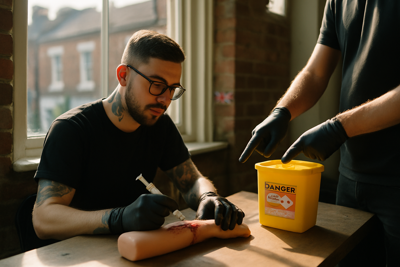
If you work with needles, pigments or any service where skin integrity is breached, Blood Borne Pathogen Training for Artists in United Kingdom is essential knowledge — not just a box to tick. This guide explains why accredited BBP training matters for safety, legal compliance, and the reputation of your studio, and it points you toward a professionally recognised option from Skinart United Kingdom.
Whether you’re a tattooist, body piercer, permanent make-up artist or a studio manager, understanding the transmission, prevention and response to blood borne infections protects your clients and your business. Here you’ll find clear, UK-focused explanations, common pitfalls, real-world examples and the practical next steps to get fully certified with Skinart United Kingdom.
- What is Blood Borne Pathogen Training?
- Why It Matters for Artists
- Course Contents and Learning Outcomes
- Common Mistakes Artists Make
- Legal & Regulatory Context in the United Kingdom
- Best Practices for Your Studio
- UK Success Stories
- Frequently Asked Questions
- Final Thoughts & Next Steps
Use these anchor links to jump to each section — this helps with quick reference and may enable Google’s “Jump to” links in search results.
What is Blood Borne Pathogen Training?
Blood Borne Pathogen Training for Artists in United Kingdom covers the core concepts that reduce risk of infection when working with human blood, bodily fluids and procedures that break the skin. It explains how pathogens such as hepatitis B, hepatitis C and HIV can be transmitted and what steps professionals must take to reduce that risk in a studio environment.
At Skinart United Kingdom we focus on practical, scenario-based learning that connects regulation, microbiology basics and hands-on infection control. The course is designed for busy practitioners and studio managers who need clear protocols they can implement straight away across stamping, shading, piercing and aftercare processes.
Everything taught in the course is mapped to UK expectations for health and safety and to internationally recognised CPD standards. The result is not only safer clients but also increased credibility when clients ask for evidence of professional training.
Why It Matters for Artists
Blood Borne Pathogen Training for Artists in United Kingdom matters because the nature of body art work involves intentional skin penetration. That exposure creates pathways for blood borne viruses to transmit between clients and practitioners if controls are not robust.
- Pros: Enhances client safety, reduces clinic liability, builds trust in your brand.
- Cons: Requires time to complete, may require updates or refreshers to stay current with guidance.
Beyond pros and cons, consider the reputational value. Studios that can confidently communicate their BBP training often attract clients who prioritise safety and professionalism. For freelancers, a recognised certificate can open doors for collaborations with salons and events.
In the UK context, while local councils and environmental health teams set premises standards, having accredited BBP training aligns your practice with broader public health obligations and demonstrates due diligence if ever inspected.
Course Contents and Learning Outcomes
The Skinart Blood Borne Pathogen course available to artists in the United Kingdom is an online, accredited course covering practical infection control, waste management, emergency response and client aftercare. Our curriculum is CPD-aligned and designed for quick comprehension with scenario-based assessments.
Key learning outcomes include the ability to explain pathogen transmission routes, implement effective standard precautions, manage sharps and contaminated waste responsibly, and respond to exposure incidents using recommended UK procedures.
The course emphasises both the science and the studio-side actions: how to set up a clean workspace, what to document in client records, and how to communicate clear aftercare instructions that reduce infection risks.
- Understanding blood borne viruses common in the UK (HBV, HCV, HIV)
- Standard precautions: hand hygiene, PPE selection and correct donning/doffing
- Sharps safety: handling, transport and disposal of needles and contaminated sharps
- Cleaning and disinfection: products and dwell times suitable for body art settings
- Waste categories: clinical waste vs general waste and UK disposal pathways
- Post-exposure protocols: immediate steps, reporting and seeking clinical advice
- Client communication and documentation: consent, aftercare and incident records
- Scenario assessments and case studies tailored to tattooing, PMU and piercings
- Certification process and how to evidence CPD accreditation in the UK context
Common Mistakes Artists Make
- Assuming gloves alone are enough — ignoring hand hygiene before and after glove use.
- Poor sharps segregation — mixing contaminated sharps with general waste.
- Using the wrong disinfectant or not observing required contact times.
- Inadequate client screening or incomplete consent and medical history checks.
- Poorly documented exposure incidents — failing to log events for follow-up.
- Overlooking ventilation and environmental factors that affect aerosolised contaminants.
- Not updating procedures after guidance changes or new evidence emerges.
- Failing to train support staff and apprentices to the same standard as qualified artists.
- Misunderstanding vaccination options and employer responsibilities regarding HBV.
Each of these mistakes is fixable with clear policies and consistent training. Our online course spends significant time on these practical failings, using UK examples and local waste disposal rules so you can implement immediate improvements.
Addressing these common issues reduces client risk and protects your licence to operate. Local council inspections often look for documentation and visible good practice; training helps you demonstrate that in real-world terms.
Legal and Regulatory Context in the United Kingdom
Blood Borne Pathogen Training for Artists in United Kingdom ties into several legal and regulatory strands. While there is no single UK-wide law labelled “tattoo law”, environmental health, health and safety (HSE), COSHH and local council licensing requirements combine to set the standard for safe practice.
Local authorities typically enforce premises licensing for skin piercing and tattooing services. Inspectors will expect clear infection control policies, appropriate waste management, and staff training records — all topics covered in our course.
For official guidance, the UK Health Security Agency and NHS offer resources about blood borne infections and the importance of vaccination and post-exposure management. These authoritative sources align closely with the content and recommendations in our training.
Best Practices for Your Studio
Implementing best practices transforms knowledge into daily routines. The Skinart approach to Blood Borne Pathogen Training for Artists in United Kingdom is built around reproducible studio systems — from client arrival through to waste collection and incident logging.
Key practical steps include establishing standard operating procedures, scheduling regular refreshers for staff, and ensuring visible signage for hand hygiene and aftercare. We highlight how to design simple checklists that inspectors and clients can review, creating transparency and confidence.
- Standard Operating Procedures (SOPs) for each procedure type
- Daily and weekly cleaning schedules with documented sign-off
- Sharps containers labelled and replaced before overfilling
- Clear client screening questionnaire and consent forms
- Accessible PPE stock with training on correct use
- Accident and exposure reporting protocol with named responsible person
- Regular audits and staff refresher sessions tied to CPD
- Visible aftercare guidance given verbally and in writing
By formalising these practices you not only meet expectations but create an environment where clients feel safe and staff are empowered to act. The course gives templates and examples so you don’t have to start from scratch.
UK Success Stories
We’ve trained hundreds of artists across the United Kingdom who used their Blood Borne Pathogen Training for Artists in United Kingdom certificate to improve studio standards and pass local authority inspections with confidence. In Manchester, a three-artist studio reduced client complaints related to infection issues by formalising aftercare information and documentation following our course.
In Brighton, a freelance PMU artist used the course content to create a sharps policy that satisfied a high-profile salon’s onboarding checks, helping her secure monthly guest shifts and increase her client base. These practical outcomes are what we aim for: training that directly supports real-world work and commercial sustainability.
Student feedback often highlights two benefits: improved client trust and a clearer audit trail for inspections. Both contribute to long-term studio resilience and professional recognition locally.
Expert Perspectives
“Blood borne pathogen awareness is the backbone of professional body art practice. Training should be straightforward, practical and directly applicable to the studio environment.” — CPTP statement, UK Advisory Group
We also include comments from local municipal health officers who emphasise that documentation and regular training demonstrate a studio’s commitment to public health. These endorsements illustrate why accredited training is respected during inspections.
Frequently Asked Questions
Below are common questions artists ask about Blood Borne Pathogen Training for Artists in United Kingdom, with concise answers to help you decide if the course fits your needs.
Q: Do artists need specific vaccinations?
A: Vaccination for hepatitis B is recommended for practitioners who may be exposed to blood; the course explains vaccination guidance and how to document any occupational health steps.
Q: Can apprentices take the course?
A: Yes, apprentices and studio support staff should complete BBP training to ensure consistent studio-wide practice. Our course is suitable for all levels.
Final Thoughts & Next Steps
Blood Borne Pathogen Training for Artists in United Kingdom is more than a certificate — it’s an essential part of professional practice that protects clients, staff and your business. Skinart United Kingdom has designed the course to be practical, UK-focused and aligned with CPD standards so you can demonstrate reliable competence.
If you want to strengthen your studio’s infection control, improve client trust and make inspections straightforward, taking an accredited BBP course is one of the most effective actions you can take. Our modules are written by experienced tutors and mapped to real studio scenarios.
Written by Gary Erskine, 25 years in Blood Borne Pathogen Training for Artists in United Kingdom education — lead tutor at Skinart United Kingdom. Gary has trained thousands of students worldwide and brings practical, evidence-based instruction to every module.
Latest Blog Posts
- Studio Etiquette Update: Professionalism in 2026
 Workplace Etiquette for Body Art Studios Refresh your studio etiquette and build a reputation for professionalism with these up-to-date best practices.… Read More »Studio Etiquette Update: Professionalism in 2026
 - 🌙 Eid Mubarak: Celebrate with 5% Off in 2026!
 Eid Savings: 5% Off All Courses Celebrate Eid with a special offer: 5% off any course. Use code EID5 at checkout.… Read More »🌙 Eid Mubarak: Celebrate with 5% Off in 2026!
 - Top Mistakes New Body Artists Should Avoid (2026)
 Stay Ahead: Common Pitfalls for New Artists Read up on the most frequent errors new body artists make, and how to… Read More »Top Mistakes New Body Artists Should Avoid (2026)