Do You Need BBP Certification in United Kingdom?

If you work with needles, skin penetration or any body art procedures in the United Kingdom, BBP Certification in United Kingdom is more than a nice-to-have — it’s your practical safeguard and a mark of professional responsibility. This article explains whether you need it, what it covers, and how a recognised course from Skinart United Kingdom can help you meet local expectations and protect your clients and your career.
Whether you’re setting up a new studio in Manchester, booking mobile appointments across London, or joining an established shop in Edinburgh, understanding Blood Borne Pathogen (BBP) training requirements is essential. We’ll walk through legal considerations, workplace expectations, common mistakes, and how our fully accredited online Blood Borne Pathogen course links to CPD and BAQA standards.
Table of Contents
Use the links below to jump to the section you need — this helps Google and readers find answers fast.
- What is BBP certification?
- Legal and local requirements in the UK
- Who needs BBP Certification in United Kingdom?
- Benefits of completing a BBP course
- Skinart United Kingdom course details
- Common mistakes and compliance issues
- Practical prevention checklist
- Local examples and success stories
- FAQs — Do you need BBP Certification in United Kingdom?
- Final thoughts & next steps
What is BBP certification?
BBP certification refers to training that covers Blood Borne Pathogen risks, safe handling of sharps, cross-contamination control, and emergency responses for occupational exposures. In practical terms for body art professionals this means knowing how to reduce the risk of transmitting infections like hepatitis B, hepatitis C and HIV during procedures involving skin penetration.
The course emphasises three practical pillars: prevention (safe technique and hygiene), protection (PPE and environment), and response (post-exposure actions). BBP Certification in United Kingdom also covers record keeping, local reporting requirements and client communication so you can both avoid incidents and handle them professionally if they happen.
Many training programmes, including Skinart United Kingdom’s accredited online Blood Borne Pathogen course, align with CPD and BAQA standards so you receive recognised proof of your learning — important when applying for insurance, registering with local authorities, or seeking employment in reputable studios.
Legal and local requirements in the UK
There is no single national law that says every practitioner must hold a specific BBP certificate, but several legal frameworks and local regulations make the training effectively mandatory for safe practice. UK health and safety law (the Health and Safety at Work etc. Act 1974 and associated regulations) requires employers and service providers to manage risks from blood-borne pathogens. This means studios and local councils expect competent BBP training for anyone performing skin-penetrating procedures.
Local Environmental Health Officers (EHOs) inspect premises and advise councils on licensing. Many councils ask for proof of appropriate training when you apply for a registration or inspection. If you’re working as a self-employed artist, insurers often make BBP training a condition of cover. In short: while the law describes duties and standards, BBP Certification in United Kingdom is regularly used as the practical measure to meet those obligations.
For official guidance, the Health and Safety Executive outlines employer responsibilities for protecting people from blood-borne infections — see the HSE guidance for employers and healthcare settings for more context: HSE.
- Employers must carry out risk assessments for exposure to BBPs.
- Environmental Health may require proof of training during inspections.
- Insurers and professional associations often require or recommend certified training.
- BBP training supports compliance with the Control of Substances Hazardous to Health (COSHH) processes in many settings.
Who needs BBP Certification in United Kingdom?
BBP training is recommended for anyone who performs skin penetration or works in environments where blood exposure is possible. This includes tattoo artists, body piercers, microblading technicians, medical aesthetic practitioners who use needles, and support staff who handle waste, clean treatment rooms, or assist during procedures.
- Professional tattooists and trainee artists
- Body piercers and apprentices
- Permanent makeup and microblading technicians
- Mobile artists who treat clients outside a fixed studio
- Shop staff responsible for cleaning and waste disposal
- Clinic staff working with minor skin procedures using needles
- Anyone applying for studio registration with local councils
- Individuals seeking professional insurance or industry membership
Even if local rules do not explicitly demand a named qualification, having BBP Certification in United Kingdom shows you meet recognised standards. It improves employability and reduces the chance of regulatory or insurance problems. Many studios will simply not employ anyone who cannot demonstrate up-to-date BBP training.
Skinart United Kingdom’s online Blood Borne Pathogen course is designed specifically for UK-based practitioners and aligns with CPD Standards Office and BAQA expectations to make it straightforward to provide evidence during inspections or when applying for insurance.
Benefits of completing a BBP course
Completing a BBP course provides immediate, practical benefits for your day-to-day work and long-term career. You’ll gain clear, evidence-based procedures to reduce infection risk, build client trust, and demonstrate competency to regulators and insurers. For many artists this is the single most important course they take early in their careers.
- Better protection for you and your clients through proven protocols
- Increased employability and studio acceptance
- Stronger insurance options and fewer disputes after incidents
- Clear evidence to present to Environmental Health inspectors
- Confidence to manage exposures and protect your team
- Knowledge of waste handling and sharps disposal rules
- Improved client communication and consent practices
- Formal CPD credit and BAQA recognition to support your portfolio
Beyond these practical benefits, BBP Certification in United Kingdom sends a message: you take safety seriously. That’s important if you want to attract higher-quality clients, form partnerships with clinics, or apply for more advanced training that requires a safety foundation.
At Skinart United Kingdom we emphasise practical scenarios and decision-making: how to handle a needlestick injury, what to document, and how to communicate with a client if a concern arises. These are the real-world skills that protect livelihoods and reputations.
Skinart Blood Borne Pathogen Course — United Kingdom
Skinart United Kingdom offers a fully accredited online Blood Borne Pathogen course tailored for UK practitioners. The course has been written and is taught by Gary Erskine, who has 23 years in BBP Certification in United Kingdom education and more than 25 years industry experience overall. It is accredited with the CPD Standards Office and the Body Art Qualification Association (BAQA).
The curriculum covers: BBP fundamentals, infection control for body art, PPE selection and use, sharps management, cleaning and disinfection of treatment areas, safe waste disposal, and what to do in a suspected exposure incident. The course emphasises UK-relevant procedures so students can apply learning directly to inspections, insurance and day-to-day studio practice.
Important practical notes: we do not provide in-person training in the United Kingdom and we do not supply BBP equipment in the UK. The course is delivered online and includes assessments and a certificate upon successful completion. It is structured to be straightforward for busy practitioners and apprentices to complete in a time frame that suits their learning schedule.
- Fully accredited with CPD Standards Office and BAQA
- Designed by an industry tutor with decades of hands-on experience
- Clear modules on prevention, protection and post-exposure response
- Certificate suitable for local registration and insurer requirements
- Accessible online for UK practitioners
- Supportive student help for course queries during study
- Practical examples referencing UK councils and EHOs
- Aligned to real studio workflows and risk scenarios
Common mistakes and compliance issues
Even experienced practitioners can make errors that put clients or themselves at risk. Understanding common pitfalls helps you avoid them — the following pros and cons-style lists highlight frequent issues and practical things to watch for.
- Pro: Routine BBP training standardises practice across a team and reduces confusion during incidents.
- Con: Treating the course as a check-box exercise without integrating the procedures into studio workflows.
Below are additional common mistakes we see during audits and student assessments. These are practical, avoidable errors that training should correct.
Use these as a quick in-studio audit list — if any describe your current practice, prioritise a refresher or take a recognised BBP course to close the gaps.
- Failing to perform and document a sharps risk assessment for new procedures.
- Inconsistent glove use and incorrect removal techniques that increase cross-contamination risk.
- Poor cleaning documentation — using the right disinfectant but not recording schedules.
- Improper sharps disposal — using bins that are not approved or not secured.
- Lack of clear post-exposure protocols or not communicating them to clients.
- Assuming client self-declaration is sufficient without standard consent and screening checks.
- Not keeping vaccination records for staff where applicable (e.g., hepatitis B vaccination status).
- Relying on out-of-date training or foreign qualifications without local context for UK regulations.
Practical prevention checklist for UK practitioners
Here’s a quick checklist you can use in the studio or before applying for registration. These are practical items that a BBP course will expand on and show you how to document and implement.
- Complete a recognised BBP course accredited by CPD and BAQA.
- Maintain an up-to-date risk assessment specific to each procedure.
- Use single-use disposable sharp items where appropriate and approved sharps containers.
- Follow correct donning and doffing techniques for gloves and other PPE.
- Keep cleaning logs and use hospital-grade disinfectants approved for body art settings.
- Ensure staff know and practice post-exposure procedures, including where to seek clinical advice.
- Keep clear client screening and consent documentation on file for the required retention period.
- Check with your insurer about their specific training and documentation requirements.
Completing an accredited BBP Certification in United Kingdom is one of the most efficient ways to demonstrate these practices to councils and insurers — it packages the evidence into a recognised format that decision-makers will accept.
Local examples and success stories
We often hear from students who completed the Skinart BBP course and immediately improved their studio processes. One London-based artist reported smoother approvals from their local EHO after attaching a Skinart CPD-accredited certificate to their premises registration application. Another student in Glasgow used their training to create a sharps and cleaning checklist that passed a surprise council visit with no actions required.
Here’s a quote from a local authority official who’s reviewed our graduates’ documentation in inspections:
“We welcome clear, accredited training evidence from practitioners. When training is aligned to national standards and demonstrates practical measures, it makes the registration process more transparent and quicker to approve.” — Environmental Health Officer, Manchester City Council
These success stories are practical reminders: a solid BBP Certification in United Kingdom not only protects health but also eases everyday business operations — fewer delays at registration, smoother insurance acceptance, and more client confidence.
- London studio: attached Skinart certificate to registration — passed EHO inspection with no remedial actions.
- Edinburgh technician: used course template for consent forms and reduced appointment cancellations related to screening queries.
- Manchester apprentice: obtained first paid studio placement after demonstrating CPD-accredited BBP training.
- Cardiff mobile artist: improved client confidence by displaying a copy of valid BBP training evidence online and in-studio.
Frequently asked questions
Do I legally need BBP certification to tattoo in the UK?
There’s no single national licence that mandates a particular BBP certificate, but health and safety law and local council expectations mean accredited BBP training is effectively required in practice; many councils and insurers ask for it when assessing registration or cover.
How often should I renew BBP training?
Best practice is to refresh BBP training every 2–3 years or sooner if guidance changes, your studio introduces new procedures, or an incident prompts an update. Check insurer or council expectations for any specific timeframes.
Is online BBP training accepted by Environmental Health?
Many councils accept accredited online training that includes assessment and a certificate. Skinart United Kingdom’s course is CPD and BAQA accredited and structured to provide the evidence EHOs look for, but always confirm local council acceptance when applying for registration.
Can BBP training replace studio risk assessments?
No. Training informs safe practice but does not replace the legal requirement to conduct and document workplace-specific risk assessments tailored to your premises and procedures.
Will a BBP certificate help with insurance?
Yes. Insurers frequently request evidence of suitable training. Holding a recognised BBP Certification in United Kingdom often makes claims handling smoother and may reduce the likelihood of coverage disputes in the event of an incident.
Eight common mistakes (and how to fix them)
- Not documenting cleaning schedules — fix: implement a simple log for each treatment room and include date, time and responsible person.
- Storing sharps bins incorrectly — fix: use a rigid, labelled, approved container and place it in an accessible but secure location.
- Assuming gloves eliminate all risk — fix: combine correct glove removal technique with surface disinfection and hand hygiene.
- Poor client screening — fix: standardise a short screening form and make it an integral step before booking.
- Not updating training after a change in procedure — fix: re-train staff when introducing new equipment or techniques.
- Informal waste handling by front-of-house staff — fix: train all staff with a role in waste transfer and provide PPE for that task.
- Neglecting incident documentation — fix: create a simple incident form that is completed immediately and stored securely.
- Relying on international certificates without local context — fix: choose training that references UK councils, HSE guidance and local best practice.
Most of these are operational issues rather than technical ones. A BBP Certification in United Kingdom course from Skinart includes templates and practical worksheets to address these exact problems and help you implement workable studio procedures.
By fixing these issues you not only reduce risk but make day-to-day studio management easier — fewer corrective actions after inspections, quicker onboarding of new staff, and better client outcomes.
Helpful resources and next steps
If you want to check official guidance, the Health and Safety Executive (HSE) provides useful information about biological hazards and employer duties; see hse.gov.uk. For local studio registration details, consult your local council’s Environmental Health pages — many councils publish body art registration and inspection guidance tailored to their area.
- Check HSE guidance for employer duties and risk assessments
- Review your local council’s body art registration pages for specific documentation requirements
- Speak with your insurer about accepted BBP training standards
When selecting training, choose a provider that understands UK inspection processes and can provide templates, checklists and certificate evidence — reasons many students choose Skinart United Kingdom.
Final thoughts
BBP Certification in United Kingdom is a practical, high-value step for anyone in the body art industry. It reduces risk, supports compliance, and signals to clients, councils and insurers that you run a safe, professional operation. Even where a named certificate is not explicitly required by statute, it is frequently treated as the de facto standard by decision-makers.
If you’re just starting out, BBP training gives you a strong foundation. If you’ve been working for years, a refresher can close gaps and refresh your studio’s approach to safety. Either way, accredited training is an investment in your clients’ health and your long-term career.
Written by Gary, 23 years in BBP Certification in United Kingdom education. Gary has trained thousands of students worldwide and brings practical studio experience to every module.
Ready to get accredited?
Take the next step to protect your clients and your career. Our online Blood Borne Pathogen course is CPD- and BAQA-accredited, tailored for UK practice, and led by experienced industry tutors.
Recent Blog Posts
- Studio Etiquette Update: Professionalism in 2026
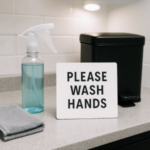 Workplace Etiquette for Body Art Studios Refresh your studio etiquette and build a reputation for professionalism with these up-to-date best practices.… Read More »Studio Etiquette Update: Professionalism in 2026
 - 🌙 Eid Mubarak: Celebrate with 5% Off in 2026!
 Eid Savings: 5% Off All Courses Celebrate Eid with a special offer: 5% off any course. Use code EID5 at checkout.… Read More »🌙 Eid Mubarak: Celebrate with 5% Off in 2026!
 - Top Mistakes New Body Artists Should Avoid (2026)
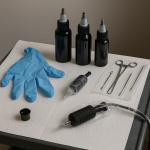 Stay Ahead: Common Pitfalls for New Artists Read up on the most frequent errors new body artists make, and how to… Read More »Top Mistakes New Body Artists Should Avoid (2026)