Why BBP Certification Is Essential for Tattoo & Piercing
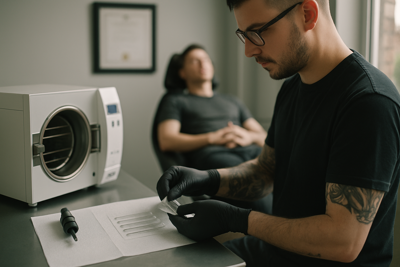
BBP Certification Is Essential for every professional in the tattoo and piercing industry. Whether you are just starting out in the United Kingdom or are an experienced practitioner refreshing your knowledge, accredited Blood Borne Pathogen (BBP) training protects your clients, your reputation and your business. This article explains why the qualification matters, what it covers, and how it fits into UK regulations and best practice for body art.
At Skinart United Kingdom we design our Blood Borne Pathogen course to be practical, relevant and CPD-accredited. With guidance from industry tutors and real UK examples, you’ll understand how BBP certification reduces risk, demonstrates professionalism, and makes compliance straightforward. Read on to find out what BBP training covers and how to get certified online.
Written by Gary Erskine, 25 years in the body art industry and lead tutor at Skinart United Kingdom. Gary has trained thousands of students worldwide and helped build safer, compliant studios across the UK.
Table of Contents
Use the links below to jump to the section you need. Anchor-linked headings with semantic IDs can also show “Jump to” links in Google search results.
- Introduction: What BBP Certification Means
- Why BBP Certification Is Essential (Key Reasons)
- Pros and Cons of Formal BBP Training
- Practical Steps After Certification
- Common Mistakes & How to Avoid Them
- Legal & Local Compliance in the United Kingdom
- Training, Assessment & Accreditation
- Real UK Studio Success Stories
- FAQ: BBP Certification Questions
- Final Thoughts & Next Steps
Introduction: What BBP Certification Means
BBP Certification Is Essential because it formalises the knowledge and practical steps required to manage blood, bodily fluids and sharps safely in tattooing and piercing environments. A proper BBP course focuses on infection prevention, decontamination, incident management and safe waste disposal — core skills for any practitioner operating in the United Kingdom.
Understanding the risks associated with blood borne pathogens — such as hepatitis B, hepatitis C and HIV — and the correct control measures dramatically reduces the likelihood of transmission during procedures. Certification is a documented proof that you know how to apply those controls consistently.
For clients, BBP certification signals professionalism. For studios it supports insurance requirements and local authority expectations. For practitioners it reduces personal liability and ensures a safer workplace for both artists and clients.
Why BBP Certification Is Essential (Key Reasons)
There are clear, practical reasons why BBP Certification Is Essential for anyone providing tattooing or piercing in the UK. Below we’ll explain the most important factors and how each affects daily practice.
- Client safety: reduces infection risk and builds trust.
- Legal and regulatory alignment: supports local authority inspections and environmental health expectations.
- Insurance and professional standards: many insurers and associations require evidence of BBP training.
- Incident preparedness: teaches immediate steps after a needlestick, exposure or spill.
- Workplace culture: creates a consistent approach to hygiene and record-keeping.
- Reputation and referrals: clients prefer trained, accredited practitioners.
Each of these reasons links back to one point: BBP training is not optional for professionals who want a sustainable, reputable practice. It’s the baseline of clinical governance in a studio environment.
BBP Certification Is Essential because it provides a common language and standard for staff, making audits, incident reviews and client communication simpler and more authoritative.
Pros and Cons of Formal BBP Training
Taking a formal, accredited BBP course is the most efficient way to gain the competencies required for safe practice. However, like any professional development, there are trade-offs to consider.
- Pros:
- Comprehensive coverage of infection control protocols
- Recognised documentation for inspections and insurance
- Improved confidence when performing complex procedures
- Practical incident-response training
- CPD points and pathway to other accredited qualifications
- Accessible online delivery for busy UK practitioners
- Cons:
- Cost and time out of the studio (though online options reduce this)
- If content is poor or not accredited, the value is limited — choose reputable providers
- Courses vary in depth; choose one aligned with UK guidance and BAQA/CPD standards
When weighing the pros and cons, remember that the downside of not being trained can be far larger: infections, legal exposure and reputational damage. Investing in a recognised BBP qualification protects you and your clients.
Our online Blood Borne Pathogen course at Skinart United Kingdom is CPD-accredited and designed specifically for UK practitioners, covering local waste disposal, environmental health expectations and incident reporting pathways.
Practical Steps After Certification
Completing BBP Certification Is Essential but it’s only the first step. Certification confirms your knowledge; implementing procedures consistently is what protects clients. Below are practical actions to take immediately after completing your course.
These tasks cover administration, studio practice and client communication so you can convert accreditation into everyday safety.
Print or store your certificate securely, add it to your professional profile, and ensure your team knows where to find incident-response plans.
- Place your BBP certificate on-site (or have accessible proof) and include it in your studio’s compliance folder.
- Update your client consent forms to reflect infection-control commitments.
- Ensure sharps containers and clinical waste contracts meet local environmental health standards.
- Set up a clear needlestick and exposure response poster in the treatment area.
- Run a short team briefing to explain key control measures and responsibilities.
- Schedule regular cleaning checklists and audits that reflect your BBP training.
- Confirm your insurance provider accepts your qualification; keep copies of the certificate for claims support.
- Use BBP knowledge when training apprentices or colleagues to ensure consistent standards.
- Make sure hand hygiene stations are stocked and waste disposal is contractually managed within UK guidelines.
Common Mistakes & How to Avoid Them
- Not regularly refreshing practical skills or policies after training
- Failing to record incidents properly in a bound or electronic log
- Using incorrect clinical waste streams (check your local council rules)
- Poor layout of treatment room leading to cross-contamination risks
- Inadequate sharps handling and overfilling sharps containers
- Assuming clients will self-declare bloodborne infections — always use universal precautions
- Relying on outdated advice rather than current UKHSA/NHS guidance
- Not verifying your BBP training with insurers or local authority as required
Many of these errors stem from treating BBP certification as a one-time box-tick. Instead, use the course material to build simple, repeatable systems that become part of the way you work. Systems reduce human error.
Regular internal audits and peer reviews can prevent complacency. Assign simple responsibilities and rotate them so everyone in a studio shares ownership of infection control.
Legal & Local Compliance in the United Kingdom
In the UK, responsibility for enforcing safe practice in tattoo and piercing premises usually sits with local authorities (environmental health teams) and is informed by national guidance from agencies such as the UK Health Security Agency (UKHSA) and NHS infection control resources. BBP Certification Is Essential because it directly supports compliance during inspections.
Local councils expect appropriate risk assessments, documented cleaning policies, sharps handling procedures and safe waste contracts. A recognised BBP certificate forms part of the evidence you can present during an inspection and helps demonstrate you’ve followed recognised control measures.
When you complete a CPD-accredited BBP course, make sure your policies reflect local disposal arrangements and the requirements of your insurer. If uncertain, contact your local environmental health team — they provide clear, practical expectations for premises where skin penetration occurs.
- Keep up-to-date copies of your risk assessments and cleaning schedules.
- Use a reputable clinical waste contractor that operates under UK waste regulations.
- Document training dates for all staff and include BBP certificates in studio records.
- Display appropriate health & safety and aftercare information for clients.
- Follow sharps disposal guidance and never compromise with overfull containers.
- Ensure staff vaccinations (where recommended) are up to date and documented.
- Make incident reporting quick and simple — include relevant contacts and next steps.
- Review policies annually or after any significant incident.
Training, Assessment & Accreditation
BBP Certification Is Essential, but the value of the certificate depends on the course quality and accreditation. At Skinart United Kingdom our Blood Borne Pathogen course is CPD-accredited and aligned with BAQA standards, ensuring your training meets industry expectations.
Assessment typically includes multiple-choice knowledge checks and scenario-based questions that mirror real studio incidents. Good courses also include practical guidance on cleaning, PPE selection, and safe disposal protocols tailored to UK practice.
We do not offer in-person BBP training for the United Kingdom — our course is delivered online so you can complete it at your own pace. The online format covers all required theory, incident-management flows and documentation templates that you can adapt to your studio policies.
Embedded industry guidance:
“High-quality BBP training is the backbone of safe skin penetration services — it protects clients and supports regulated premises.” — CPTP (College of Tattoo & Piercing Practice), industry statement
- CPD-accredited modules covering pathogens, prevention and post-exposure response
- Assessment through quizzes and reflective scenarios
- Templates for risk assessments and incident logs
- Certificate on completion that supports insurance and local authority checks
Real UK Studio Success Stories
Practical examples help show why BBP Certification Is Essential. Here are anonymised UK-based scenarios that reflect common outcomes when studios invest in accredited training.
Studio A in Manchester recorded a drop in post-procedure complications after staff completed BBP training and implemented checklist-led cleaning schedules. The owner reported improved client confidence and a smoother local authority inspection as a direct result.
In Brighton, a small piercing studio used BBP knowledge to update their incident response. When a needlestick occurred, the documented process reduced staff uncertainty, ensured rapid clinical referral and avoided escalation into a formal complaint.
- Improved client retention after visible safety improvements
- Faster, more effective responses to incidents
- Smoother insurance renewals with fewer queries
- Positive feedback during local authority inspections
FAQ: Why BBP Certification Is Essential for Tattoo & Piercing
The answers below address common search queries and practical concerns. They are also encoded with FAQ microdata to help search engines present accurate results.
Why is BBP certification important for tattoo and piercing artists in the UK?
BBP certification teaches infection control, incident response and safe waste handling; this protects clients and supports studio compliance with local environmental health expectations and insurer requirements.
How long does it take to complete an online BBP course?
Online BBP courses vary, but most CPD-accredited programmes can be completed in a few hours to a full day depending on the depth of content and assessment requirements.
Does a BBP certificate meet local authority requirements?
A CPD-accredited BBP certificate is widely accepted as evidence of competency, but local authority expectations can vary; keep your course details and certificate accessible for inspections.
Will BBP training teach me how to manage a needlestick or exposure?
Yes. Accredited courses include immediate response steps, reporting procedures and follow-up actions that reduce health risks after an incident.
Can I use my BBP certificate for insurance renewal?
Most insurers accept recognised BBP certification as part of your professional documentation; always confirm with your insurer which accreditations they require.
Final Thoughts & Next Steps
BBP Certification Is Essential not just as a piece of paper, but as the foundation of a safer, more professional practice. Clients expect high standards, and local authorities and insurers look for demonstrable evidence of competence. Completing accredited BBP training is a practical way to meet those expectations while improving your day-to-day confidence and decision-making in the studio.
If you’re ready to strengthen your practice, Skinart United Kingdom’s online Blood Borne Pathogen course is designed for the tattoo and piercing community — CPD-accredited, locally relevant and focused on real studio application.
Take the next step to protect your clients, your career and your business: get certified and make BBP best practice the heart of your service offering.
Ready to get started?
Recent Blog Posts
- Studio Etiquette Update: Professionalism in 2026
 Workplace Etiquette for Body Art Studios Refresh your studio etiquette and build a reputation for professionalism with these up-to-date best practices.… Read More »Studio Etiquette Update: Professionalism in 2026
 - 🌙 Eid Mubarak: Celebrate with 5% Off in 2026!
 Eid Savings: 5% Off All Courses Celebrate Eid with a special offer: 5% off any course. Use code EID5 at checkout.… Read More »🌙 Eid Mubarak: Celebrate with 5% Off in 2026!
 - Top Mistakes New Body Artists Should Avoid (2026)
 Stay Ahead: Common Pitfalls for New Artists Read up on the most frequent errors new body artists make, and how to… Read More »Top Mistakes New Body Artists Should Avoid (2026)